
Now Reading: Word of the Week: Bottom (turn)
-
01
Word of the Week: Bottom (turn)
Word of the Week: Bottom (turn)

Word of the week is Bottom. I’m so juvenile—I hear bottom and I think of fanny. Only people who are familiar with both British English and American English will get this joke. Alas, it’s the only one I have for you today.
Oh, sorry—it’s a Bottom turn we’re talking about here.
♂️ What Is a bottom turn?
A bottom turn is one of the most fundamental (and important!) maneuvers in surfing, and yet most beginners either skip it completely or don’t even know they’re doing it. So, let’s fix that.
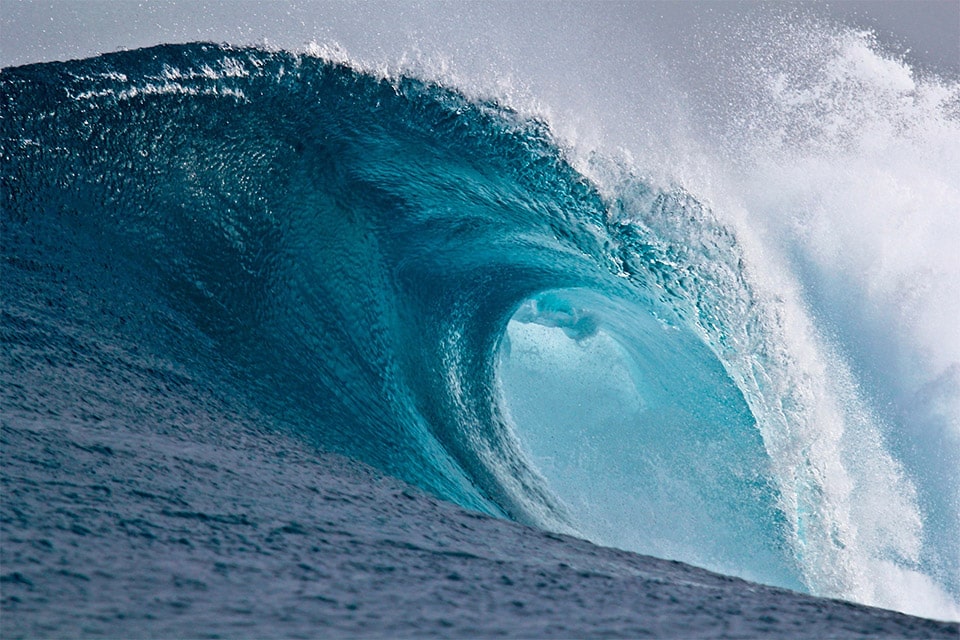
A bottom turn is what you do right after you drop into a wave. It’s the first proper turn you make at the base of the wave to set up your ride.
You angle your board off the bottom of the wave to either go back up to the face (if you’re turning up to do a maneuver) or continue trimming down the line on a green wave.
It’s basically your way of saying: “Okay wave, I caught you. Now here’s where I’m headed.” You’re using the wave’s energy to direct your line.
Why does it matter?
Because a good bottom turn sets the tone for the rest of your ride. It controls your speed, your direction, whether you can actually stay in the pocket (remember that word of the week), and whether you can go for that first trim, cutback (oh my), or even noseride down the line.
No bottom turn means going straight to the beach. And that’s okay for a while, but it gets tired pretty quickly.
You’re probably doing it already, just don’t know it. If you’ve ever angled your board a little bit to the left or right as you stood up—that’s a decent start of a bottom turn!
How to get better
First, angle your takeoff
Don’t drop straight down. Paddle at a slight diagonal so you already have some direction. Watch how the wave is breaking—you want to be paddling away from the breaking whitewater.
Look where you want to go
Your eyes and shoulders lead the turn. Head down to the bottom, then start to lean and look up the face of the wave.
Bend your knees
Make sure that you bend your knees and drop your butt (or bottom!) down so your center of gravity is lower.
Shift your weight
Try shifting your weight gently over your toes or heels to engage the edge of the board.
Turn, turn, turn
A little history
The bottom turn has been around as long as surfers have been turning on waves—but it became a distinct move in the 1960s and ’70s when shortboards and performance surfing took off.
Before that, surfers on big heavy longboards mainly rode straight or trimmed. But with shorter boards came tighter turns and more vertical surfing—the bottom turn became the launchpad for everything else: cutbacks, snaps, off-the-lips, you name it.
So many new words for our word of the week!