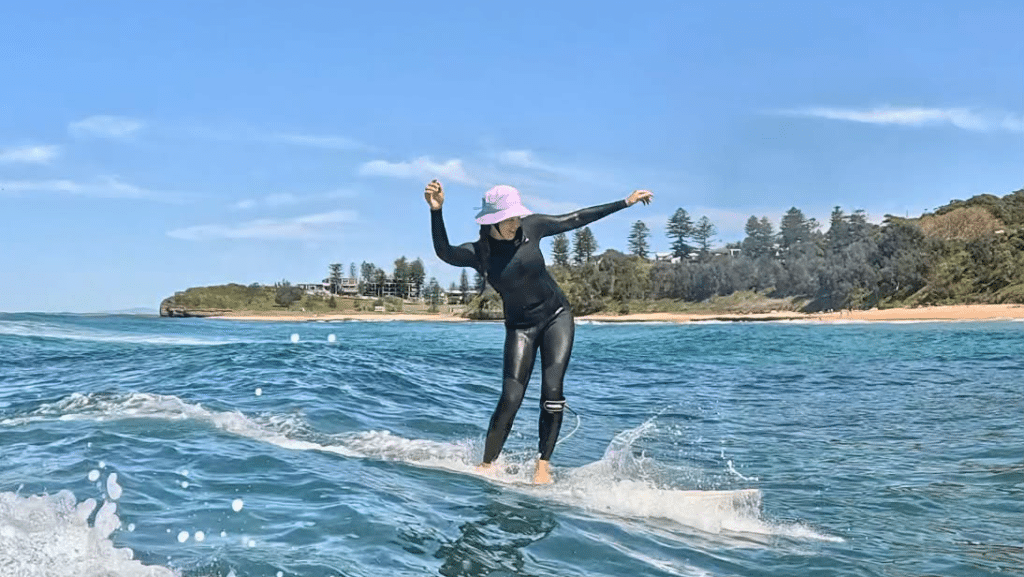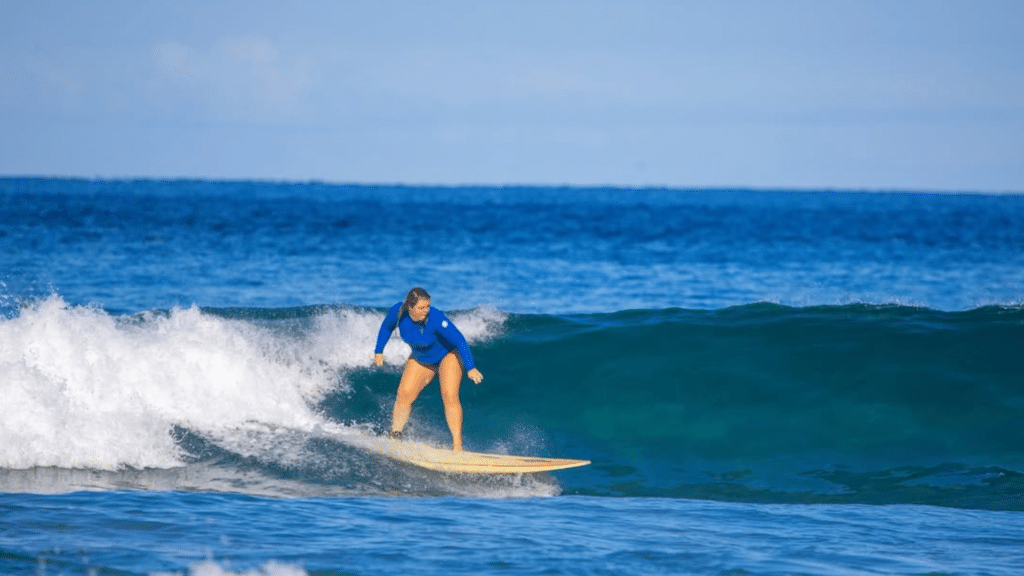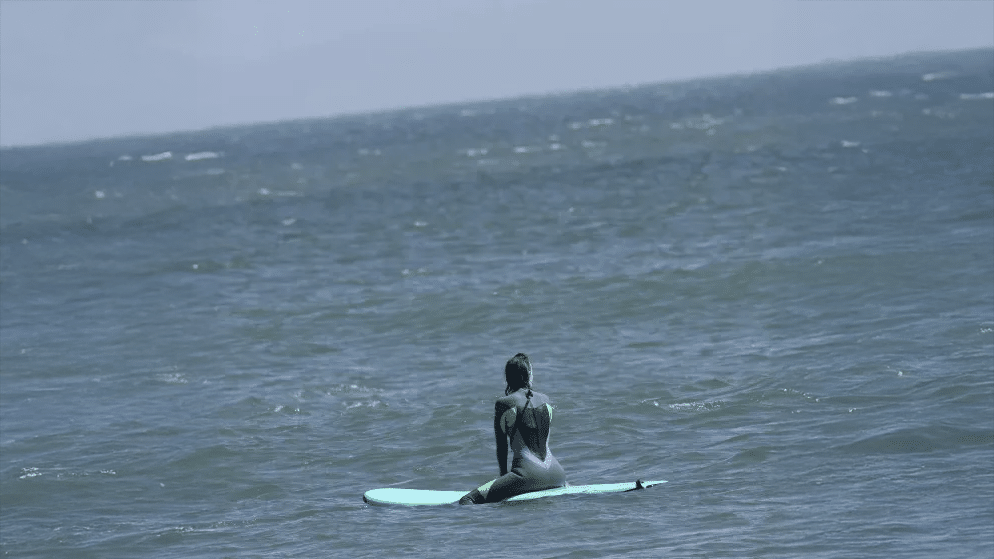
Now Reading: On building the confidence muscle and why midlife is the perfect time to start surfing with Inessa Love
-
01
On building the confidence muscle and why midlife is the perfect time to start surfing with Inessa Love
On building the confidence muscle and why midlife is the perfect time to start surfing with Inessa Love
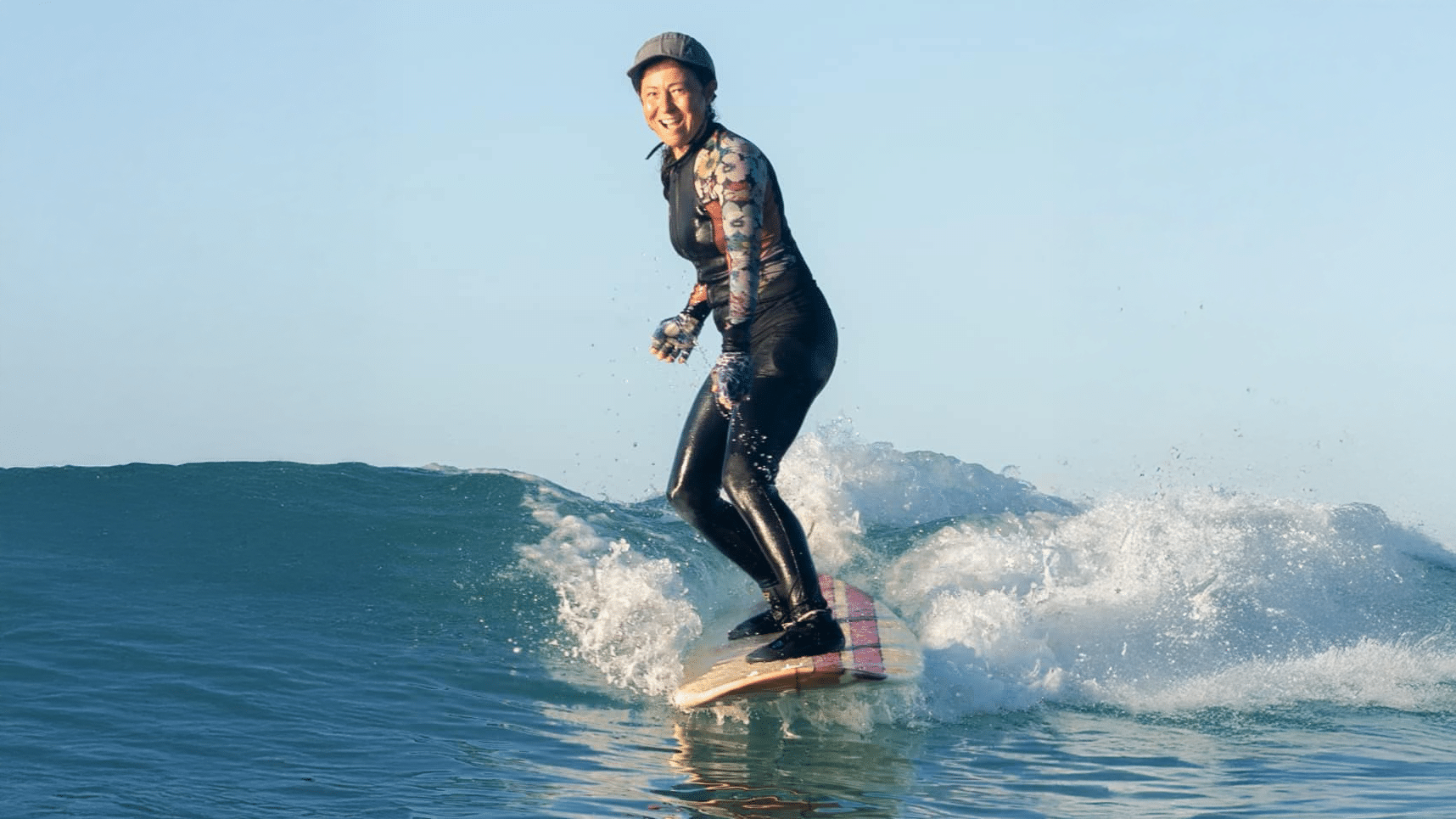
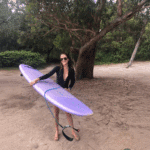
You can listen to The Wipeout Weekly episode with Inessa Love, creator of Sassy Silver Surfers on your preferred pod platform or below.
This Wipeout Weekly podcast episode transcript was abbreviated to a blog post format by my good friend Chad (ChatGPT). He takes liberties, you know. You will find the full transcript below it. Host: Zuz Wilson | Guest: Inessa Love
Zuz:
You shared a story on Instagram about being asked to leave a surf spot by two men. What happened?
Inessa:
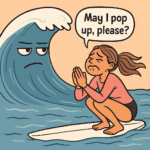
It was a three-to-four foot day—bigger than I usually surf but not outside my skill level. Two different men told me I didn’t belong there. One assumed I’d let go of my board and hurt someone, which wasn’t true. It really affected me. When I shared it online, the comments were divided—most men blamed my skill level, most women told me to ignore them.
Zuz:
Did you go back to that spot?
Inessa:
Yes, on a smaller day. Turns out those same guys had said similar things to a friend of mine who’s 73. It made me realize—it wasn’t just about me. Still, I try to see their perspective. Maybe they thought I was unsafe. But also, maybe they just didn’t want me there.
Zuz:
Tell me a bit about your surfing journey.
Inessa:
I started at 50. I wasn’t very athletic, but I practiced yoga and Tai Chi. Surfing didn’t come naturally—I kept pearling, had the wrong board, and honestly, I didn’t love it at first. But I kept going with friends. It became a social thing. After a year, I started to enjoy it on my own.
Zuz:
What are your goals with surfing?
Inessa:
I don’t want to shortboard. I want to ride mellow waves on a longboard, stay healthy, and surf as long as I can. Longevity is my goal—not performance.
Zuz:
You’re also researching older women surfers. Can you tell us about that?
Inessa:
Yes! I co-founded the Sassy Silver Surfers group for women 50+. With my research partner, we interviewed 30 women from around the world about their surfing experience—what got them started, how it’s impacted their identity, mental health, and physical well-being.
Zuz:
What themes came out of those interviews?
Inessa:
Empowerment. Joy. Surfing helped many of us rebuild confidence—what I call the “confidence muscle.” And there’s a strong emotional connection to the ocean. Many women become ocean stewards—they pick up trash, advocate for climate action. They’re ambassadors, not just surfers.
Zuz:
Do you feel older women are represented in surf media?
Inessa:
Not at all. I asked AI to generate an image of four surfers over 50—it gave me four white men. Media still ignores older women. But we’re the ones with time and money! We should be visible in ads, in wetsuits, in surfboard design. Representation matters.
Zuz:
What’s your surf setup like?
Inessa:
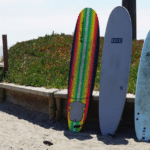
I surf three to five times a week, often on my foamy because it’s easier post-back injury. I bike to the break with my board. I used to ride an 8’6″, now I love how easy it is to catch waves with soft tops.
Zuz:
Do you have any mental tricks for staying calm in the lineup?
Inessa:
Yes! I use Reiki symbols on my board before paddling out and send a silent “aloha” to everyone. I also try power poses and always thank the break after each wave. Surfing is so mental—it helps to build rituals that ground you.
Zuz:
What message do you have for older women thinking of surfing?
Inessa:
You can improve at any age. Whether you’re 50 or 70—it’s never too late to start. Stay active, find joy, and surround yourself with people who inspire you. That’s how we break stereotypes and redefine what aging looks like.
Full transcript
(0:00 – 3:08)
Inessa: I asked Chat GPT, make me an image with four surfers, 50 and over. You know what the thing did? All men, they were all white dudes. And I was shocked.I didn’t realize that.
Zuz: Welcome to the Wipeout Weekly, the daily podcast for beginners, wannabe surfers, and seasoned Wipeout enthusiasts. No hype, no filler, just the highs, lows, and honest truth about learning to surf and finding your place in surf culture.
I’m your host, Zuz Wilson. Let’s go out.
Zuz: The story that you shared on Instagram, when you were asked to leave a surf spot by two men independently. I am very curious how this happened and what followed from it.
Inessa: Yeah, so it’s interesting. It’s one of those things that sparked a lot of controversy in online discussions, right? And how I used to tell my graduate students, controversy is good for research.
Apparently, controversy is good for building Instagram following because people just love to share their opinions. And it is controversial because it’s not black and white, right? So the question is, should I have been there or should I not been there? You know, I was just slightly out of my comfort zone. I thought I was fine.
My own perception, I’ve been surfing almost five years. And I go to that spot a lot on a smaller day. I go to that spot on the two to three day and it was a three to four day.
So it was just a little bigger, but it was a different ground. And personally, I thought I was fine. I knew what I was doing.
But again, it’s not a clear cut. Maybe I was in the way. Maybe I was, you know, endangering some people because one of the things the man said is, you know, I see all these people and then you can’t hold on to your board and it flies in my face.
And that wasn’t me because I just thought aloud. You know, so I think they just made an assumption that because I look like a cook, I’m gonna let go of my board. And the funny thing is, a few funny things about it.
When I posted that story and I, of course, and it was the next day because I’m like, I tried to write it off. And the next day I felt like it still affected me. I still didn’t surf good.
I was just like, I went to a game. So that’s when I made that post. And I said, well, what do you do? And what’s the most interesting thing is how the comments were divided.
But man, what did most men say? And again, it’s not hundred percent, but the majority of men say the following. It’s a skill level thing. It was above your skill level and you shouldn’t have been there.
They said, you know, get better first. It’s a matter of abilities. It’s a matter of safety for other people.
(3:09 – 4:04)
And it’s all about your skill level, right? And so many comments said, and I made a separate post, which I like selected some of the comments and they say, you shouldn’t have been there. You did something wrong. You know, it’s because something was lacking in your method or positioning or paddling.
And the answer is always performance. And so that’s most of the men’s comments and not, again, not all of them. And the women said is just like, okay, thanks for the men’splanation, but you’re in my way or just ignore and just keep surfing.
And, you know, if you’re on the shoulder, not dropping in, minding your business, screw those guys that are entitled. And so there was this really gender divide about what men said and what women said. And of course there was like one woman who said kind of the thing that man said, and she was attacked by other women.
(4:05 – 9:57)
She was seriously like, and I didn’t say anything because I don’t know, you know, I’m still learning. So I cannot say I was a hundred percent in the right. I thought I was fine, but there’s always so much that’s going on that, you know, anyway, that’s the story that kind of jump-started my surf-fluencer career.
So you did go back to that surf spot. On a smaller day. Now I know because there’s, and the funny thing is I have a friend who goes to that same spot and she’s older than I, she’s 73.
And we then later we talked and this was exactly the same two men who made comments to her on a different day. So that actually was really reassuring. It wasn’t just me.
We totally discussed their boards, how they look. One is like very distinct looking people. I don’t want to, you know, say anything, but she got exactly the same comments and she’s about my level.
You know, she’s not that great, but she’s not a complete beginner either. So then I started to think, okay, it wasn’t just me. Yeah.
And I went on the smaller days and one of the guys was there and I’m just like, what am I going to do? I’m going to try to build up my confidence so these things don’t affect me as much as this one did. But it was very interesting. The conversation that followed on the Instagram from this was very interesting.
That’s so funny that you guys discussed this. I know these were exactly the two guys. Maybe they’re just troublemakers.
I sort of, you know, I tried to see their perspective, right? I tried to see, you know, maybe there was some degree of, okay, this is not safe for you out here. But there was a quite a degree of don’t be here. I love it how you’re trying to explain it away rather than if I was interviewing a dude, he’d be like, yeah, no, these guys were just, you know, slagging me off.
I had all the rights to be there and they were just in bad mood and they probably thought I was a tourist. That’s the kind of, I expect that’s the answer that I would be getting if I was talking to a guy. Yeah, I guess the women would try to be more understanding of the other side.
And as I said, you know, I’m not the very beginner, but I’m not like by all means, I consider myself an advanced beginner. I probably always be an advanced beginner. You know? Well, I mean, I tell you a little bit of more backstory.
I started to learn when I was 50 and I wasn’t very sporty or athletic. I was doing okay for being 50. Hiked and I did acroyoga and I did yoga, which really both helped.
So I was in good shape, but surfing is kind of the next level thing. It’s very physically challenging. And starting in the fifties, it’s, you know, absolutely possible.
So many examples. And I’ll get back to that. I’m sure a little later in the conversation.
But I don’t expect myself to, you know, ever go to a short board, like not my goal. Don’t care for that. I’m going to ride my long board.
I’m going to be good with three foot weights. You know, currently I’m good with two to three. And if I’m really good in three to four, I’d be thrilled.
And that’s really the extent of my ambition. I just want to stay healthy and do it for as long as I can. So that’s really, my ambition is about longevity and not like how intense I want to get with it.
Right? So that’s why I say, and I’m okay being an advanced beginner, right? I don’t have that when you got to be in your fifties. And that’s what happened to me. Like, I don’t have that huge drive anymore.
I can just enjoy being my level. And that’s the advantage. That’s the beauty of being older is like, and it’s not just me.
I ask so many women on my page, how is it to be an older surfer? And one of the things they say is, you just do it for yourself. You just do it for enjoyment of it. It’s interesting that you say that because I actually asked this question to everybody I interview.
What level do you think you are? And I asked advanced surfers. They never say advanced. They always said like, I’m like intermediate, you know, like I’m like the intermediate, maybe a little bit more than that.
I’m like very, very comfortable. I can serve eight feet waves. And I asked this question, Matt Warshall, who wrote the Encyclopedia of Surfing, and he’s in his sixties right now.
And he used to be a pro surfer. And yeah, he doesn’t say that he’s advanced anymore. He’s kind of like, you know, upper intermediate.
But when he goes out, he probably has as many, he sees as many obstacles in the surface as we do as beginners, because he doesn’t do it every day. But you surf in Hawaii, and you started surfing in, was it 2020? It was during the pandemic. Yeah.
And how did you find, how did you get into it? What drove that decision? Random, honestly, it was random. And thanks to COVID. This is the best thing COVID has done for me.
Because in Hawaii, as I said, before I got into surfing, I was into hiking. And during COVID, they closed hiking trails. So it was just like the safest place to be and the healthiest place to be is on the hikes, but you couldn’t go hiking.
But of course, they can’t close the ocean. They’re going to be a revolution here in Hawaii. So the ocean was open.
(9:58 – 10:15)
And my friend who is just about my age, maybe a couple of years younger, she was taking a surf lesson. And she said, Come and join us. And until that moment, it never entered my head that I could be surfing.
I’m an okay swimmer. And I’m not like the greatest. I feel comfortable swimming.
(10:15 – 10:50)
I don’t like waves. I guess I still don’t like big waves. I’m scared.
I had an incident incident when I was younger on the beach break, that I was just playing in the waves and ducking under and it just smacked me on my back on the sand. And I was just like, whoa, something I just didn’t expect the power of the wave. I was in Virginia Beach like, I don’t know, two decades ago, probably.
And so I was never into like big waves. And it never really occurred to me that I could be surfing, I could be learning to surf at 50. It was just like a month or two before I turned 50.
(10:51 – 12:18)
So I’m just really grateful for that friend, and for the chance and the opportunity that it entered my life like that. Do you remember if you popped up during that first lesson? I’m pretty sure I did. I did.
Yeah, I’ve also done Tai Chi for many years. So my balance and my coordination and yoga and Tai Chi. So I have a pretty good balance and coordination.
And yeah, but you know what you’re asking me? I know why you’re asking me this because a lot of people say it was a love at the first sight. It wasn’t. It completely wasn’t.
It was just an okay thing to do because there’s nothing else to do. And so I started going with this friend who introduced me and a third girl, well woman, she’s actually older than me. So three of us would go regularly.
It became the thing three of us did. So it was a social thing. And I hear that from so many women that it became for me a chance to hang out with two of my close friends.
And surfing was kind of like, okay, we’re gonna go surfing because there’s nothing else to do. So it took me a long time, Susana, to like surfing. I really, I was the worst of the three.
I would purl all the time. I would just purl all the time. I don’t think I had the right board for me.
I’m small. I’m 5’2 and 110 pounds. So I could not manage my board.
(12:19 – 13:07)
I would purl. But it was a good exercise. And I was with my friends.
So it was good. And literally for a year, I just did it because they were doing it. And slowly, I started like, oh, it’s kind of fun.
I don’t think I went on my own for the whole year. I would just go with my friends. And then slowly, I started kind of getting the hang of it.
As I got a little better, not purl so much, I started to be able to go on my own and just like, oh, I can actually do this. Took a long time. So there wasn’t like one moment when you’re like, oh my God, you know what? I love this.
No, it was not one moment like that for me. It’s like when I say, you know, sometimes you have love at the first sight. And sometimes it’s love that grows over time.
(13:07 – 13:21)
And mine is more of the later. It’s really grown me over time. What are your favorite breaks where you surf? Well, now that I’m on Oahu, my favorite break is called Pops or Populars.
(13:21 – 13:29)
Are you coming to Oahu? I am. So I’m going to take you there for sure. That break, when it breaks, it’s fantastic.
(13:30 – 13:37)
It’s a little bit longer paddle, but the wave is nice. It’s not fast. It’s just beautiful.
(13:38 – 14:01)
And when it’s too small, that break is further out. So it doesn’t break on the smaller days. Then I’ll go somewhere else, you know, depending if I get a friend, where we’re going to go.
So I’m, you know, there’s many opportunities. That’s really, I’m so lucky. So I’ve been living in Hawaii eight years before I started surfing and now I’m beating myself up.
(14:01 – 14:25)
It’s like, why didn’t I start sooner? Why didn’t I think about it? Travesty. Yeah. That’s the thing.
When I was busy with raising my kid and building my career and, you know, that’s what happens for us women. We’re just all about other people. So I like so admire women who are younger and able to say, no, this is my thing that I’m going to do.
(14:25 – 14:51)
I wasn’t like that when I was younger and I kind of regret that. Do you ever travel to, because you were in the South Shore, but do you ever travel to the North Shore? On the winter when there’s nothing in the South Shore, I’ll go drive up. Maybe once a week, once or twice a week, I’ll go to the North Shore.
It’s not that far. It’s less than an hour drive. And how often do you surf now? Now, maybe three to five times a week, I guess.
(14:52 – 15:13)
Nice. Do you go out like first thing in the morning when there are no crowds? I wish. I’m not the real morning person.
I go maybe around eight, eight or nine, eight o’clock, eight or nine, like comfortable. But sometimes it’s not bad because the morning can be crowded here. Unless you really like don’t patrol like 520.
(15:13 – 15:39)
There was someone visiting the other week and she went really early because California time. I’m like, OK, 520. I was in the water first time ever.
And there was not that many people, but there were quite a few people, I have to say. So there are there is like kind of shifts, right? There is a don’t patrol shift, early morning shift, sometimes mid morning. It’s actually the best here, less crowded because all those pre work people leave.
(15:39 – 16:10)
Right. And then like around 10, sometimes even 11. Yeah.
Before the lunch crowd comes. Since 2020, when you started surfing, did you notice any changes like in the lineup that were more people, more women, or is it still the same? Because it is it is Hawaii. It is, let’s say, Waikiki.
So it’s always busy. Yeah, I cannot tell. I honestly notice now I pay attention more.
(16:10 – 16:19)
Right. So on most breaks, there are quite a few women here. Not that one that I got yelled at.
(16:19 – 16:58)
That’s it. But still, there’s sometimes still women on that one, too. But most breaks and what I am most interested in now is when I see older women surfing.
That’s a personal interest of me to meet and learn about their stories and share their stories. And because I am personally inspired by older women surfing and I know a lot of younger women are inspired by that. Like even today, there was a post on your group, right? Someone in their 40s and late 40s and struggling with arthritis and almost thinking this is it.
(16:58 – 18:36)
Am I going to quit? And I want to send the messages like, no, there are people surfing in their 50s, 60s and 70s. And that’s part of my mission is just to show that to inspire each other. Right.
So we can do this longer than I thought was possible. You see, I love I love this approach because I think I read this somewhere on Reddit. It was one of the male surfers who was talking about when should he retire from surfing? Which I found it absolutely bizarre.
But he he was saying maybe I should just retire 10 years ago. What does it mean? Like you don’t go out at all or is it like you’re a competitive surfer? But no, he was just like giving up on the entire sport. Yeah, and it’s a personal choice, I suppose, right? But what inspires me is when I meet women who are now in their 60s, for example, and they say, I want to surf 20 more years.
I want to surf until I die. And it’s not just one. I’ve heard it from more women than I’ve started to interview and interact and share their stories.
So many women just want to do it as long as possible, as long as possible. So I don’t know if it’s a if it’s a gender thing, because men think, you know, if you if you can’t be like the best, then you shouldn’t do it. And I don’t feel that way.
(18:36 – 20:53)
If I can’t be the best, I can’t be OK and still have fun and enjoyment and health benefits. One of the ladies I made a story about said surfing is a fountain of youth, you know, and I love how she put it. And it is.
I feel I’m almost 55. I’m going to be 55 in a few months. But I feel like I’m strongest I’ve ever been.
I’m in the best physical shape of my life. Now, I’ve never been an athlete. I’ve never been into sports.
You know, I’m more of your kind of yoga and hiking thing. But I am feeling strong and and not just me. Right.
So many people actually the post they made the other day. For me, 50s has been the best decade so far. And so many women say the same thing.
So for you younger people, there’s something to look forward to. You know, 50s is the best. One thing that I’ve noticed is that there are like two types of surfers.
One is like it’s all about waves. I need to catch waves. This is my wave count.
If I go out in the ocean and nothing happens and I don’t catch anything, it’s a day completely wasted. And then there’s this other type of surfer when we just because I include myself in this, we go out into the ocean. It just sit there on the board and just take it in.
We catch something. Great. We don’t.
Still great. Would you agree? Yeah, I’m more of that kind, too. I love catching waves, of course.
You know, I like the adrenaline. I love the excitement of it. I don’t think I ever had a session which I would say I caught zero wave.
At least I’ll get some whitewash or something, you know. So, yeah, but I try not to get hang up on how many waves I caught. However, when I do wear my watch, I do look at my stats.
You know what I mean? It’s addictive. It’s like a video game. It’s a game, right? Oh, what’s my longest wave? Because, you know, here in Hawaii, you get long waves.
(20:53 – 21:44)
50 seconds or like, right? It’s not like a beach break that is done in 10. So it is exciting. I like the numbers.
I like to look at that, too. But it’s never my goal. At least I don’t want it to be my goal.
My goal is health, fitness, mental health. It’s my therapy. I’m sure you heard that before.
It’s totally my therapy. And so many people say because of all this chemicals, right? It’s a natural antidepressant, natural everything, mood booster. It’s a natural mood booster, unlike anything I’ve experienced personally.
Is there anywhere else than Hawaii that you would like to surf? Or you’re like, you’re so spoiled. I know I am. I’m so spoiled.
(21:44 – 22:28)
I like I don’t have this bug of going places to surf. I have 20 minutes from the best surf breaks ever, right? I did go to Costa Rica and Pavone’s, of course, the left was pretty fantastic. Some of their beach breaks I didn’t care for.
So I have a very like two weeks of experience of something else that’s not Hawaii. And, you know, never say never. You know, one day I do want to, but it’s not like a burning desire for me like it is for women who are maybe at less favorable places in the world, right? And I can see the appeal of, you know, traveling to surf.
(22:29 – 23:17)
Yeah, I travel to surf on my bike 13 minutes. It’s a beach break. And unfortunately, right now it’s bigger than I would like it.
So I’m waiting for the summer waves. And you’re able to take your board on your bike? I can take my foamy. I can take my longboard.
Very, very easy from where I live. Nice. I love the foamy.
So something happened a few months ago that I had like a scare with my low back. All of a sudden my low back started going out and it wasn’t from surfing. I think it was more from gardening and doing too much sitting.
I’m writing a book. I actually finished one book. So I was sitting too much and doing… Anyway, so then I went to physical therapy.
(23:17 – 23:57)
Eventually, I realized it’s not going away. And I’m a yoga teacher. And I didn’t know how to help myself with the bulging disc kind of issue.
So I went to physical therapy. And after like two weeks, I started getting better. And he told me, you can go surf.
You just can’t carry a board. I’m like, okay. So what do I do? Because I couldn’t lift anything.
He told me that good for me to lift, but surfing apparently wasn’t bad for me. So I borrowed a foamy from a friend. And I’m like, okay, I’m going surfing that same day.
I’m like, okay, I’m going. And I kind of like fell in love with the foamy. It’s just so easy to catch waves on it.
(23:58 – 31:19)
Then when I healed enough to go back to my, you know, a proper board, I just almost didn’t want to. So what board do you normally surf on? I have, I’m a small person. I surf 8’6″.
So I have a couple of 8’6′ boards. One, I just recently got Takayama in the pink, which is 8’6″. Yeah.
And I’m trying to fall in love with that board. It may grow on me. And the other one I used to ride called, by some company called Blue.
I don’t know what it is, but on the back of it, it says some like for surf chicks, something about surf chicks. And I figure out it’s made for women. So I started surfing that.
And I kind of like that board, but I don’t know. There’s nothing like the foamy. What’s your sense on the foamy? When I started surfing in the UK, I surfed on the 7’6″, and it was Epoxy Bic.
I don’t think you can actually get them in the US. And that was, I had no idea that that board was probably too small. I should have, if I got a bigger one, but we had a group of surfers traveling from London to North Devon and Cornwall.
We were all beginners, most of us. So we didn’t know what we didn’t know. And then when I moved over here to California, I got a 9’6″, fiberglass, and it’s a custom board.
And it was made for surfing in Bolinas, just outside of San Francisco. And it’s the best board ever. However, it’s not necessarily perfect for the beach break that I’ve got here in Venice.
So sometimes when I don’t want to get hit on my head, I just take a foamy. So I thought, okay, well, let me see if I can actually pop up on a wave storm. Because the longboard is so stable.
It turns so beautifully, like everything about it is so perfect. So yes, I went back to an 8′ wave storm. And I’m making progress on that.
So now I’m thinking, if I go back to my 9’6″, this is going to be like a Cadillac. So that’s, yeah, I’ve got that. And I’ve got a 7’6″, magic carpet.
So it’s like, it’s a smaller board. And it’s supposed to be a, like a longboard without those two feet in the middle. That’s how I, that was sold to me.
But it’s got very, very little volume. So it’s very, very hard to, to pop up on. So I don’t actually use it.
But one day, fingers crossed. So you don’t want to try shortboarding at all? Nope, not shortboarding. No, I want to get better longboarding.
The reason I got in the pink is I want to try to walk to the nose. It’s not like my primary goal or motivation. But that’s something I could work on.
I could work better on turning and carving a little bit, what you can do with longboard. But yeah, that’s it. So is this your only goal? I want to get better.
I really do want to get better. I want to get so comfortable that I can serve, as I said, three to four, five, you know, I’m five feet. So five would be head high for me.
That would be good. If I could do that comfortably, you know, so occasionally I can get it. But those are my goals.
And, and yeah. How do you feel in the lineup? Do you feel comfortable? Depends on the spot and how crowded it is, right? So I still, when it’s very crowded, you know, Waikiki canoes here, I do not like it. I still do not like canoes, even though that when that friend visited and I took my foamy and I was like doing really good and it’s still not my favorite.
So I don’t feel super happy there. Some other breaks that I go to pops, I love pops, you know, especially on the, just a medium sized day, not huge, but pops, you know, I can handle four to five at pops. It’s different.
It’s a different wave. It’s kind of a slower, not so steep. I feel most comfortable there.
I would think. Yeah. Do you have any mind tricks or any advice for people who want to feel more comfortable in the lineup? I don’t have really advice to go in a crowded place because I avoid crowded place.
So it would be in, in a higher state, not sincere for me to say, Hey, you can do it. But I go to less crowded place, right? I go to less crowded place. And of course it’s surfing is so mental.
Like the, how we started this conversation on the days that I didn’t feel confident, I couldn’t serve. So surfing is very, very mental. So for me, I have few rituals that I do right before I paddle out.
I do a little, I’m a Reiki two level trained. So I do a Reiki symbol on my board and I’d also do it around me for everyone in my break. So it’s kind of creates that little ritual for me to feel safe.
So that helps me. I’ve asked recently that question that other people have other little rituals when they go out. So different people find what works.
Right. And then I, another ritual I have is I say, thank you after each wave I catch and to the break, like, thank you for ops. Thank you bowls.
Thank you. It’s just a little cute thing. I don’t think that helps me with safety issue, but the first one is really about my safety and I believe in that, you know, so it helps me that put my mind is okay.
I have this protection for me and people around me. I always do it first for me then put people all around on my break. And then recently I met the friend here and she told me this power pose is when you stand shoulders open and she does, she, we did that before paddling out.
And I think I haven’t quite integrated it into my routine, but I would like to. And it’s just interesting because if you put your body in this position, your mind kind of catches up. So when I teach yoga, say we do warrior two and I always tell people, look, now you channel that warrior.
Now you channel that strength because once you put your body in the shape, the mental state kind of calibrates to that. So the idea is before paddling out, standing like really strong, you know, like shoulders out, you know, maybe hands at your waist or just like really power pose, whatever it is for you. And just channeling that energy.
So I’ve tried that a few times and once on my board, because you can also sit on your board and imagine yourself in this power pose, right? So those are the few mental tricks that I do. But there’s so many out there and it’s totally mental. Don’t you think it is? Do you smile in the lineup? Not intentionally, but that’s a good idea.
(31:20 – 31:31)
Well, you know, I try. So another thing I learned, actually, after that incident, I kind of say aloha to everybody. And sometimes I say it loud and sometimes I say it silent.
(31:32 – 33:44)
So I kind of try to bring that vibe a little bit more where I am. And of course, with that comes the smile, right? So I try. I’m not a super chatty, like I have some friends who go paddle out and meet everybody at the break, right? They’ll chat with everybody.
And I’m not like that. I wish I was. I’m a little bit more keep to myself.
But at least I try to, you know, send the good vibes around me, right? By just saying aloha. And even if I don’t say it out loud, I say it inside of me like, OK, aloha. I smile a lot when I go out and nothing gives me more pleasure when I see somebody who’s just starting out and they catch a wave and they realize they caught a wave and they’re on it and they come off and then they break into this massive smile and I smile at them.
But I don’t see many people smiling in the lineup. It’s just so it seems so stressful. Like you’re there and you’re like, I’m going to catch a wave and I’m going to ride it and then we’re just going to paddle back.
And I think that just takes the joy out of surfing. I don’t do that. And I think it depends on the gender balance, right? If there’s mostly men, I think that would be more that way.
And sometimes there are more women than men and there will be a more relaxed kind of feeling to it. One of the podcast guests that we had was Kyla Peterson and she runs a surf school in San Diego, but she goes on a lot of retreats and surf camps. And she says that at some breaks, the gender balance is obviously in favor of women and they sing and they just, you know, they’re being so more relaxed and everybody’s clapping for each other.
I think I would love to see that in California. I don’t think I will. But yeah, but that’s a dream, right? You interview a lot of women because you’re writing a book, right? So last summer, well, first, let me backtrack a little bit and tell you about the group.
(33:44 – 33:58)
Yes. Right. So how it started is actually it started with girls who can surf good and Lisa, my partner in this venture is Lisa Alfano, who has a business called Ageless Adventurers.
(33:59 – 35:29)
And she made a post on your group and asked, are there any women over 50 in this group? And some, I don’t remember exactly her question, but there was a long, now she says over 200 comments came in on that post. And I was one of them. And she said she was thinking about starting a group for older women.
And I jumped in with her and I said, look, I was thinking about the same thing. So I was thinking already about it and she was thinking about it. So then we got together and talked and decided to go in on this together.
So we started this group, which is called Saucy Silver Surfers, and it started as a Facebook group. And now, you know, it’s not huge because we’re very exclusive, right? We only have to have the woman 50 and over, but there are women from all over the world. There’s more than a thousand people in that group.
And I met through that group, another woman who is from Russia, you know, I’m from Ukraine, as I mentioned, and she was here in Hawaii for a conference and we surfed together and we hit it off, kind of friend vibes. And we decided we’re both researchers. So my background is research, it’s economics research.
But later years, I’ve sort of branched into happiness research, happiness and well-being. And she is a communication research about media and how media represents different populations, especially underrepresented groups. So that was her focus.
(35:29 – 39:45)
So we talked and we’re like, hey, let’s write a research paper because that’s what we do as researchers. So we started talking and eventually got this project off the ground. So last summer, we interviewed 30 women from our group, including the two of us.
Yeah. So I have 31 hour interviews, maybe less than an hour, 40 minutes to an hour interviews. And there was a structured interviews because, you know, it’s research.
So we had to ask the same questions of everybody. And then, of course, variations because it’s approved by whatever you call like human research because it’s research in humans. So we had to get it approved and it is approved.
And so we have this wealth of data from these women and we ask them everything. Why did they start surfing? What are the challenges? What are the benefits? What are the physical benefits, mental health benefits? How did that change your identity? That’s one of the things she wants to research and both of us. And I’m from my happiness perspective is how does it change your mental health and well-being? Because that’s my angle.
So now we have this data and we’re starting to process it. And we have now two papers that my colleague would be presenting at the conference in Singapore, actually in July. Wow.
This is a conference called International Association for Media and Communication. Now you’re interested in media and communication research. And the conference is about communicating environmental justice.
And it’s in Singapore in early mid-July. And so the two papers that we are working on is one is about how surfing and midlife is empowering for women. But the second one, and this come up after interviews, and we called it communities of care and silver surfers as ambassadors for the ocean.
And what we learn from people is we get in such a deep connection with the ocean and its creatures and the beach and everything that surrounds it. It’s kind of like we develop a relationship with the ocean, right? And it’s relationship. And a lot of people become what we call ambassadors because it’s an environmental conference, but they kind of take to caring for the ocean in whichever way they can, you know, some clean up the beach, some just have this incredible connection and they become ambassadors for climate and improvement in our environment, ocean environment.
So that’s kind of an angle that came out of this research. So there will be two papers presented at this conference. And this one won the award from the conference, which is nice thing.
Yeah. So it’s kind of like all these things happen that I didn’t ever expect to happen. But I was talking on another podcast and what we decided is surfing by helping you strengthen physically.
It also strengthens you emotionally and mentally, right? It gives you this what she called, it’s not my term, but I love a confidence muscle. Confidence muscle. I love it.
Cool. Yeah. So it’s like we strengthen that as well.
You can call it, you know, whatever it is, but I like that. And so I think it’s true. And I want to find out more if it’s true for more women that they’ve now started projects that they didn’t think they would do.
Right. Just because surfing, especially later in life, it’s a little different ballgame, but gives you that little extra confidence muscle building because you have to be confident to paddle out there. Right.
Or insane confident. I love that. Yes.
True. Yeah. Are there any common themes that you are noticing like off the bat in all the data that you have? Oh, yeah, of course.
(39:46 – 40:27)
Like everybody who I interviewed said it’s been amazing for my well-being. I’m happy when I surf, right? That’s the common theme. I’m happy when I surf, when I can surf.
And a lot of people like some people make major changes in their lives. Some move closer to coast. Some decide, you know, to work online or, you know, to allow for that possibility.
So the main theme really is what I’m interested is empowerment. My passion is how it can empower women in midlife. And to kind of breaking down the stereotype of what we thought fifties or sixties or even seventies look like.
(40:27 – 41:31)
It’s not what we thought. It’s not what I thought personally, because I’m sure in your culture too, in my culture, in your fifties, a woman, you are downhill. You’re babushka.
I don’t know. You are definitely a babushka. Yeah.
You are a grandma sitting at the market and selling roasted sunflower seeds. Right. So that’s an image that I have.
That is the exact image that I would have. And I probably did have when I was when I was growing up. But obviously now I look at my friends and who are a little bit older and I’m like, no, we’re still as we were when we were in our early thirties.
Nothing has changed apart from the fact that obviously physically we’re maybe less able and we need to take care of ourselves and things are going to hurt if, you know, if we do some physical activity. But you’re absolutely right. I spoke to my mom this morning and when I talk to her on the phone, I forget how old she is because she still sounds so young.
(41:32 – 44:24)
Nothing else has changed apart from the fact that, you know, she’s in her seventies now. Yeah, there are several women. One woman, I made a story and she is 70, maybe, oh my gosh, 73 feels like 55.
You know what? That’s what people say. It’s like, I can’t believe it. And it’s true.
And then one of the questions we ask is, you know, how has this affected your body? Like are there physical challenges? And it’s true. There are physical challenges. We don’t want to minimize that.
But what your age gives you experience to deal with it. So you know that, okay, you can deal with it. And so many women I met who got knee replacement, hip replacement, shoulder replacement, and then they went back to surfing, right? So all this diagnosis, it doesn’t have to be the end.
And when I see people get really into upper seventies, okay, they paddle on their knees, but they still out there. So you modify like me, I had to switch to the foamy because of my back. But what I learned is you learn to modify things, but just don’t stop moving because if you don’t stop moving, that’s the fountain of youth.
The movement is the fountain of youth. And surfing is just such a perfect combination of, you know, the water and the movement. And you’re out there and in nature, you know, the sun is shining, you’re getting your vitamin D and yeah, it’s a perfect sport for anybody at any age, but also specifically for people who are a little bit older.
Yeah, it’s completely like changed my whole idea of what our old age is. And the more people I meet who sort of totally defy these ideas, you know, it helps me. I love sharing their stories like on Instagram, because first it helps me, it inspires me, and I know it inspires other people.
And I’m very passionate about changing that stereotype because I was dreading being in my fifties. And I hear from so many younger women the same thing. Oh, I was dreading turning 40.
I was dreading turning 50. You know, as I said earlier, fifties has been my best decade yet. And it’s not just me.
A lot of people say that. And some people, oh, one more said she’s now 76. One of a few older ladies that I’ve interviewed, she said she is happier in her seventies than she was in her sixties.
Wow. Because she went back to surfing. She surfed as a young girl, like a teenager because of the social circle.
And then she stopped for 60 years. And now she went back in her seventies and now she’s happier than she was in her sixties. Isn’t that inspiring, Susana? So, so inspiring.
(44:25 – 48:18)
I just love stories like that. So I’m out there. My mission is, part of my mission is to share stories like that, to break down those stereotypes and to give hope, to give inspiration because really we need more.
We need to put older women at the proper place in the society as a respected, honored, wise being, because women are, you know, have that wisdom. We have so much to offer to make this world a better place. Yeah.
So if we have more women who are strong and empowered, the world will be a better place. So it’s my small little piece of that through sharing stories of older women surfers. Yeah.
We all do like a little bit. What a great contribution. I couldn’t agree more.
We don’t want older women to be invisible. And unfortunately that’s what tends to happen in the workplace. As you reach that age, it’s harder to get a job because it is ageist, however we look at it.
And I love how much you inspire older women to, you know, take up surfing and then continue until they die. And I find it so fascinating. And I’m also envious to a certain extent when I look at younger girls.
So they say, oh, no, I started so late surfing because now I’m 25. I’m like, oh, my God, you are so young. You’re so young.
25, 25. But still, they love it. They embrace it.
And they will continue, hopefully, for as long as they can. And I love these new generations that just like, you know, they don’t give a fuck. It is what it is.
We’re just going to go out there. We’re not going to take any shit from guys in the lineup. And we’re just going to surf.
And I find that equally inspirational as the stories of older women. So just looking at these young girls and they’re just killing it. Yeah, true.
And it’s changing like societal stereotypes, right? I don’t know if you’ve seen the post I made that I asked Chad GPT to make me a picture with four surfers 50 and over. That’s all I said. Make me an image with four surfers 50 and over.
You know what the thing did? They’re all men, all white dudes. They were all white dudes. And I was shocked.
I didn’t realize that. And Chad GPT, of course, it’s a mirror of what’s in our media. It’s what we are being fed on average, right? It’s a statistically representative image of surfer.
And I’m here to change that. And you are too with what you’re doing, right? You’re inspiring younger girls. I’m inspiring older women.
Let’s change that image, right? Because it’s all in our media. And it’s changing, but very slowly. Like how many older women you see modeling surf related stuff? Zero.
Zero, right? When I interviewed, this was one of the questions we asked. How representative did you feel in the media? Almost zero. I think one out of 30 said that she saw a commercial for like an older age community.
And there was a woman surfing in her 50s or something like that. But yeah, why don’t we have older women modeling swimsuits and surfboards and surf heads? Because actually, older women are the ones with money as an economy. I tell you, they are the spenders.
(48:18 – 50:15)
So why we don’t have ads targeted to them and showing to the whole culture? Look at this older woman surfing in her 60s. So that’s another aspect of it as a media changing perception of what a surfer is. I think it’s going to take us a while because this is also one of the missions of not only girls who can’t surf good, but also, you know, the media arm of it, which is the YPi Weekly, that we just want beginners to feel empowered.
Beginners of like, whether it’s men or female, whatever age they are. We just want to build their confidence quicker so they can get out there in the lineup and enjoy it. But I was thinking about what you were saying.
And do you remember how long it took for brands, not surf brands, but for any like sports brands, to start including photos of women who were larger on their websites? I remember, like, I think when Fabletics started, I think they were all very much cookie cutter size, I don’t know, to two, zero to two. And now, yeah, and now I think I remember it correctly. And now you can see three different sizes of the ladies.
You can see, you know, the slimmer ones, the ones that are maybe more athletic, and then the ones that are plus size. But that took forever. Because we still don’t see many older women surfers modeling anything.
So hopefully that would start to change soon. We don’t see a lot of brands that are taking time to create surf-related gear for women, either. When you think about wetsuits.
(50:15 – 51:09)
I don’t think about wetsuits. Damn you. Yeah.
But wetsuits. Yes, that’s one of the reasons why women get custom wetsuits sometimes. Because they’re not necessarily been designed for women.
Or even sometimes surfboards. That’s why anybody who’s progressing in surfing just gets a custom surfboard made. So yeah, hopefully, as you said, women and older women, they’re going to have money.
So the brands go where the money is. Yeah, they should come. And the thing is, it’s not just about the brands, it’s changing the public image.
And it’s inspiring more people to try to give it a try. And surfing is not for everybody. So my message is stay active, find what you love to do.
(51:10 – 51:52)
We happen to love surfing, and I’m a big advocate. But finding something you love to do, even if it’s not surfing. But the message is the same, is you can be strong and empowered in middle age and beyond if you find something to stay active.
That’s really the key, it seems to me. I think it is. And before we finish, I know you do a lot of exercises to help you with your pop up.
And just generally with surfing. Would you mind sharing some of these with us? I do pop ups every time before I paddle out. I do 10 on the beach on the sand.
(51:52 – 52:13)
So I just drop there and do them. Don’t care what other people think. And that’s the other thing that comes with age.
Don’t care, I’m going to do my pop ups. So that’s one thing that really helped me. In our group, Facebook group Sassy Silver Surfers, we did a few rounds of a challenge, 30 day challenge in which a bunch of women who wanted to do a practice on land in my house.
(52:14 – 54:27)
So we do that. And I teach yoga once a week for surfers. I teach yoga for surfers.
And of course, I include pop up practice in my class. And sometimes if I cannot surf, I’ll do either push ups or pop ups. I’m still working on my upper body.
I’m not as strong as I’d like. So I would practice those. I recently made a post which I called three fitness essentials for midlife surfers.
And what I said was upper body strength, of course, for paddle and pop up. You need to have that upper body strength. You need to have hip mobility because for pop up, you’re bringing your whole legs and under yourself.
You need to have that, of course, core, right? Core strength and hip mobility and balance. So I offer those exercises on my Instagram just as a sample. And I teach that in the yoga class.
So I would say those few things, upper body and core, which you can do planks, push ups. You can do all different sorts of hip mobility exercises. Squat is excellent.
So I have a coffee table and a cushion. And sometimes I’ll eat my meals just sitting on the floor. We sit in the chairs too much.
And that’s why everybody has an issue with tight hips, everybody. And the older you get, the worse it is. So sit on the floor.
That’s like the easiest thing to work on your hips, building into your life. Like eat. And then sometimes I just sit in a squat or sit and cross leg.
So that’s really important. And what did I say? The balance. And of course, anything you do for endurance, because if you’re like out of gas by the time you add the lineup, then you’re not catching anything.
So working on endurance in any way, shape or form. And it could be as easy as just brisk walking, running, biking, cycling, rowing, whatever it is. Or just paddling your board along the beach or swimming is really good.
So those are the four things that I would say a good place to start. And that’s the thing. You are as strong as your weakest link.
So for me, my weakest link has always been like upper body strength. So I have to work on my weakest link. For some people, it could be the balance.
(54:27 – 54:40)
For some people, it could be the hips. So find what’s your weakest link, because that is going to hold you back. Right.
Great. I think my weakest link is hip mobility. That’s for sure.
(54:41 – 57:21)
Yeah. So I have actually on my Instagram, I have this little cute hip dexterity exercise that I learned from a hydro mind, the surf dude. And then I give away a free hip mobility guide, which is five yoga poses that I think it’s a PDF.
So anyone can die through Instagram, text me and I will give you a hip mobility guide. And you can, this squad, of course, is going to be the squad is the king for hip mobility, because basically pop up is almost you moving from laying down to a squat. Yeah.
And then you lift yourself up with your legs. So I feel like that’s the king of hip mobility exercises. But there are other ones because hips move in all sorts of directions, you know, flexion, extension, side adduction, abduction.
So yeah, that’s the thing. And it definitely will help you with the pop up or anyone. It will help with the pop up and turns and stability because the hips are really, really tight.
It’s hard to feel stable as well. But we sit so much in the chairs and that’s the problem. The more we sit, the tighter our hips get.
No sitting, no more. Yeah, sit on the floor as much as possible, right? Where can everybody find you online if they want to get in touch or follow you on Instagram? Perfect. Yes.
Thank you for that. So two different things. Specifically, if you’re a woman 50 and over, there’s a Facebook group called Sassy Silver Surfers.
But we’re very exclusive for women 50 and over just to keep a protected community. And everybody is welcome to follow me on Instagram because Instagram is public, open for everybody. And that’s for inspiration, whether you’re 20 year old or 80 year old, whatever you want.
And man, welcome to follow. If you’re inspired, if you’re learning something, if it’s helping you, anyone, welcome to follow me on Instagram. But the Facebook specifically, we’re keeping with my colleague Lisa Alfonso from Ageless Adventures so people can connect her.
She’s now organizing surf retreats for women, especially older women. And yeah, so those are two resources where we can find each other. Is there one thing that you would like the older women to know about surfing? One single thing.
One single thing I would say you can improve at any age. No matter where you start, you can improve. And I find it’s a very hopeful message.
(57:22 – 57:55)
Yeah. Even if you’re starting as late as possible, you will improve. They have been studies of people doing weightlifting in their 90s and improving, right? So I’m a researcher.
So I look at research and I strongly believe that no matter where you’re starting, you can improve at any age. That’s my message. And that’s all for today.
Check out The Wipeout Weekly for our free newsletter, more stories and ways to connect with us. Thanks for listening. See you tomorrow for more of The Wipeout Weekly.