
Now Reading: From long to short: The three dudes behind the shortboard revolution
-
01
From long to short: The three dudes behind the shortboard revolution
From long to short: The three dudes behind the shortboard revolution
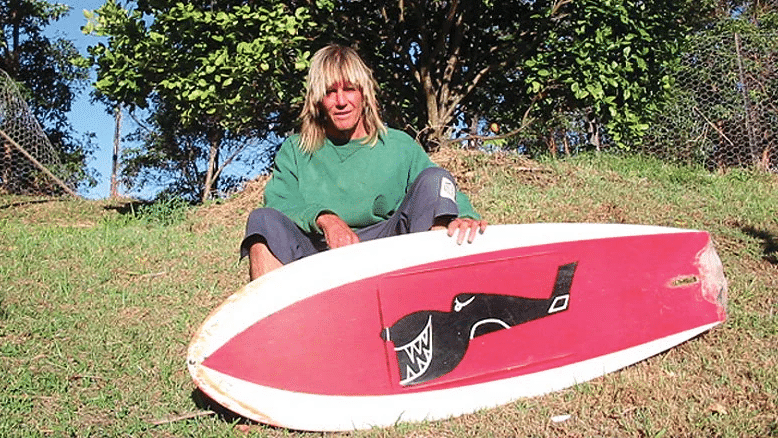
I’ve been trying to write about the shortboarding revolution for a while now, and I have struggled. But I finally figured out why.
This is the story of bigger-than-life personalities, geopolitical conflict, rushed surfboard design, threatened business interests, and the decline of surfing. It took Matt Warshaw countless pages in History of Surfing. And it’s a coffee-table book — these are ginormous pages. How can I distill this into a cohesive story and do it justice?
I guess I’ll just start and see how it goes.
♂️ Bigger-than-life personalities
There are three names that come to mind when talking about the shortboard revolution: George Greenough, Bob McTavish and Nat Young.
First, we have George Greenough from Santa Barbara. Originally a stand-up surfer who wanted to go “faster, faster,” he started kneeboarding on a 5-foot balsa spoon. Why the knees, you ask? Because the lower you go, the faster you go. Physics.
And man, he was so awesome at it. If you’ve ever seen Endless Summer, he’s that 22-year-old dude who rides the prettiest wave in the movie.
George is also known for developing a new fin resembling a dolphin’s dorsal fin, and pioneering surf photography “from the inside of the tube, looking out.” He was a visionary. When he designed his fin, he cut its size by one-third, which gave him better handling of the board. Then he embarked on the journey to create a flexible board that would move as a fish moves when it swims.
He named his second fiberglass spoon “Velo,” for velocity, and that’s the board he took with him to Australia in 1966. Matt Warshaw describes George as “always shoeless, often shirtless, he didn’t tell jokes, muse or lament, always generous with his time.”
It’s not essential to our story, but a good explanation of how someone so young could afford to travel back and forth to Australia to hang out with Bob McTavish — George lived at home, and his family was well-off.
Which brings us to Bob McTavish, 21, from Queensland, Australia, son of an accountant who left home at 16, so most definitely not a trust-fund baby surfer. Described as “bright, funny and enthusiastic,” enthusiasm for surfboard design was something he shared with George, who visited him on numerous occasions.
Here’s something Bob found perplexing about surfboard design, and I believe it must have been pivotal to Bob and George trying to solve it like a math problem: the surfboard’s areas that controlled turning and speed were in two different spots on the board. Turning was at the back, and speed was in the middle of the board. As a kneeboarder, George had managed to solve the problem for himself, but it was still beyond the reach of stand-up surfers.
One of these stand-up surfers was Nat Young from Sydney, one of the best surfers in the world by the time he was 20, with a big presence — and not only because he was 6’3″. He wasn’t actually called Nat, but Bob, and his nickname was “Gnat,” but the “G” eventually got dropped.
Whenever I read about Nat, I get the Miami Vice vibe, with his flashy cars and general impatience. All this hanging out with George and Bob led to Nat creating his own McTavish-like surfboard, which was a half-foot shorter than his usual 10’6″, with George’s new fin design, and it was quicker and more responsive than any board he’d ever ridden.
Geopolitical conflict
I’m gonna do this one quickly. In 1966, the World Surfing Championships were under way. Nat was competing against David Nuuhiwa from Hawaii.
According to Wikipedia, David won. According to History of Surfing and Nat, Nat won. What followed was surfing magazines from the U.S. and Australia trading insults. I am not a big fan of Nat at this point for saying “girls shouldn’t surf, they make fools of themselves,” so I’m gonna go with Wikipedia.
️ Rushed surfboard design
In 1967, Bob designed “a plastic machine.” I’ll spare you the technical details. It was 9 feet, very weird looking, with the flat middle section effectively cut out, the parts of the surfboard meeting in a V-shape. Bob took it out surfing and surfed non-stop for 9 hours. The surfboard controls were insane!
When Nat eventually learned about “plastic machines,” he was not pleased. According to History of Surfing, he uttered, “Why wasn’t I told?” Yeah, I don’t think Nat and I could be friends.
Enter Hawai’i. Bob, Nat, and George found themselves all together with the Witizing brothers and some other Australian surfers in Maui, where Hot Generation the movie was being shot. That’s also where another big name in shortboard design resided — Dick Brewer.
He wasn’t a big fan of the plastic machines, calling their design “unsound.” And yet, inspired by the Australians, he took his 9’6″, cut a foot out, and turned it into a “mini gun.”
Hot Generation was a hit! Everyone wanted a new board.
Threatened business interests
When I spoke to Matt Warshaw about the shortboard revolution, he mentioned people couldn’t give away longboards for free fast enough. I only get it now that I’ve understood that the entire industry got caught off guard and with an inventory of 9’6″ longboards when everybody wanted a mini gun or a plastic machine.
The big surfboard manufacturers even leaned on Surfer magazine to prevent it from doing any in-depth report on the shortboards. Some went out of business; some scaled back.
I love this description of where surfboard design stood — all over the place. Quoting Matt Warshaw: there were blobs, disks, mini guns, square tails, pintails, round tails, 12-pounders, 10-pounders, 7-pounders. Even more flexible fins. Tri-fins and twin-fins came and went. Differences between Hawaiian, Australian, and East Coast boards emerged, and so did the board colors: Australian — white, Hawaiian — red and purple, and Californian — multicolored.
Decline of surfing
You’d think that with Hot Generation and everyone’s appetite for shortboards, surfing would have exploded. But because most shortboards were made in garages rather than in factories — fewer were available. And because the learning curve was so much harder than anyone could have expected. Not to mention that the cold-water surfers were now freezing their nuts off, being half submerged, the surfing population actually shrank by about 10–20% from 1967 to 1970. Yay! Here’s how to end on a high note.
I have left out so many good stories along the way. If you’re interested in the shortboard revolution, I invite you to read Matt Warshaw’s History of Surfing, pages 238–253.