
Now Reading: Twin-what? Twinzer?! Is this a typo…
-
01
Twin-what? Twinzer?! Is this a typo…
Twin-what? Twinzer?! Is this a typo…
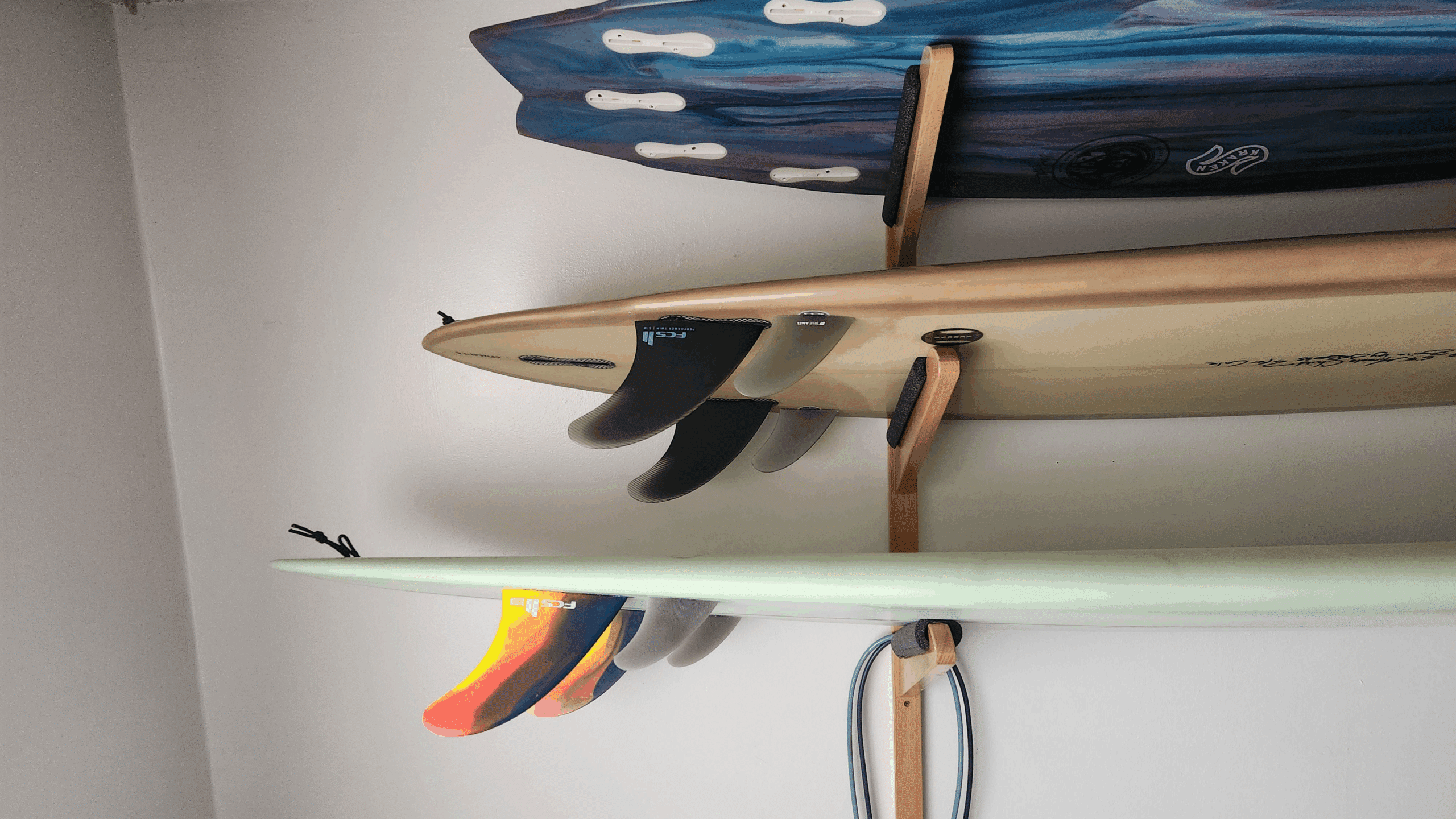
I’m sure you’ve heard of twin-fin and thruster setups. Twin = two fins. Thruster = three fins, all the same size. There’s also a tri-fin, but that’s more of a 2 + 1 kind of situation. But have you ever come across a twinzer?! I thought someone made a typo. Apparently not.
It’s 1988 — the year of Die Hard, Coming to America, and A Fish Called Wanda. And Wil Jobson, a surfboard shaper from Huntington Beach, gets the idea to reinvent the twin-fin.
The twin-fin setup was concocted in 1971, and it was a big improvement over a center fin because it caused less drag — making the board go much faster in smaller waves.
It got effectively killed by the thruster around 1981 — the year of Raiders of the Lost Ark and An American Werewolf in London.
️ Reinventing the fin setup
Wil says, “Never you mind, I’ll fix the twin-fin and make it so much better than a tri-fin!” According to the EOS, Wil corrected many of the twin-fin’s issues.
He did it by… wait for it… adding two more fins set slightly forward and outboard of the main fins. The main set of twin fins also got pushed back a few inches toward the center of the board.
So now we have — four fins! But that’s a quad, you say. No — a quad is where the fins are all of similar size.
In the twinzer design, we have two main fins — standard twin size — and two canard fins much smaller (about 1/3 to 1/2 the size of the mains). The smaller fins are positioned far enough forward so they engage the water before it hits the main fins.
But we’re not done yet! These smaller fins are also “canted out and toed-in more aggressively.” What the actual…? So many new words.
Cant means a vertical tilt. Toe-in means a horizontal angle. In the twinzer design, the fin is tilted outward with the top of the fin leaning toward the rail, and it’s also toed-in more toward the nose of the board.
And it’s not just for fun — more cant gives you looser, more responsive turns but reduces straight-line speed. A more aggressive toe-in does pretty much the same.
♂️ Why traction matters
You end up with a board that has more traction than the twin-fin but the same speed and responsiveness. I know what you’re thinking — so the only benefit of this redesign is more traction?!
Yes! But that matters a lot. With more traction, your board sticks to the wave face during turns instead of sliding out. Shapers are a bit obsessed with tweaking traction to control speed and looseness for the conditions and riding style they want to achieve.
I’m nowhere near appreciating these kinds of tweaks in my own surfing, but I do love the science behind it. Despite all these improvements, the twinzer design didn’t overtake the tri-fin. It actually made little difference in the marketplace, but surfers love them for their speed and looseness — especially in mushier waves.
According to Surfer magazine, this setup may even be due for a renaissance.