
Now Reading: Tombstoning is scary as hell
-
01
Tombstoning is scary as hell
Tombstoning is scary as hell
Halloween was last week, and our word of the week seems more appropriate for the scary season, so we’ll keep it short. Let’s chat about tombstoning.
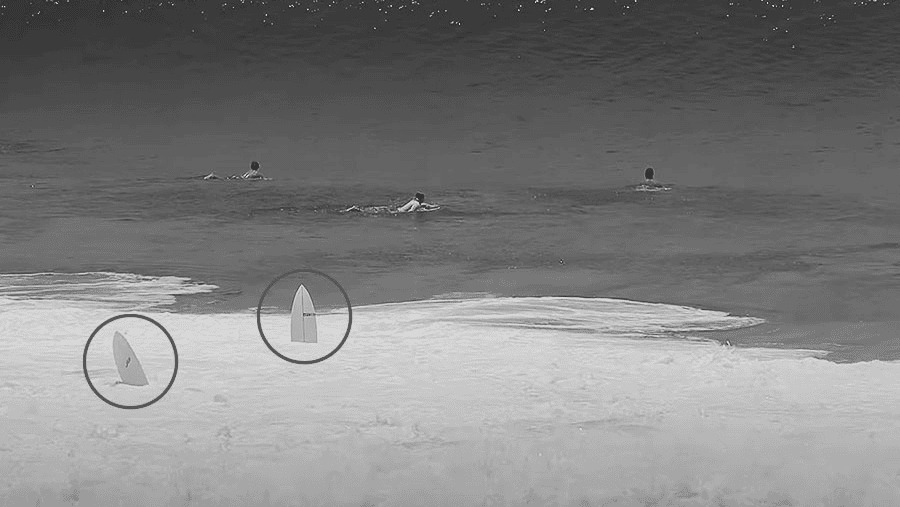
Tombstoning describes the very moment when a surfboard sticks straight up in the water—like a gravestone—while its rider is being held underwater by a powerful wave. It’s one of the most recognizable signals of a heavy wipeout.
It usually lasts only a few seconds, although it feels like a lifetime. And it’s extremely visually dramatic. The surfboard stands vertically, half-submerged, pointing toward the sky, pulled upward by leash tension while the surfer is still deep below the surface.
When does tombstoning happen?
Tombstoning occurs when a combo of circumstances happen at the same time.
The wave has a lot of power and hold-down force. The surfer wipes out and gets pulled underwater while the wave’s energy keeps driving them downward or inward toward the reef.
The surfboard is buoyant and attached by a leash. And the leash tension between the submerged surfer and the floating board pulls the board upright, like a fishing float signaling a catch.
There’s significant depth or turbulence. In shallow, mellow surf, a wipeout might just send the board bouncing around. In deep, powerful waves (like Pipeline, Teahupoʻo, Mavericks), there’s enough vertical distance between the surfer and the surface for a full tombstone effect.
Why it matters
It’s never a good sign. It means that the surfer is still underwater and being held down. And the wave is heavy enough to trap someone beneath for several seconds or multiple wave cycles.
The whole situation might require rescue attention, especially if the surfer doesn’t resurface quickly.
At spots like Pipeline or Jaws, when tombstoning is visible, lifeguards and ski teams immediately note the location—it can help them track where the surfer’s body is underwater and plan a pickup if needed.
And I guess that’s good news: tombstoning doesn’t happen at most breaks, just the big wave ones with deep reefs or heavy beach breaks with vertical takeoffs. Or when the surfer falls headfirst or backward into the trough, increasing the depth difference between them and the floating board, with the leash stretched to the extreme.
What to do if it happens
I won’t be surfing any big, tombstone-inducing waves any time soon, but if it does happen to you, don’t fight the leash too early. Relax, protect your head, and wait until you feel the pull lessen before swimming up.
If you see someone else’s board tombstoning—keep an eye and watch them resurface. If they don’t appear within a few seconds, it’s time to alert safety crews or paddle over if you’re trained to help.
Well, that was depressing. The term “tombstoning” has also been used outside surfing in cliff jumping to describe entering the water feet-first, like a “tombstone.”