
Now Reading: The quiet legend: Pat Curren
-
01
The quiet legend: Pat Curren
The quiet legend: Pat Curren
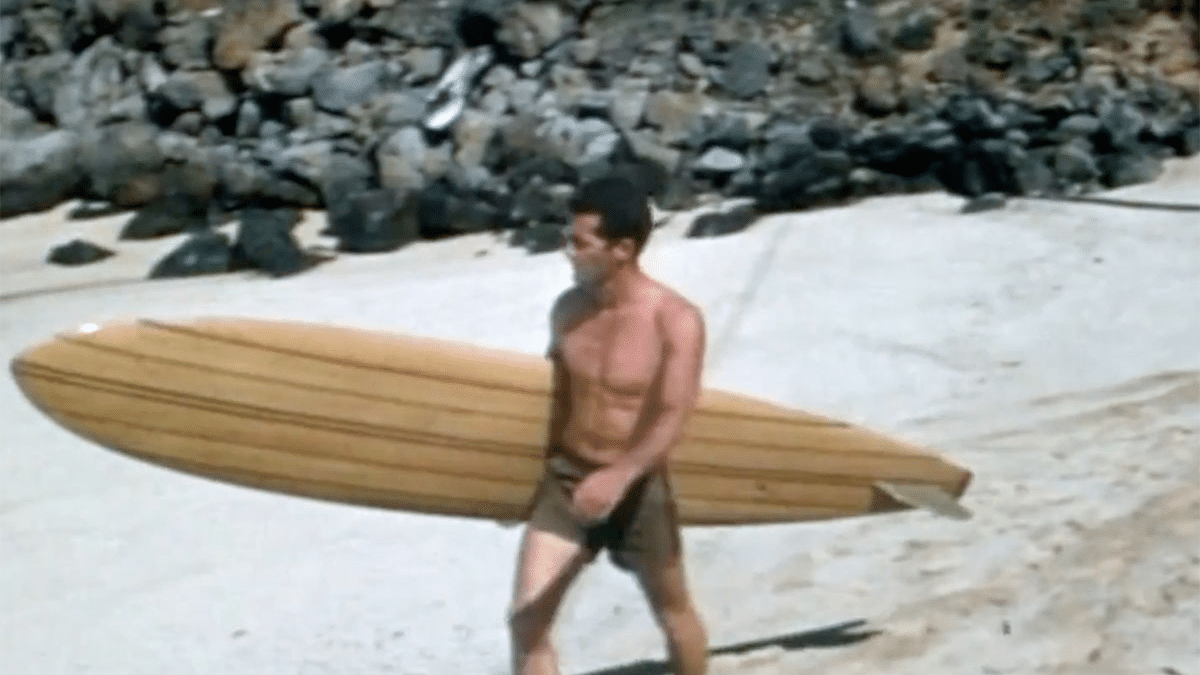
Surfing is full of larger than life, loud and outspoken characters. Just for a change, let’s talk about the quiet ones. Specifically–Pat Curren.
The first time I learnt about Pat Curren was when watching Riding Giants by Stacy Peralta. Knowing what I know about him now, I am surprised he even participated, very briefly, as a talking head. And stealing chickens with Greg Knoll, what Pat?!
Matt Warshaw in the EOS described Pat as an impenetrable surfer who once when asked to answer to the Surfer mag questionnaire in 1963 responded:
What do you like about surfing? no answer
Club affiliation: none
Personal surfing history: no answer
Hobbies: no answer
Other sports of interest to you: diving
Future plans: no answer
Outlook for surfing: no answer
A big wave surfer, Fred van Dyke said about Pat: “I’m not sure anyone really knew Pat, I don’t think anyone ever penetrated his depth. And that was sort of his charm. He was quiet, strong and silent, sort of a John Wayne type. . . . The image I’ll always have is from Waimea one day in 25-foot surf. We’re all standing around, waxing our boards, and there’s Pat with a cigarette and a beer. He walks down to the shore, flips the beer over his head, kicks the cigarette into the ocean, paddles out and catches the wave of the day.”
♂️ Early days
Pat was born in 1932 in Carlsbad, California, and grew up mainly in Mission Beach, San Diego. At 18, after he dropped out of high school, he moved to La Jolla and began surfing, later became an original member of the famous La Jolla–based Windansea Surf Club.
In 1955, Pat traveled to Hawaii for the first time and two years later alongside Gregg Knoll, Micky Munoz and others he surfed at Makaha and Waimea. Or more like attempted to surf, because these were big waves and they were wee surfers on the boards that couldn’t handle them. When Pat returned to California he committed himself to shaping the first big wave guns, including the stiletto, a board specifically made for Waimea. In the early 90s, he produced six full size balsa guns selling them at $3,500 each. His 11’ Elephant Gun got auctioned for $26,000.
Pat’s Meade Hall
I’m stealing this description of Pat–in its entirety–straight from the EOS (please don’t sue me Matt, it’s just soooo good):
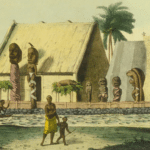
“Curren had meanwhile become the most patient of the big-wave surfers, and would often sit quietly for two hours or longer waiting for the right wave. He took off on fewer Waimea waves than any of his companions, but invariably got the one that everybody remembered. Once up and riding, Curren kept his feet and legs fairly close together and used a medium crouch, with a ramrod-straight back and arms swept out like wings. Nearly mute at times, Curren nonetheless had a fully developed sense of humor. In the winter of 1958, inspired by the Anglo-Saxon legend of Beowulf, he rented a three-bedroom house on the North Shore along with eight other La Jolla surfers, gutted the interior so that it was essentially one high-ceilinged room with a surfboard rack along the wall, and built a giant communal table down the center. Curren called it Meade Hall, and presided over dinners with a Viking helmet jammed down over his close-cropped black hair.”
Say it again, about having a sense of humor, Pat got married at midday in Hawai’i and surfed Waimea that afternoon. He moved around first with his family, then on his own to Costa Rica, then near San Jose del Cabo, finally moving back to California, where he died at the age of 90.
And lest we forget, he’s the father of Tom Curren, another surf legend.