

Now Reading: The origins and features of wetsuits that should matter to you
-
01
The origins and features of wetsuits that should matter to you
The origins and features of wetsuits that should matter to you
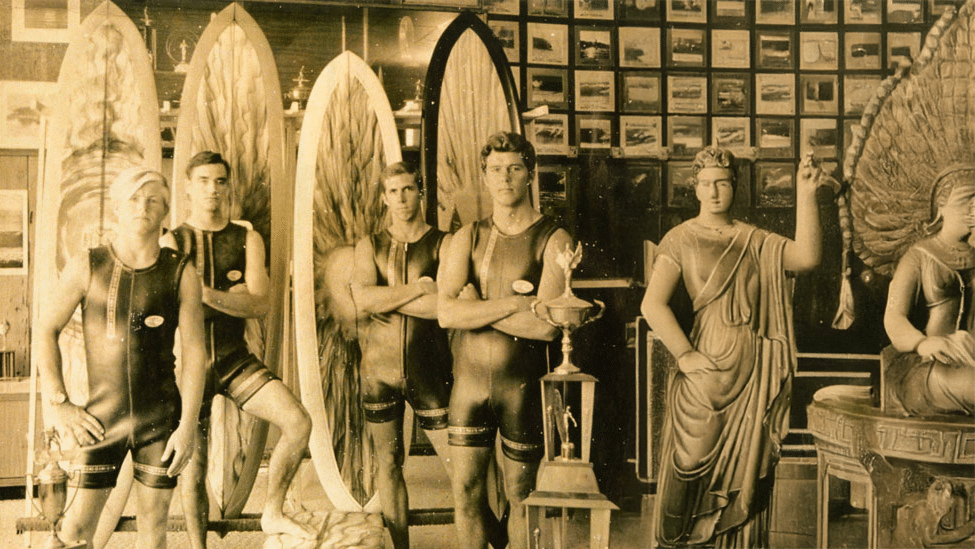
Honestly, I needed an excuse to do some research on the latest and greatest in wetsuit technology and surf swimwear. So I thought, why not start at the beginning and do a story on how we even ended up with wetsuits in the first place?
What do you need to surf? A surfboard—that’s number one. And if you’re not surfing in the tropics or SoCal in the summer—a wetsuit. Because with a wetsuit, “it’s always summer on the inside.” It’s a slogan.
Let’s take a minute to think about all the brave cold-water surfers dressed in rubber caps and oil-steeped sweaters as they braved the temperatures.
✈️ The origins: war, science, and a carpeted plane
When we think about the origins of the wetsuit, we usually go: California, Jack O’Neill, 1950s. But actually, the wetsuit was a result of World War II-funded developments in plastics and rubber so U.S. Navy divers could be comfy working underwater. A physicist from U.C. Berkeley, Hugh Bradner, did all the hard work. His findings were declassified in 1952, and commercial production was encouraged.
The report found its way into the hands of Manhattan Beach surfer/diver Bev Morgan, who understandably started making suits for his diver and then surfing mates. He brought some other friends on board, and eventually, his operation spun off the Body Glove brand.
But back to Jack O’Neill. It really takes a special kind of guy to get inspired by seeing neoprene foam carpeting along the aisle of a DC-3 passenger plane in 1952. Jack started by making vests for surfers, followed by wetsuits sold from his store in San Francisco. By the time he moved operations to Santa Cruz in 1959, O’Neill was synonymous with wetsuits for surfers.
It took a few different designs of suits—most of them called some version of “long john”—before we got to the one we’re familiar with now. Over time, O’Neill refined the design, adding smooth-skin panels, zippers, and better seals.
How wetsuits actually work
Wetsuits are by definition not dry suits. They don’t keep you completely dry. Instead, they trap a thin layer of water between your skin and the neoprene. Your body warms this water, creating an insulating barrier.
Key factors that keep you warm:
- Thickness: Thicker neoprene = warmer.
- Fit: A snug suit prevents cold water from flushing in.
- Seams: Better seams mean less leakage.
Wetsuit features you should care about
What features you should care about depends on what’s important to you. For example:
Seam technology:
- Flatlock stitching (cheaper, more breathable)
- Glued and blind-stitched seams (warmer)
- Liquid taping and welded seams (best seal)
Types of neoprene:
- Super-stretch neoprene makes paddling easier.
- Limestone-based neoprene is more eco-friendly—that’s Yamamoto neoprene.
- Thermal linings (like O’Neill’s TechnoButter or Rip Curl’s Flashbomb) speed drying and boost warmth.
The great zipper debate
And then the most controversial topic—zipper placement:
- Back zip: Easiest to get into.
- Chest zip: Better seal, less flushing. Awful to get into.
- Zip-free: Maximum flexibility, trickiest entry.
You can’t have it all, I’m afraid.