
Now Reading: Teahupoʻo: The wave that shouldn’t be surfed
-
01
Teahupoʻo: The wave that shouldn’t be surfed
Teahupoʻo: The wave that shouldn’t be surfed
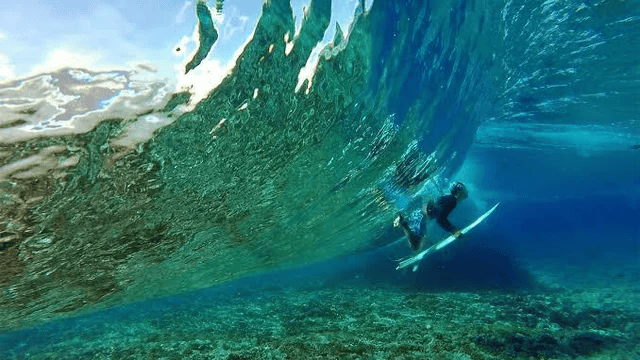
And here’s yet another story about a wave and surf spots that most of us will never surf. Teahupoʻo – one of the world’s most challenging and dangerous surf breaks.
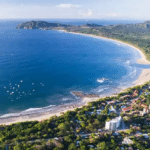
On the southwestern coast of Tahiti, in French Polynesia, sits a tiny village at the literal end of the road. Its name, Teahupoʻo (pronounced cho-poo), loosely translates to “wall of skulls” or “place of broken heads,” a nod to Tahitian oral history of battles and bloodshed, and perhaps a more of an accurate premonition of the wave’s reputation.
What makes Teahupoʻo so dangerous?
From shore, the break is completely invisible. You can’t hear it, there is no thunderous roar you’d expect from a big‑wave spot. Instead, you take a boat out and, there it is, looking impossible to ride.
What makes Teahupoʻo so legendary is the reef—an abrupt, geologic trapdoor. Roughly fifty yards past the break, the ocean floor plunges from over 300 feet deep to a razor‑shallow living coral shelf that sits about twenty inches beneath the surface.
Swell traveling thousands of miles across the Pacific collides with that sudden depth change and folds over itself. The result is a wave that doesn’t just barrel; it mutates. Surfers often describe the lip as thick as it is tall. It forms a heaving, square barrel that appears to break below sea level, swallowing everything in front of it.
⚔️ War zone, not a wave
I love this description by surf journalist Gary Taylor: “Teahupoo isn’t a wave, it’s a war zone. A freak of nature that some bastard decided to call a surf spot.”
The danger isn’t primarily the height. Waves as small as three feet can be ridden at Teahupoo. But the bigger it gets the heavier and thicker it becomes. Anything above eight feet becomes a different species. If you’re not positioned perfectly, you don’t fall into water. You fall onto reef.
It’s not uncommon to hear pros talk about being “scalped” by the coral, or losing skin to the reef, or having to be stitched without anesthesia in a local house because waiting for a hospital would take too long.
One local surfer, Briece Taerea, died in 2000 during a swell before a major contest—caught inside, driven headfirst into the coral, breaking his neck.
And Laird Hamilton caught an 18 footer and was described as “a little speck of human, charging for his life, doing what none of us ever imagined possible” as the wave poured over him “like liquid napalm.” He made the wave and then apparently just sat and wept in the channel. They called it The Millenium Wave.
♂️ From locals to legends
Tahitian locals surfed it small in the mid‑80s. Then Hawaiian bodyboarders Mike Stewart and Ben Severson were the first to ride it at full size a few years later.
In the early ’90s, pro surfers like Kelly Slater and Tom Carroll found themselves at “the end of the road”. That’s what the wave was called then.
By 1997, professional contests were being held. In 1999, it earned full World Tour status.
Then in 2011, the Code Red swell hit—so massive, the contest was paused because the event scaffolding was shaking in the wind. The world’s best surfers naturally ignored the cancellation, launched their skis, and threw themselves into the heaviest barrels ever filmed. Nathan Fletcher’s ride graced the covers of seven surf magazines.
Teahupoʻo goes Olympic
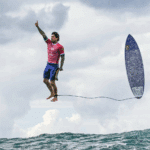
And this you know already. In a stunning moment of Olympic irony, Teahupoʻo was chosen as the site of the 2024 Paris Olympics surfing event.
As such it set another record: it was the farthest‑away medal event from the host city in Olympic history.