Now Reading: The Wave closes. Big wave surfing with women. Baby shark meets baby surfer.
-
01
The Wave closes. Big wave surfing with women. Baby shark meets baby surfer.
The Wave closes. Big wave surfing with women. Baby shark meets baby surfer.
News alert! Saturdays are now for a weekly surfing news roundup! This is going to be fun.
The Wave in Bristol—closed… and back again?
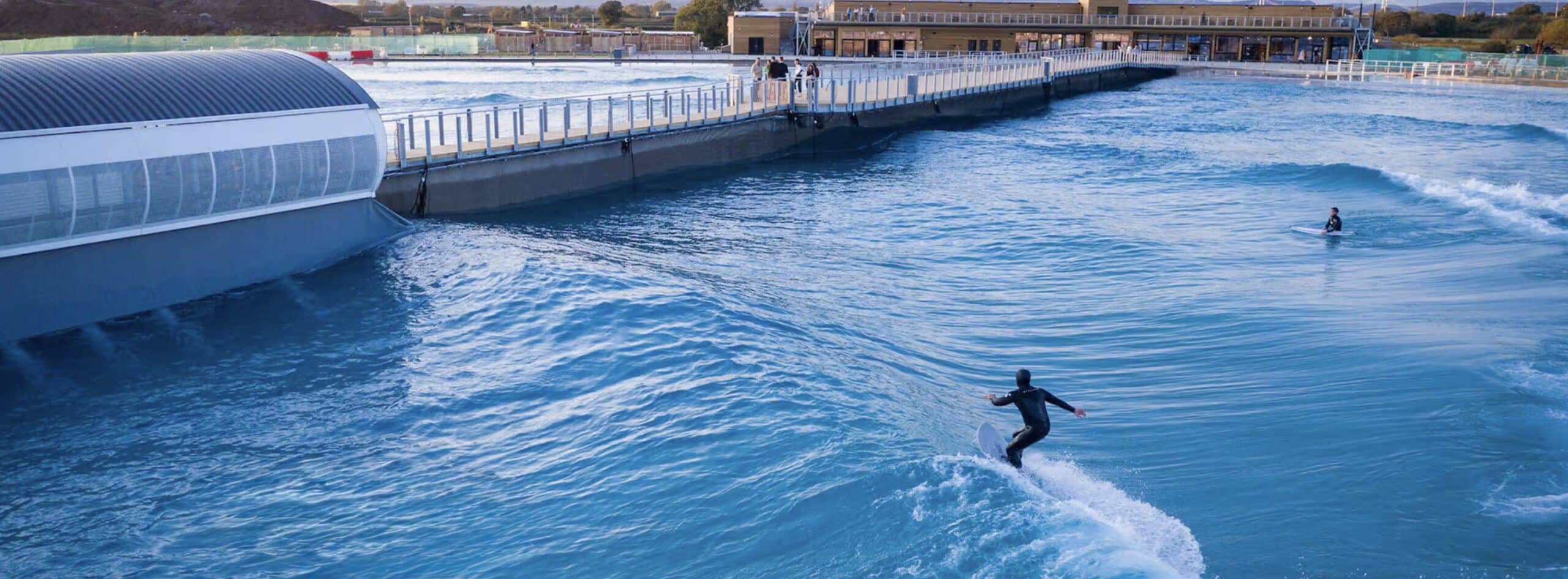
What is going on in Bristol, UK? Just earlier this week, one of the girls from Girls Who Can’t Surf Good posted a video of herself surfing The Wave, a wave pool near Bristol—and just on Thursday, The Wave was no more.
According to the BBC, which calls the wave pool “an inland surfing lake,” The Wave closed because of “a row over finances.” Something to do with problems facing a director of funding partner JAR Wave, which currently faces bankruptcy. And I always thought you can’t lose money on wave pools.
What really sucked was that it all happened so suddenly—The Wave was operational on Wednesday, and by Thursday, the website was down and anyone arriving at the gate was met with a whiteboard announcement scribbled on with a marker: due to circumstances beyond their control, The Wave is closed today, and to look out for more information and news on the socials.
The Wave opened in 2019 and could generate up to 1,000 waves an hour. What was super cool about The Wave is that it was powered using solar energy and battery storage, which created more energy than the site used each year. It was a popular spot that, since 2019, was visited by 400,000 people, including 400 para surfers who got to surf as part of regular surf sessions. Such a shame for it to close! Hopefully, they will find some new avenues for financing soon. In case you wanted to build a wave pool, this one cost £26 million to build.
But wait. That was Thursday, today is Saturday and The Wave is back on, with a fully operational website and new owners, but bookings still on pause.
Women and big waves—CNN’s big feature
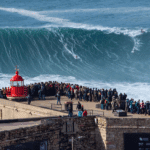
CNN did some decent reporting this week on women big wave surfers thanks to Amy Woodyatt. The feature focuses on British surfer Laura Crane and Guatemalan-American Polly Ralda, both of whom are regularly throwing themselves over 50–60-foot waves at Nazaré and Jaws (Pe’ahi).
Laura talked about how fear doesn’t go away—you just learn to use it as fuel. Polly was more blunt: she’s blacked out, dislocated things, almost died—multiple times.
Beyond the wipeouts, the piece digs into what we know so well: the persistent gaps in sponsorship opportunities, contest spots, and even equipment.
It’s tough being a big wave girl surfer. It’s been less than ten years since women were first allowed to compete in the WSL big wave competition. In case you’re wondering why it took so long, it’s because it was argued that big wave surfing was too dangerous for women. Why, you may ask? Women are more prone to injury, especially in the knees, because we don’t have the muscles.
And of course, it was only in 2018 when the prize money for women and men finally became equal. But seriously, kudos to the WSL, since it’s the only US-based global sports league to do so.
But even among the big wave surfer girls, there’s a discourse regarding competitions. Should they compete with men, have their own women-only contests, or perhaps both?
Still, women are often competing for fewer entries, wearing men’s flotation suits, and getting less visibility in the media, which is why this feature feels pretty momentous. Yet, Surfer Magazine, which regularly writes news stories and features based on other outlets’ materials, hasn’t picked it up yet. Maybe by the time I record this pod this afternoon, they will?
Baby shark meets baby surfer
And now, onto sharks. This piece was picked up by Surfer Mag. They love their sharks.
This week, Carlos Gauna—The Malibu Artist on IG, who documents sharks, the ocean, and everything in between—captured a beautiful interaction between a juvenile great white shark and a juvenile (from what I can see in the video) surfer. The boy and the baby shark were hanging next to each other for a while, inspecting each other, super curious. As Carlos described it: “I don’t know who was more curious here. The shark or the human.”
A self-described shark activist, Rae on IG, who commented on the video, confirmed that the surfer did everything right: he was calm, he tucked his feet in, no splashing, just chilling. In case you didn’t know this about sharks, their strongest sense is hearing—so going crazy loud around a shark is not going to do you any favors.
The summer in SoCal is all about baby sharks. They show up in search of food: stingrays, fish, but rarely take bites of surfers.
According to a study from Cal State Long Beach’s Shark Lab, they found that great white sharks were near surfers 97% of the time in California waters. Meaning: there might’ve been a baby shark hanging under you on a surfboard and you didn’t even know it. And that’s the good news, because baby sharks do test bites at a more rapid rate than larger greats, according to Rae.
If you’re dying to see one, you will have a better chance if you take up paddleboarding.