Now Reading: Surfing as a passion, not an obsession with Surfer Cass
-
01
Surfing as a passion, not an obsession with Surfer Cass
Surfing as a passion, not an obsession with Surfer Cass
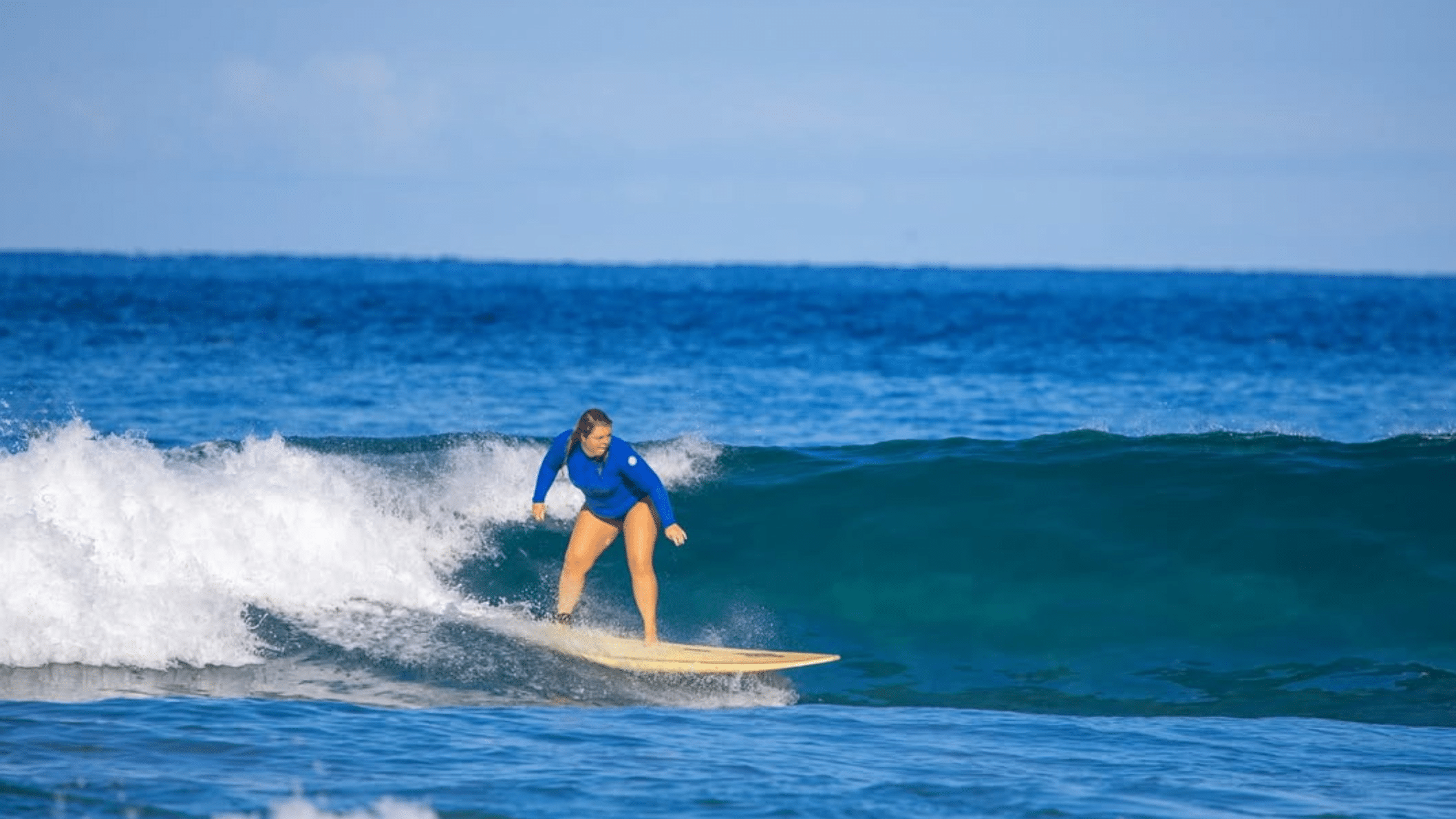
You can listen to The Wipeout Weekly episode with Surfer Cass below or where you get your pods.
This Wipeout Weekly podcast episode transcript was abbreviated to a blog post format by my good friend Chad (ChatGPT). He takes liberties, you know. A lot of liberties.
You will find the full transcript below it. Host: Zuz Wilson | Guest: Surfer Cass
surfing as a passion, not an obsession
Zuz: You’ve said you don’t want surfing to replace your job—why?
Cass: I already have a job, and I like it. At one point, my job took up too much of my life. I don’t want surfing to do that too. I want surfing to stay fun and passionate, but not pushed so hard that it stops being fun for how my brain works.
Zuz: You also spend a lot of time on it already.
Cass: Too much, honestly. Between surfing, traveling, editing, and just thinking about surfing, it’s easily 20 hours a week—minimum. That’s like a half job. If I add more, like surf-specific land training or yoga “because it’s good for surfing,” it turns into a second job. I don’t want that.
Zuz: Let’s rewind—why did it take you so long to start surfing?
Cass: I’m a person who thinks everything through. I research, I sit with decisions. I loved swimming and snorkeling, but I worried I was too big for surfing—like I’d show up and they’d say, “You can’t do this.” I didn’t even want to call schools because I was scared of that rejection.
Zuz: What changed?
Cass: Hawaii. I learned they use bigger boards—sometimes 11-foot boards or even paddle boards for lessons—and that felt safer for my size. I booked a Maui lesson through Airbnb Experiences so I could message the instructor ahead of time with my height and weight and ask for a big board. He reassured me. The lesson was totally fine. That was the moment I realized the worst-case scenario I’d built in my head wasn’t real.
Zuz: And that shifted how you approach other athletic things too?
Cass: Yes. Surfing helped me face that fear. Now I’ll just ask—like I called an aerial stretching place and asked about weight limits. Even if the answer was “no,” it wouldn’t be the end of the world. Doing surfing publicly—being in a bathing suit online—made that fear shrink instead of grow.
Zuz: When did content creation enter the picture?
Cass: After that first lesson. I didn’t start with video. Then I got obsessed—watched videos, learned more, and realized there was a gap. I didn’t see creators who were my age, my size, my experience level, who were also new and documenting it honestly. I work in content for my job, I love editing, so I thought, if I want this and can’t find it, other people probably want it too.
Zuz: Back in LA, it took you time to find your rhythm.
Cass: Months. I’m from Kentucky, I didn’t know anyone who surfed. I had to figure out: who do I go with, what breaks work for me, who has the right board, what’s safe. First it was learning the logistics and community. Then it was learning how to make content.
Zuz: How often do you surf now?
Cass: Ideally every day, but in California it’s conditions and schedule. Realistically, three or four times a week. And I like coaching or group lessons because I progress faster and get more waves.
Zuz: Because they help you…choose waves?
Cass: Exactly. Lineup anxiety is real for me. In a crowded break, a coach is like a traffic controller. They’ll tell me, “That person’s going right, you can go left,” or “Go now, this one’s yours.” That can be the difference between getting two waves and getting ten.
Zuz: What’s the hardest part for you out there?
Cass: People. Not the cold, not the beatings, not wildlife. I just don’t want to be in someone’s way or ruin someone’s wave. That fear is my biggest challenge.
Zuz: And being recognizable on social media—does that help or add pressure?
Cass: Pressure. I get more self-conscious. I feel like I’m being judged, especially if I’m with a coach. It makes me more stressed, not less.
Zuz: Skill-wise, what’s the biggest hurdle right now?
Cass: Reading waves and positioning. Pop-up too, but mostly reading and being in the right spot. My pop-up can get knee-y when things get harder. One of my big goals is a no-knee pop-up—never touching a knee. I can do it on small easy days, but when it’s challenging, I revert.
Zuz: And you’ve surprised yourself with bigger waves.
Cass: Totally. I did a retreat in Baja Norte with Beyond Surf—hurricane swell, waves were chest to overhead, then bigger the next day, like a couple feet overhead. I had an in-water coach, Roberto—Emotional Support Roberto. Being near those waves made me think: I actually want to do that.
Zuz: Then El Salvador pushed it further.
Cass: El Salvador was the first time I was truly scared. The first wave felt like throwing myself off a roof. But the waves were incredible—real walls. That trip made me want to learn turning. I’d never had the space to even think about carving before.
Zuz: If you want to do bigger, steeper waves consistently…shorter board?
Cass: Yeah. Not even because of riding them—because I want to duck dive. I can’t duck dive a 9’6 or 9’10 board. People online say I can, but I’m not John John Florence. To be in the conditions I want, I’ll need to downsize.
Zuz: You travel a lot. Favorite spots?
Cass: El Salvador is a standout because El Tunco is like 45 minutes from the airport, it’s easy, multiple breaks nearby. Hawaii is amazing—warm water, great waves—but crowds, especially at beginner spots and the more “wall” waves I want now.
Zuz: Let’s talk surf retreats—your first one surprised you.
Cass: Surf With Amigas in Nicaragua was lovely, great people, great coaches. But I didn’t think through what I wanted. I’m a psychopath—I want to surf all day. Most retreats are one long session and then yoga or activities. I hate yoga. If I’m taking time off work to surf, I want two sessions a day, maybe more. So my advice is: get the schedule, ask what breaks you’ll surf, decide your dream retreat, then pick the one that matches it.
Zuz: On land you lift weights now.
Cass: Three times a week with a trainer. Not because of surfing at first—I just want to be strong and not scared of the gym. I like that weightlifting has measurable progress. Surfing progress is real, but it’s harder to feel day to day.
Zuz: Does lifting help surfing?
Cass: Mostly for maintaining paddling strength when I can’t surf. I don’t get as sore coming back after a week off. Otherwise, I don’t know. My instructors say it helps. Maybe it does. It’s hard to tell without looking back at videos over time.
Zuz: And you’re intentionally not doing surf-specific land training.
Cass: Right. It’s partly motivation, and partly boundaries. I had a moment where I considered getting a place in Hawaii, living there part-time, and I realized: if I do that, surfing could become my entire identity. I’ve seen people where it’s their whole life and they’re not getting paid for it. I don’t want that. I want to surf for decades, but it has to stay enjoyable.
Zuz: You did that “30 days in Waikiki” at the beginning though.
Cass: Yeah, daily lessons for about a month. It built my foundation fast because there’s no gap between sessions. Plus, Waikiki worked with a normal work schedule—I could work and surf after. That’s not really possible in LA because wind and conditions.
Zuz: We touched on wave pools too.
Cass: I’ve done several. They’re different from ocean surfing, but I like them. Priority is clear—it’s your wave. That removes a lot of the social anxiety and decision stress. Downside: it’s expensive, and it’s harder to catch because it’s not saltwater, so board choice matters. The Kelly Slater pool was wild—fast and long. Palm Springs felt closest to the ocean for me.
Zuz: Gear—what boards are you on?
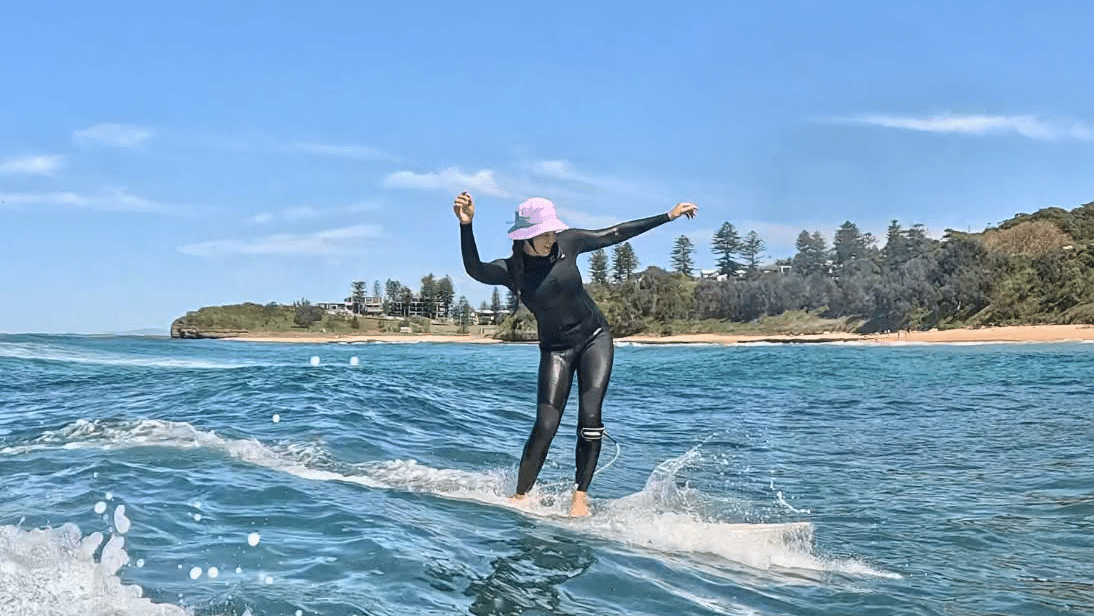
Cass: I started with a 9’ Storm Blade foam board, and we also used a 9’ paddle board. Now my main longboard is a 9’6 Walden Mega Magic—that’s the longest I can still turn. I also have an 8’ Float Tanker—my “plus size shortboard”—great for steeper waves and beach breaks. If it’s tiny, I’ll borrow my boyfriend’s 10’ Mega Magic or take out an 11’ NSP, but that one is a tank and only works at a few breaks.
Zuz: You’re not rushing to get a custom board.
Cass: Not yet. I don’t feel like I’ve maxed out what I have. One day I might for aesthetics—pick colors, make it pretty—but I’m not at the point where a custom board unlocks something I can’t do right now.
Zuz: Outside surfing itself—what’s changed for you as a person?
Cass: A lot. Being a student has made me more empathetic at work. I run a company with about 40 people. I was never taught what I do professionally—I built my skills as the field evolved. Surfing forced me into beginner mode. It’s taught me self-care, understanding my body, investing in strength, and facing the fear of not being naturally good at something.
Zuz: Surf dreams, even with your boundaries?
Cass: A longer surf trip someday—like Indonesia—but not for a week. I’d want a proper surf sabbatical. And skill-wise, I want to ride a board I can duck dive. That’s a big goal. For this year: no-knee pop-up, cross-step without falling, bend my knees more.
Zuz: Your content has become a resource for people.
Cass: That’s the best part. I felt underserved when I started. When someone messages me saying they booked their first lesson because of my videos, that’s huge. It also makes me feel less alone because I’ve met so many people like me—maybe not posting, but out there.
Zuz: And the underrepresentation is bigger than content—like wetsuits.
Cass: Wetsuits were brutal at first. I couldn’t find a full suit, tried a top-and-bottom situation—terrible. Amazon had one brand that fit me in a 3/2, but not a 4/3. I’ve lost about 50 pounds since I started, kind of naturally, and now I can fit into a size 16 at Rip Curl, which helps. But a lot of brands still stop at 10 or 12. Access is a real barrier.
Zuz: Last question—what advice would you give a brand-new surfer?
Cass: Progress is slow and that’s normal. There’s nothing wrong with you. Be kind to yourself. Surfing is hard because the “goal posts” move—you’re learning in a living, shifting environment. But it’s so fun. Honestly, it’s the best thing that’s happened to me in adulthood.
Zuz: And that’s it for today. Check out The Wipeout Weekly for the free newsletter, more stories, and ways to connect. Thanks for listening—see you tomorrow.
FULL TRANSCRIPT
Cass: I already have a job. I like my job. My job was too big a part of my life at one point. I don’t want surfing to replace that. I want it to be a really fun passionate part of my life, but I don’t want to push it. I don’t want to push it anymore because I feel if I push it anymore it becomes not fun for how my brain operates.
I probably already think about surfing way too much. I’m probably spending at least 20 hours a week on it, if not. So that’s a proper half job. If you really count the hours I spend thinking about it, it’s probably even way more than that, but I don’t want to sell myself out. But I am kind of obsessed with it and I don’t want it to go even further.
Zuz: That was Cass, or as many know her, Surfer Cass. Cass who wants to rip on social media. Cass’s mission is to show that surfing is for everyone at any stage and in any body.
Welcome to the Wipeout Weekly, the daily podcast for beginners, wannabe surfers, and seasoned Wipeout enthusiasts. No hype, no filler, just the highs, lows, and honest truth about learning to surf and finding your place in surf culture. I’m your host, Zuz Wilson. Let’s go out.
Zuz: Why did it take you so long? And what actually pushed you to go out surfing?
Cass: You know, I think, I feel like in general, I’m kind of a person who thinks a lot about things before I do them. Like even in business, a lot of times I’ll be on a call and like somebody will present like a problem to me, for example, and I’ll be like, let me think about it and get back to you. And I think a lot of people use that term as to like move on from it, but I genuinely really am like thinking through the whole situation and problem solving on it. And then like, we’ll actually come back with a solution. So I think I kind of just sit with things a lot.
And I looked at, you know, researched a lot about surfing and I was like, that looks interesting. I love snorkeling. I’ve loved swimming my whole life.
And I was just like, but I’m just like, I don’t know if I like, I am too big or I weigh too much to do that or not. And I did some research on it and like, you know, when you start like, it’s a whole rabbit hole, right? When you’re learning about surfing, like there’s so many things to learn. And when I was looking about, you know, especially like here in LA, for example, like most lessons are going to put you on like an eight or nine foot board.
And for a first time lesson for somebody like my size, that just is, that’s not a good situation. It’s like, I’m above like the upper weight limit maxes on those. So I think I just, you know, sort of like kind of shied away from it.
But then in Hawaii, I noticed that they use boards, like a lot of even put people on paddle boards for like their first surf lessons, or they use like big 11 foot boards. And I researched that and I’m like, oh, like, I think like I could do that. And I’ve seen some, you know, good size, like people do that.
So I was like, you know, finally, I think gave me enough confidence when I went down the rabbit hole far enough to learn like, oh, like, but in Hawaii they use bigger boards and they have a bigger weight limit and those are easier to stand up on. So it like kind of gave me the confidence and like safety to, you know, at least even give the lesson a try.
Zuz: So were you genuinely worried that you’re going to sink?
Cass: I just thought that they would be like, you weigh too much.
You can’t do the lesson. Like, because like, like, like, for example, like in horseback riding, a lot of those have like weight limits, for example. And I, you know, I, or like a water slide at a theme park can sometimes have a weight limit or that sort of thing.
And I just, I just didn’t want to, I guess I had the fear of like showing up and they being like, oh, this isn’t going to work. You weigh too much. You can’t do the lesson.
I had this, like, even if I would like call them and ask them, I had this like deep fear, like in my mind that like that was going to like happen to me.
Zuz: That’s so interesting that you’re saying this, because I just read on Reddit and it was a guy who just got into surfing. He was a beginner surfer and he wanted to introduce his parents to surfing.
And they’re, I think in their 60s. And he called one of the surf schools and that surf school implied that this was not a good idea at all. I think that was in Portugal.
Did you call any of the schools or did you just assume and you, it was just the fear of even like, you’re going to call and they’re going to say, no, surfing is not for you.
Cass: I think I, I didn’t even call them until I finally did it. I didn’t talk to anybody about it, but I think I had the fear of like calling and then being like, it’s like, like that conversation that guy had, like, that’s not a good idea for your parents.
And it’s, it feels a little different when you’re asking about yourself and like you get rejected in that way. So I think I, I think I had this subconscious fear of something like, like that happening to me for sure. What’s changed it? Um, I think surfing has actually changed a lot of that.
Like I feel more comfortable than ever, like calling, um, things that are athletic based and asking questions like that. Like I, um, I did a, I did like an aerial stretching class in Las Vegas and, um, I called them and just straight ahead, like asked like, Hey, what are like the weight limits on this? And I think I’m just, I think facing the fear of like being too heavy to do things has, um, actually like made me not scared of it. Like doing it and realizing like the worst thing didn’t happen.
Or even if like you are told no, or you do have challenges because of your, your weight, like it isn’t like the end of the world and it’s better to have tried than to have not done it. And I think just like doing this thing and like putting, you know, showing myself in a bathing suit on the internet, doing an athletic thing has just made me like, it’s really made that fear dissipate versus grow more.
Zuz: Do you remember your first lesson?
Cass: I do. Yes.
Zuz: Did you start documenting it at that point or was that without video and any writeup of it?
Cass: No, no, there was no video at that point. Cause I, I didn’t really, I didn’t start looking at videos of surfing until after I did the lesson.
So I kind of became interested in surfing as I was just like driving around. My first lesson was on Maui actually. And I just remember I was always driving around.
I would kind of like see it from the road. And that was, you know, I was like, Oh, that looks interesting. I remember actually from my first lesson on Airbnb experiences and which I liked because I could like message the guy and be like, you know, this is like my height and this is what I weigh, like bring, you know, a big board.
And, you know, and he reassured me that it was fine. And the, and the experience totally was fine. And the boy and I, it was, uh, you know, it was a good experience.
But, um, after I did that and was like, Oh, I want to do this again. That’s when I started looking at videos and stuff of it. But I didn’t, um, in general, there’s a couple of things that I thought was, you know, sort of a big learning curve and surfing beyond like actually learning the surfing one was, um, like finding instructors or people to surf with.
Cause I’m from Kentucky. I don’t know anybody who does this. So like learning, you know, who do I go surf with? What breaks are good for me? Who do I go surf with? So like, I feel like when I came back from Hawaii to LA, this was like, you know, front end of 2024, it took me probably like three or four months of like asking around and like, you know, finding people to figure out like, who can I surf with? Who has a board for me? Do they have a board that’s right for me? That sort of thing.
So I feel like that’s step one that kind of took me several months to get a handle on. And then the other thing was once you figure that out, it’s like, how do I make content of this? That’s a whole other sort of topic to broach in a learning curve as well.
Zuz: What made you start making content on your surfing?
Cass: So I think I started making content of me surfing because I couldn’t, I felt there was kind of a gap in the marketplace, so to speak of, of a part of me that wasn’t being spoken to in the current surfing content.
There’s a lot of surf creators that I really like, but I felt like there wasn’t anybody that was like around my age, around my experience, like around my size that was making content that was also like pretty new. And I was like, well, if I’m looking for this and I’m not finding it, there’s probably other people that are looking for at least one of those things that aren’t finding it. And so I decided to start making it because of that.
And also, you know, separately, I work in content for my job. So I genuinely like enjoy that. I love video editing.
I like thinking of like short form video content. That’s just something that is fun for me. So I was like, I have the skill set to do it.
So why not give it a try? And I’m really glad that I did.
Zuz: And when you got back from Hawaii, then a few months passed, you were very deliberate about who you’re going to go out with and where you’re going to surf. How often did you then go out every single week or month?
Cass: As we all know in surfing, a lot of times it does depend on the conditions.
But I try to make sure I go. If I could go every day, I would like it’s not a it’s not a tired issue. It’s a schedule weather issue, especially in California.
But I try to go three or four times a week and I try to do I try to do as many sessions as I can with like a coach or an instructor or like a group lesson or that sort of thing, just because I feel like I get more waves that way and I progress faster. I’m trying to do more sessions by myself intentionally, but I really socially like the aspect of a group lesson. I like enjoy having a teacher now.
I guess it’s kind of like why people like a personal trainer at the gym. I enjoy that. So it’s actually is like it is kind of I feel like it’s like taking a treat away from myself to do sessions without a coach.
But I know that it’s important for my progress. I’m like consciously trying to be better about that. But I do really like that.
I like the experience of having somebody teach me because I haven’t I didn’t really have that in my career. And I I’ve actually really enjoyed being a student. And so I like having a teacher.
Zuz: Is this only about the teaching element, but also maybe about safety that you know, they’re on your own and your bad things could happen?
Cass: I think it depends on the break. I think safety in general is one thing that’s really something I think about a lot with a coach. I also have a certain level of social anxiety.
So when I go to a crowded break and I’m going for main waves, I do like I almost think of sometimes as a coach is like they’re blocking for you’re like telling you you’re in the clear like you can paddle for for that wave or that person’s that they know like, for example, like that person’s going to go right and you can go left. Whereas I feel like I’m still not at the point where I know early enough that they’re going to go right that I have time to turn and paddle for the left. So like them kind of saving me that time is in a crowded break means like the difference between like two waves and ten waves are in a session.
So I like it for that aspect as well. I only had two coaches and that was like at the very, very beginning of my surfing career. But one thing that I find extremely useful is if I am in the group of other people surfing and they can see the wave and then they just tell me just go.
This is yours. And it’s just so liberating because I don’t have to make a decision. Yeah, I agree with that.
And I like going out with other people because of that, too. Just like I think I can get in my head, especially if it’s the more crowded it is, the more I’m in my head about like, you know, getting in a surf accident, so to speak. And I just don’t want to be that I meet that person.
And I think everyone is going to be that person at some point on the accident. It’s kind of, I think, the nature of surfing. But I’m doing my best to not be in the way and having having a group or having a coach does help me feel better about decreasing my chances of being in the way.
That’s one thing that I am always worried about. I don’t care what happens to me, but I just don’t want to ruin your wave because I’m going to be extremely upset about it. Yep.
Zuz: So we talked about the lineup anxiety. Is there anything else that you found hard, you know, with being in the ocean?
Cass: Not necessarily the obstacles of like, you know, popping up, because we’ll talk about it later, but just generally, I mean, it’s just wild out there, right? Yeah. I mean, people are the scariest part for me.
Like, I’m fine to like, take a beating by waves. I’m, I don’t really think about the wildlife aspect of it too much. I don’t mind like the cold.
I don’t mind the wind. I just, I just really don’t want to be in somebody’s way. And I don’t want like somebody to be mad at me or like, like, say something mean to me.
People are really like my biggest challenge in the ocean. And not that, and they’re probably not even doing anything wrong. It’s just, it’s just in my head.
But that’s the part that’s been the most difficult for me.
Zuz: Do you find that some of the breaks where you surfed were more challenging from that perspective, you know, that people were not as nice at, at some other breaks?
Cass: For sure. I mean, I think in general, the more people there are, regardless of the location that I think it’s just human nature, you know, it’s becomes a limited resource.
And it’s going to be more hostile, the more people there are, the less waves there are. Listen, if there’s, if it’s a crowded break, but it’s really consistent, you know, decreases hostility. But I think it really, I think it’s, there are some breaks that are probably a little more challenging than others.
But overall, I think it just comes down to the amount of people, at least for me and in my head, it’s just like a, it’s, it’s really like a math and odds equation.
Zuz: Do you think you ever benefited from the fact that people know who you are, especially on Instagram, because you’re, you know, you’re a visible feature of certain breaks around here in LA? Did that make it easier or harder?
Cass: I think it makes me more self-conscious because I’m like, oh, like they’re going to judge me because like I have a coach or it, I feel like it puts a little more pressure on me actually. And maybe, maybe if I didn’t have that social anxiety aspect, maybe I could use it to my advantage, but I, it definitely makes me a little more stressed out and aware and even more not wanting to be in somebody’s way.
Zuz: Let’s talk about these other obstacles in terms of like fitness. You are extremely tall. Like I am 5’5 and you, when you arrive, I’m like, oh my God, I forgot how tall Cass is. Does it present any sort of advantage in surfing whatsoever? Or do you think that just makes it harder?
Cass: I mean, I think being tall is traditionally looked at as not an advantage in surfing, but there’s a lot of tall surfers. I mean, Mikey February 6’3 and he’s obviously killing it.
I think my combination of my height, and this is a fun fact, I have a short wingspan. So I, my, I’m, so I’m 5’9 and my wingspan is 5’5 and your wingspan is supposed to be about the same height as you. So like losing that space for pop-up kind of sucks.
So I think that that, you know, is sort of challenging. And then I know that height, you know, I don’t have anything, I can’t AB test my height, but apparently like, you know, being shorter, you know, can help with like lower center of gravity was, is supposed to, to help with surfing. It’s probably easier to get a little bit lower in certain situations if you’re, you know, not as tall.
So I think, you know, that that is, you know, probably a challenge, but I mean, I’m not, you know, I’m not 6’7. So I wouldn’t say it’s like that big of an obstacle, but also like being taller means you weigh more. So you have to think more about like a board that floats you and is long enough for you and that sort of thing.
Zuz: What did you find most challenging? Wasn’t the pop-up turning, choosing the waves?
Cass: I still think reading is the, reading and being in the right position is still the hardest part for me. I mean, I’d still clearly have a lot of issues with, with my pop-up. I, you know, that’s a big goal of mine this year is to really like hone in on like never having a knee touch the board when I pop up.
I can do it, but as soon as I like get, if it’s like a perfect day and it’s like two foot waves, I can do it pretty consistently. But as soon as anything becomes a little more challenging and I can’t focus my entire brain on that specific thing, I will revert to like a knee scrape. My pop-up is just slow.
I think I’m thinking about a lot of stuff, but I will say I’ve gotten farther along and into bigger waves than I thought I ever would with my slow knee pop-up. I do want to focus on changing that because I am, you know, I lift weights now and I am in the best physical shape I’ve ever been in. So I do think I’m in, I physically can change my pop-up now, whereas before when I started, I don’t think I could do anything better than I do now.
I do think I could do better. I’m just going to have to go back to like smaller waves and relearn, you know, popping up, you know, in a, in a different, more explosive way, which I’m fine to take the time, time to do that. But that is like one of my big goals for this year.
I saw you in videos on the waves. Your pop-up is not that slow. Mine is probably even slower.
Do you think that when you’re taking a wave and do you think you’re overthinking the pop-up? Maybe. I, and I also think that like people don’t give, you know, I get a lot of feedback online about my pop-up. It’s, it’s interesting, but I think that you can also take more time on a pop-up than you think, unless like, obviously you’re doing like really big, steeper waves, which I unfortunately think I am interested in doing at one point.
And that’s why I do want to redo the pop-up. But if I just wanted to stick with like kind of long board-ish two, three foot waves, I think my pop-up is totally sufficient for that. But I do want to get into steeper waves at some point.
I do think I’m going to have to be faster only because of that. And I didn’t think when I started surfing, I would even be, I didn’t think I’d be interested in those kinds of waves. And then I did a couple trips that I was like, oh no, I do, I want to go for it.
I didn’t want to want to go for it, but I can’t stop thinking about like some waves that I saw that I would love to try. So I, I do want to, I do want to get faster at it because I do want to try some of those more challenging breaks at some point.
Zuz: What size of the waves are we talking about here?
Cass: So when I went to, there was two trips at the end of last year that I did.
The first one was like right south of the border, you know, Baja Norte. It was amazing. I would say that day, I didn’t take any of the waves this size, but it was, it was a point so I could kind of like paddle around and like just sort of like look.
And it was a retreat. So we had like a videographer coach and then an in-water coach that was able to watch. His name was Roberto.
We called him Emotional Support Roberto. He was a lifesaver that day. But that, that, that, that surf weekend little retreat, it was with Beyond Surf in San Diego.
But that, that really like changed my perspective of like me believing in myself and being able to do bigger waves. Cause you know, I think before I was kind of like, oh, like I love like a waist high wave and I still do love a waist high wave. But that day it was, it was the hurricane swell was coming in.
And I remember the night before the big day we went out, it was like kind of coming in like, you know, I would say like chest standouts would be like head higher, a little overhead. And I was like, I looked at it before we paddled out and I’m like, I talked to Jake and I was like, do you think like I should even try? And he’s like, yeah, you should. And I’m like, okay, then I’ll, I’ll try.
And it was, that session was great. It was perfect. I got so many waves.
It was, I did better than I thought I would. They, I did, I performed better than I thought I could. And then the next day was bigger.
Those were like consistent, like couple, couple feet overhead waves. And I never like paddled out and something like that. And so I kind of took it like one step at a time.
I was like, okay, step one, I’m just going to paddle out and look at them. And then finally I felt like comfortable and I’m like, I want to take in one of the waves that comes in between the bigger sets and Roberto helped like me navigate through that. He’s like, okay, so we’re going to wait till the set clears.
I’m timing them. You’re going to go paddle on inside and take a small one, but you’re, and take a small one and I’ll help you get it. And I was like, I’m, he had like fins and he’s like, I’m going to, I’m going to paddle directly like where you should go to get it.
And so he helped me pick out like a one that was like probably like a, you know, or like a shoulder head high ish wave in between like the couple, the waves that were like, you know, a couple feet overhead, but watching people take those being up close to people taking the couple of feet overhead. I was like, yeah, I want to do that. And I was the only person out there on a long board.
Everyone else had a short board. And I was like, I want to, I want to try that one day.
Zuz: So would that mean that you would have to downsize to a short board if you wanted to do this consistently?
Cass: Yeah. So I would need to be, I would need to be on a board. I think my biggest challenge with those waves is I don’t mind being in them. I don’t mind taking them on the head.
I just wish I could duck dive them. And I can’t do that on a nine and a half foot board, even though a lot of people on the internet tell me I can, I am not John John Florence. I can not duck dive an over hundred liter like long foot board.
And I don’t think most people can. So I think to be in the conditions that I would like to be in one day, we’ll have to downsize and be able to get, you know, do, um, you know, a shorter board for sure. Are you scared of the height at all? Um, so the next trip, this, I didn’t get scared of the height there because I wasn’t taking those.
I wasn’t like getting into those waves. I took like a, a chest, probably it was probably a head highway, but like, I felt it was a little scary, but I felt okay on it. Um, but it was fun to like, sort of like be next to people taking the bigger ones.
Um, but two weeks later I went to a soon as all, and I was, that was the first time I went on a wave, that size. And like that first, it kind of felt like I was throwing myself off the roof of a house. Um, like it, it was like in your, but you’re laying down.
So it looks even taller. Um, so that first day in soon as all, like that was the first time I was actually like, I don’t know if I want to do this. Um, cause usually I’m like very much like, yeah, like let’s do it.
I don’t care if I wipe out, I don’t care if I like nosedive, like, let’s do it. And that was the first time I was like, I had to like talk myself. Like I had to like have a mantra that day.
I was like, okay, like you’re going to go and you’re going to stay low. And like, I was like talking to myself when I actually got up on the wave. I was like, it’s okay. It’s okay. Stand up. You’re okay.
You haven’t like, it was like that, like the conversation was probably ridiculous, but that was the first time I was like scared, but then I got used to it. And it was, and now I like want to go back really bad, but the first couple of sessions, like kind of scared me a lot. Actually.
Zuz: I remember being the exact opposite to you. So like when I didn’t know that this was scary, then I would take waves that were like six feet and I would wipe out every single time. But after I’ve done it a few times and obviously I didn’t catch anything, I was like, no, I think I just need to get so much better in the smaller waves before I can even, even attempt it.
But it’s a lot of fun. It’s a lot of fun trimming and trying to cover, even like pump a little bit. And I do love longboarding and it looks so graceful and beautiful, but I completely understand where you’re coming from because it’s just like another thing that you could do in surfing.
Cass: Yeah. So I, but it’s just, and El Salvador was just, it was amazing. The waves were incredible.
The, I never really had like a wall like that to work with before. And then like that, that’s the trip that made me think more about like, oh, like I want to learn about like turning. And I just never, I don’t think I really had like the space to like have a wave provide that sort of opportunity for me in surfing before.
And so to have experienced waves that, where I could like maybe, you know, eventually like turn and carve on them. I was like, oh, like I like this. You’ve traveled a lot for surfing.
Zuz: What are your favorite spots or even countries, if you don’t want to say it’s a secret spot?
Cass: I’ve, I mean, I’ve liked everywhere I’ve gone. I would say I really like El Salvador. I think the favorite, a couple of things I think is a standout compared to other spots.
One, you know, compared to other like Central American locations you know, El Tunco, the little surfing town is 45 minutes from the airport. And that’s just incredible versus a lot of these other spots in Central America. It’s at least a three hour drive from the airport.
So to be able to like get an Uber and like go to the surf town that’s like cute and safe and has multiple breaks there. And then a lot of other ones within 20 minutes nearby is it’s pretty convenient and like a good, like long weekend situation. So I would love to go there, but you have to be careful about what you’re looking for.
Cause I went at the end of summer and it was pretty big. Main summer is probably massive and I wouldn’t want to go at that time unless like I’m feeling really brave and idiotic for some reason, which you never know if I get there, but apparently right now is great. And then there’s more sand on the beach and that sort of thing.
But I loved that. I love Hawaii, but Hawaii can be crowded and can be unpredictable. I mean, more predictable than probably a lot of places in Southern California, but I love the warm water.
But you know, a lot of the beginner spots are very crowded and the waves that I’m, you know, kind of looking for now that have more of like a wall and like, you know, places for me to turn that are not like crazy, crazy difficult, you know, those are going to be pretty crowded waves there. So that’s, love Hawaii, but I would say that’s like a downside there, but I’m looking forward to exploring some more places. I’m going to Ecuador in March with them beyond surf.
I’m excited to try that out and see how it goes. And I’m sure I’ll have some more trips coming sooner rather than later, but I’m, I’m look, I’m always researching new destinations.
Zuz: You mentioned I’m going on a surf retreat.
So I want to talk about this a little bit. I remember, I think that the first time that we talked and you were just going on the surf retreat and you came back and there was a sort of a mismatch between what you expected a surf retreat would look like and how it actually turned out.
Cass: Yes. So I went with surf with Amigas, which to Northern Nicaragua, which was lovely. But I think, I think I didn’t think through like the experience of a surf retreat. Maybe it’s because I hadn’t gone on one before as much as I in hindsight, I wish I would have thought about it.
I think important things to think about for a surf retreat is one, like how often you want to surf what other activities you want to do, if any, when I’m on a surf retreat and what kind of breaks you want and what kind of conditions you want. And so the one I went on, I think is a good, I think the surf with Amigas retreat, one, all the people that went, I was, I was worried about like not liking somebody there and having to spend like a whole weekend with them. And everyone that was in my group of people was really awesome.
And I, we all still like talk on what’s happened. A lot of them are actually going on another surf with Amigas retreat to Costa Rica this year. So the people were awesome.
I loved all the coaches and like the staff at the eco resort. They were great. My one, I don’t want to say complaint, but I think just mismatch for me.
Cause I’m a psychopath is I, when I, if I’m taking off for work to go to travel somewhere to surf, I want to surf the whole time. Like when I’m in Hawaii, I, if I can, if conditions allow, I will do two sessions a day. I’ll do three sessions in a day if I can, like, I don’t want to do anything else besides surf.
I don’t, I fun fact about me. I really hate yoga. So I don’t want to do yoga. I don’t know. I need to talk to my therapist about why I hate yoga so much. I don’t want to do yoga.
I don’t really want to do any activities besides surf, maybe get a massage, but I just, I really want to just like zone in on surfing. But I think most people don’t want to do that. I think most people like don’t, they’re good with like one good long session a day.
And a lot of people do like yoga or like, do you want to relax or, you know, see other, you know, things locally. And, you know, so I think you just have to, I think just ask for like the schedule of the retreat to make sure that it, that it matches like what you’re looking for. And also like, ask about the breaks you’re going to surf.
Like, is it a beach break? Is it a point break? Is it, you know, is it a reef? Like, you know, just know, like, I think kind of, there’s so many retreats out there, like, make your dream one in your head and know what, like, you know, okay, I want it. My dream retreat is, you know, three hour days surfing, reef breaks. And, you know, I want to travel X far fortnight. It’d be this amount of days. You can find that retreat. There’s a lot of them.
You can find one that, that matches what you’re, what you’re looking for. And Surf With Amigas does have, they have a lot of retreats. Like the one I did, that’s probably like one really good surf session a day.
And then like a yoga and then a, like a, you know, another activity. There’s some that are like, you know, I think beyond surf is a little more like where they’re, you’re going to surf at least twice a day. Obviously depending on conditions, but that’s like the goal of conditions align.
So I think it just comes down to like, what do you want to do on the surf retreat and finding that? And I’m the psychopath that like will be in the water for like 10 hours if I can. And people are surprised when I say this, like, I may not look like I can handle that, but like I can, I don’t get tired when I surf. Like I am conditioned to like paddle for that long and to like be out for that long.
The thing that usually gets me out of the water is not being tired. It’s my schedule. Cause I have other things in my life and job and that sort of thing.
Or like I’m in a with a coach and my lessons over, like those are the things that get me out of the water. Or like the sun went down. It’s not ever because I’m like, I’m tired.
I need to go in that. That is like 1% of the time why my session ends. It’s not, it’s not it’s not because I’m tired.
So I have the endurance when I went to El Salvador, they, they, I was doing a partnership with them, Mira surf, this hotel, which their hotel it’s, I love it. I can’t wait to go back. It’s awesome.
But I think they had planned one surf session for me a day and then like had like an activity for me and I’m like, Nope, I just want to surf. Can I take the activity out? And I just want to surf again. And I think they were all like, really? And they’re like, that’s a long paddle out.
And I’m like, yeah, I want to go twice. And they’re like, okay. But that’s, that’s what I want to do.
And I go on a surf trip. I don’t think you’re the only psychopath. I would love to have an tired day just filled with surfing.
Zuz: I wanted to say that I don’t get tired, but that’s not necessarily true. I’ve experienced it for the first time in my life over this weekend. I went out in Venice for two hours.
I came back home and I had to lie down. I have never been so tired in my life. I don’t know what happened. Yeah. But it happened. I am hoping that on Sunday, I went out surfing and I was absolutely fine. So I’m hoping that it was just a total fluke. It happens sometimes.
Cass: Yeah. And sometimes I feel like I get tired. I mean, I just, I don’t ever feel like I get tired during the session, but like, I do have those moments after I’m like, I just want to sit and watch TV. I need something to eat.
But so the, the beyond surf trip that I did to Mexico, I love the schedule. So like we would go surf in the morning and then we go eat like some amazing, like local Mexican food. And then we would sit in, do video review or, or one day we like got massages and then we’d like go out and surf for the rest of the day.
And I, that was like my, that’s my kind of schedule that I like for the surf trip. And then we go like do something nice for dinner, like go, you know, to like, we went to like this little like lobster town. It was fun.
It was great. It sounds like a dream. It’s great.
Zuz: I only went to one surf camp and that was Witches Rock in Costa Rica that, you know, everybody.
Cass: I’ve seen that. One of my friends went recently, actually.
Zuz: Probably knows about, but our schedule, I think we started because it was so hot. We started at six, me and my husband and a few other friends. We just started with a margarita and then we went out surfing.
Cass: At 6am? Perfect.
Zuz: Yes. Because we were on vacation. So you do vacation things.
Cass: Yes. Love it. I love that. How was Witches Rock?
Zuz: I liked it, but at that point I was so new to surfing that I really didn’t know what I wanted. And probably the breaks that they were taking us to, they were not the best breaks for me because there were not those slow rolling breaks. If I could have had Witches Rock and Waikiki, yeah, that would have been perfect. But it’s still a lot of fun and it’s a nice hotel and people are always very, very nice. So I would recommend it. But then again, that was, oh, I don’t know, 15 years ago? A long time.
Cass: OK. A long, long time ago. Gotcha.
Zuz: OK. I wanted to add one more thing that if I was planning to go on a surf retreat, one of the things that would really matter to me is how close is where I’m staying to where the breaks are. If I have to spend 45 minutes in the car, that would be a big no-no. So I’d rather if it was just like just there in front of me.
Cass: I’ve never stayed that far away from a break because Surf With Amiga’s retreat was well positioned for multiple breaks. I would say we didn’t have to drive more than there was a beach right out in front that made sense for some people.
We did drive most days, which I actually really liked the drive because I got to sit in the back of a pickup truck and for some reason that made me really happy. It was like things that I don’t get to do at home in the United States. So I liked that.
And then, you know, you’d see like cows while you’re in the back of the truck. And I just loved it. But I think that’s it.
I haven’t had to do that, but I don’t think I would like it. But in El Salvador, everything was close. Everything was close in Nicaragua.
And then on the Mexico trip, we were staying at the break we were surfing. So it was pretty easy.
Zuz: Another thing that I read in your sub stack was that you said you didn’t get into surfing in order to lose weight. But it sort of happened naturally. And I know that you’ve got a fitness routine because I see photos and videos of you exercising and doing weights. So what does it look like right now? Like how much do you exercise on land versus surfing?
Cass: Interesting. So I would say I didn’t for the first year I just surfed. I didn’t really do much on land.
I mean, I walk a lot in general. I just I like it. And I would live in Southern California where it’s perfect weather to like walk everywhere all the time.
So I’ve always been a walker. But other than that, I wasn’t really doing much exercising on land until I started April or May of last year. I started lifting weights, not really because of surfing, just because I just just like, you know, I’m getting older.
I want to be strong and I don’t want to be like scared of the gym anymore. I want to understand it. So I got a trainer and started going with the trainer.
And now I go three times a week to do strength training. And I love it. And I kind of really do view it as a separate activity from surfing because, I mean, obviously, I’m sure it probably helps some aspects of surfing, but I just I like weightlifting.
I like that you can see progress. I like that there’s like numbers attached to things and you can like measure your progress in a real meaningful way where I feel like that’s a little bit harder in surfing. So it’s nice to kind of have like that balance of like, you know, numerically like knowing, OK, I can you know, I lifted this last month and now I’m lifting this this month.
So I really enjoy weightlifting and wish I would have discovered it earlier in life. But it is what it is. Well, you’re seeing progress.
That’s I think so rewarding. And the same thing with your videos. Yeah.
Zuz: Do you think that it helped your surfing? Did you see any difference in terms of weightlifting, helping surfing?
Cass: Yeah. Um, I mean, I think to a certain degree, I think that the one thing I think it’s really helpful is when I can’t surf or if I’m traveling and can’t surf, maintaining my upper body strength for paddling, you know, to like I think before I was weightlifting, if I would, you know, take a week off because I had to work and was, you know, not able to surf, I, you know, I would definitely feel some pain after, you know, not pain, but like muscle soreness after surfing the first time back. But now like I won’t feel pain from surfing because I can maintain my upper body strength with weightlifting.
So I think that is an advantage. I don’t feel like I feel that really big of a difference. Otherwise, my instructors say that there is.
I don’t know if they’re just being nice or if there actually is like a difference in terms of lifting weight. But I think maybe I can probably paddle a little bit better. There’s probably a little more paddle power.
I’m hoping that, you know, with this new journey with like fixing my pop up, so to speak, um, maybe, you know, it’ll come in handy, you know, with that and in terms of like being able to get deeper on bending my knees. But I mean, not too much. I don’t know.
But, you know, it’s hard to say because you’re in it every day. That’s why I like the videos because I can go back and look at a year ago and be like, OK, I have like I can do some things better. But like you don’t really feel it on a day to day basis and you don’t really feel it.
And I’m from session to session either. So that’s why actually one thing I’m doing with my videos is less now about analyzing per session and more about comparing over time, because I feel like sometimes, especially as you’re like, I think in the phase I am of surfing, you looking session to session. It’s hard to see a difference.
I also hate yoga, by the way. So in doing anything surf related online, like trying to do my pop ups, it’s just not going to happen. Yeah, this is not how I am built.
I’m better off just going out surfing and just just trying this over and over again.
Zuz: Do you do any exercises that are surf specific online or is it just weight training just to keep your fitness up?
Cass: I think it’s just weight training and I do view it as a separate thing. I’m I’m kind of like you.
I don’t really I’ve tried to do like these videos and they’re great videos and like I understand why people should do them, but I am not inspired to do the land training for surfing. I wish I was. It’s it it it is not it does not speak to me.
I also so I for, you know, for a second, I thought about getting a place in Hawaii and trying to be there part time. Um, this was like in May of last year and I lived there for a month and I realized during that time frame that I didn’t want surfing to be that big of a part of my life because it that scares me to for I think that I have kind of an addictive personality and if I if I start like surfing plus also doing things outside of the water to like support my surfing like I I just feel like that it’s going to put me in a bad place of where it’s not a hobby anymore and it’s like it’s too big of a part of my life and personality and I think that for me I think that that works for some people, but I think for me that becomes like a dangerous place of losing the positive things of this thing so I I almost don’t want to dedicate more time to it than I already am because I I’ve been putting a lot of hours into it like I’m figure I’ve rearranged my life to figure out how to do this at least four times a week you know that’s at least 12 hours of my week probably more and then I’m also editing videos like I I can’t dedicate more hours to this sport without ruining it is kind of how I feel I think that’s a very healthy approach like what percentage of your week do you think spend on surfing editing videos about surfing and thinking about surfing yeah I mean too much already and so like then if I so if I start adding land exercises and then like yoga not because I like it but because it’s good for surfing and you know all this other stuff like that it becomes a second job and I don’t want it to be a job I want it to be a hobby and I don’t want to you know I don’t want to you know like I could probably do more on my Instagram and post more often and grow faster but I don’t want it to be my job like it’s I already have a job I like my job my job was a too big a part of my life at one point I don’t want this to like replace that I I want it to be like a really fun passionate part of my life that I don’t want to push it I don’t want to push it anymore because I feel like if I push it anymore it becomes not fun for how my brain operates and yeah I’m probably already spending what like between traveling going surfing thinking I think about surfing way too much I like have like that’s my I mean you know I’m probably spending at least 20 hours a week on it if not you know so that’s a proper half job if and then if you really count the hours I spend thinking about it’s probably even way more than that but I’m I don’t want to like sell myself out but I am like kind of obsessed with it and I don’t want it to like go even further I’m glad that you’re thinking about it this way because I gave up surfing I think for probably a couple of years or maybe like I served very sporadically because I got to the point when it was just dictating everything in my life where we went on vacation what we did what we did over the weekend when we were still in the UK yeah always go out surfing and and I’m sure as you said it works for some people yeah but if you want to enjoy your life and you want to serve until you’re 65 80 100 it still has to be enjoyable yes and I felt it like and so I when I was in Hawaii and I like spent like a you know three or four weeks there I I realized that if I lived there it would it would become that and I don’t I don’t want it to become that because I saw a lot of people where like it is their whole life and like they’re not getting paid for it like it just but it’s it is their job and like mentally it’s there and I just I didn’t I was like I don’t want this for myself and I know that if I live there it could very likely become this thing and then like it’s a thing that I’m never gonna be like the best at or good at and like to like have this thing that you’re never gonna be like an all-star at like take up such a big chunk of your life like for me that just I don’t think that’s gonna put me in a good mental like relationship with the the sport.
Zuz: I was scrolling through your earlier videos and there was one about the surfing 30 days in Waikiki
Cass: Yeah. That was at the very very beginning. Yes, right. Yeah. Was this over a period of 30 days. So this was 2024. Because I’d done a lesson like earlier that year. And I was like, I want to spend like a whole month. And I just want to do like a surf lesson every day at the same spot. So that was like at the very beginning of my journey. And this was before I did the stint last year where I was thinking about like getting a, you know, trying it out part time. And but yeah. I just, I went every day for you know for about a month. And it was, it was really really great. It was a really great place to like build a foundation and build some confidence. And like see, like do I, do I really love this. Like can I build up like the stamina to do this at a break that’s a, you know, a thousand yards out paddle or whatever. Like. And it was, it was great. And I loved it even more after I did that. So that sort of like solidified my relationship with the sport. I think anybody who can do this and, you know, surf as much as they can at the very very beginning of their surfing journey, surfing journey, is going to benefit from it. Because there’s no break in between sessions. You don’t forget things. You just constantly progress. Yeah. Obviously we cannot do it here in LA because sometimes we just have shitty waves. And we cannot. Yeah. And sometimes it rains. So yeah, also cannot go out. No. There it was perfect. Um. The reason why I chose there. Well I mean obviously it’s amazing. But I could work a normal work schedule here. I could work five to two and then go surf after. So I could keep a work schedule. Because I was able to. I didn’t have like any in-person commitments at that time. So I was able to keep a normal work schedule and then go surf after. I love the times on there because of that. Because you can surf and the wind doesn’t blow it out. So you can surf after work. Whereas here you can’t. You have to go before 11. And that, that is challenging from a schedule standpoint.
Zuz: You’re not going to get hung up about the fact that we are getting a wave pool in El Segundo. And you could go out pretty much every single day if you wanted to. Because that’s not the way you’re thinking about surfing. But this is just a. Because I want to talk about wave pools. I have, I have a lot of thoughts on wave pools. So please do share.
Cass: I have never surfed at the wave pool. However I did learn snowboarding at that indoor slope. So, so I understand why this would be beneficial. But for me, wave pools, that’s wave pools. And surfing, it’s surfing. So I’m curious how you feel about it. Um. I’ve liked my experiences at wave pools. I think I got kind of spoiled because my first wave pool was the Kelly Slater wave pool. And I wish it was like the reverse order now. Um. But it is what it is. I got a last minute offer to go because somebody had to drop out of their heat. And it costs way less than it normally would have. So I was like, you know what, we’re gonna do it. Um. And I’m glad I did it. Um. But it was very stressful because it’s so expensive. You know. It’s just like, you know how much every wave costs in your head. And so that makes it stressful. Even if you’re amazing at surfing, it’s stressful because of that reason. Um. But it was a really good experience. And I would love to do it again now that I’m a little farther along. Maybe, maybe I’ll do it again this year or next year. But I would like to do it. I think enough time has passed where I would see like progress from doing it the last time to doing it this time. So I’d like to. I would like to try it again. But I’ve tried. Um. I’ve done that one. I did the one in New Jersey that’s like at the mall. That’s, um, they have it like it’s a water park. And they have a wave pool before after. Um. Before and after work. Or and before and after the pool hours. Which is nice. Um. I’ve done the Palm Springs one. And the, um, the Phoenix one. So that’s my. I guess that’s for being nude surfing. That’s a decent amount of. That’s quite a few wave pools. Yeah. I’ve enjoyed it. It’s different. But like there’s some aspects of wave pools that I, I can really appreciate.
Zuz: How different is it for, you know, for everybody who has not experienced a wave pool in terms of catching a wave and then riding. How long the rides are?
Cass: Um. I mean. So the Kelly Slater wave pool is a 60 second wave. That’s about, it’s over I think it’s about a third of a mile long. It’s, it’s insane. Um. That wave is, it’s 22 miles an hour. And it’s 60 seconds. It’s crazy. Um. And that wave is, um, I would say that wave is probably the tallest in height out of the ones I went to. And I would say that it was a lot faster than I thought it was. Because I’d never done this before. And I, it was when I went out. Because I didn’t, my heat wasn’t until the next day. And we were there the night before. And I went out on the jet ski to like ride along the side of the wave to see it. And I’m like, oh this is like bigger and faster than I thought it was going to be. Um. That one, that one’s definitely. That one’s the creme de la creme. Like that is an amazing wave. And you can pick your setting. And you can, it’s a great. It’s a proper barrel. It’s great. Um. I would say, you know, they’re all. The thing I like about wave pools is that like priority is determined. Like this is your wave. You’re going on it. Like you don’t have to think about that aspect of it. And for somebody who like me has a lot of social anxiety, I do like that part being removed. So you can like think about focusing on other things. Um. In wave pools it is harder to catch a wave because there isn’t. It isn’t salt water. So that is something to like take into consideration on like what board you bring. They a lot of times they recommend to bring something with a little more volume than you usually use. Um. But it’s, that’s something that I think is important to take into consideration. And I think it depends on what wave pool be on there as to how real it, you know, it feels or not. I would feel like outside of the Kelly Slater wave pool the best wave that I’ve done was. Um. I loved the lefts and rights at the Palm Springs wave pool. I would say that was like the closest thing to the ocean. Um. I loved the Breville Surf Park. And um. I forget the name of the other pool in New Jersey. But it, it’s. Um. I mean it feels like a wave. And you can practice turns. But it doesn’t like. You don’t feel like the power of the ocean. Um. But I would say the Palm Springs one, I felt it felt a little more like the power of the ocean in it.
Zuz: So do you usually have to bring your own board. Or is it just. It just depends.
Cass: So, so all of them have like a board room is what they call it. Um. Where you can, um, get a board. And that actually. Um. The wave pool in New Jersey. That actually is how I picked out my board that I have now. And they had. They used. They’re called Float. They like have all these different foam boards you can pick from. But they had these. They had high volume eight and eight and a half foot boards. And I never tried a board that short before. And I was like, oh these are super high volume for that length. So I’ll try it there. And that’s why. That’s where I tried those boards for the first time actually. Um. So that was nice. But um. There’s. All of them have a ton of options. Some of them it’s included in the fee. Some of them it’s an add-on. Um. But a lot of people fly in their boards. I flew my board. Um. To, um, Phoenix when I went to the Rebel Surf Park.
Zuz: Do you usually fly your boards when you go on surf retreats?
Cass: That was the Rebel Surf Park was end of last year. And that was the first time I’d flown a surfboard. Or no, it was the second time. Um. I forgot. I flew my board to Hawaii last time. But that was the, that was kind of like my practice trip. I was like, it’s just Phoenix. This will be a good practice run. I’m like flying a surfboard.
Zuz: So you mentioned that you’ve got four boards. Curious, what was your first board when you started after Hawaii. After you know being on a paddle board. Being on something that’s long and it’s got so much volume.
Cass: Yeah. So um. We actually. For my boyfriend and I would use this sometimes when we got back from Hawaii. I got a nine foot Storm Blade SSR Max. Because I just wanted like the big high volume foam board. But I grew. I outgrew that pretty quickly. Just because it’s, it’s so wide. So it was hard to like turn it. Um. And it’s hard to like, you know, paddle with it. Because it is so wide. Um. But I thought it was great for like the first six months. Um. But he had a. Um. Like a nine foot paddle board. That I. We eventually got rid of it. But I. Because not because we didn’t want any more of it. Because like the top got torn up. And it just wasn’t worth. We didn’t want to deal with replacing it. But that. I actually loved. Because um. He’s a big guy. And the nine foot paddle board was like. He loved that for surfing. So that was actually. It was like a narrower paddle board. So we started with, with those. And I would steal. We steal each other’s boards sometimes. And still.
Zuz: So what do you have now?
Cass: Um. So now I have my main long board is the nine six like Mega Magic. I love it. Um. I think that that board is like the maximum length board I can turn. Okay. And if I want to do like you know. Not like left or right. But like a little turn on a wave. Um. I would say once it gets longer than that. I, I’m not capable of turning it. But that. I would say that’s my main long board. And then I have my eight foot Float that’s called the Tanker. Um. I call it my plus size short board. Um. But I love it. Um. For like beach breaks and steeper waves. So that’s my. I’m usually using one of those two. If it’s really small out. Um. I’ll steal my boyfriend’s. Um. He has a 10 foot Mega Magic. So I’ll get a little more volume. And we have a little. It’s a soft top Mega Magic. It’s great. I love it. And then if it’s really really small. I’m just feeling adventurous. Um. We have an 11 foot. Um. NSP. Like the big board they use for lessons in Hawaii. Um. But that thing is like. You, you can really only use that board at like three breaks around here. It’s huge. It’s a. It’s a tank. Um. It’s. But I. But it’s. It’s fun for like a, a small day at a long board break.
Zuz: Did you ever consider getting a custom board?
Cass: Not yet. Um. Just because I am pretty happy with everything that I have right now. I think eventually. Just because I don’t think this exists. I would love a not soft top version of my Float board. Because I really. I. That board has helped me progress so much. Um. And I never seen. Until I did that wave pool in New York. And a Float is like a. They’re kind of like the Storm Blade. Or like Portugal. I never seen any board like that short with that shape. With that amount of volume. So I was like, oh. Like this could. This is probably the perfect board for me for like a beach break. Um. Because it has the same volume as my nine and a half. But it’s eight feet. So I can kind of turn it. And it’s not. I think it’s like maybe 26 inches wide. So it’s not too crazy for like turning it around and stuff. Whereas like a paddle board is like 30. And that’s really hard to like sit on and turn around. Um. So maybe one day. I don’t know. If I’m like you know that locked in on it yet. I don’t feel like I’ve maxed out my potential on my current boards. But maybe if I’m like. If I like feel like I’ve mastered those two. I’ll get to it. But I. I still have a lot to learn on the boards I have right now.
Zuz: This is a very refreshing approach. Because all I keep hearing is people start on their foamies. And the next thing is like. Well I need to get a custom board. I need to downsize. And I need to get a custom board. I don’t know where they heard that this is the progression that you have to you know apply in surfing. But I love hearing that you know the boards that you’ve got are great for the level that you’re at. And you can just continue until you feel like now I want that board. That specific board. Buy a custom.
Cass: Yeah. I think I want to get to the point where like you know. My longboard. Like you know. I want to feel like oh. Like I could do this. I could. I can’t do this maneuver unless I get this board. Or I you know. I’m cross-stepping now. And I want to be able. I want something that holds that better. But I’m just. I’m not there yet. Um. And yeah. Still just have a lot of maneuvers and things to learn on my. You know. My mid-length shortboard shaped board. Like I just. There’s. I’m just not there yet. But I’m happy that people want to you know support shapers. But I. I just. I. I don’t feel like educated enough to even know what to, to ask. I don’t. I don’t know. My surfing has not reached the point where there’s not something I don’t have right now that you know can support me. Um. But one day I would love. I think that’d be a fun experience. Just more. I think more so for the aesthetics than anything. I like. I want to pick my colors. Um. If anything I’d probably get like a similar board. Um. To my Walden Mega Magic. But I just want like prettier colors. Um. That’s probably what I would want. On like a purple one. Um. But yeah. I. I’ve been really happy with both my boards. I think they’ve been my two main boards are the Float and the Mega Magic 9-6. And I think they’ve both been very good to me so far. But we’ll see what the future holds.
Zuz: You mentioned that your boyfriend also surfs. Is it beneficial to go out with your boyfriend? Do you get more stressed when he’s around? Is it a good thing or is it a bad thing?
Cass: I think it’s generally a good thing um I think he’s he’s not as frothy as me so I think sometimes he’s a little annoyed at like how much I want to surf and to be fair I totally understand his perspective if I were him I’d be annoyed too but like I I love that um you know we’re going to Hawaii at the end of this week and we both like that is both like we both like the breaks that we surf there and we’ll be it’ll be a good experience and we’ll have a good time uh doing that together but um he’s he just he really only wants like long board like easy rollers that’s like all he’s interested in so like when I want to do that like we have a great time together but um if I’m doing something a little steeper he’s probably not gonna like that and I’ll tell him that and he won’t go yeah how many times have you surfed now since you uh because you know because you track your progress and you and you do your little videos to a certain degree but I don’t do every session um so I mean definitely over 200 times um probably more than that I don’t know but at least 200 times that is a lot of times for what is it two years not even two years yeah yeah definitely more than that um but yeah I yeah because like four times a week four times a week in one year would be 50 yeah it would be 200 probably one year so probably probably at least 300 I I you know because I don’t I at first I wanted to do every session I’m like no that’s it’s gonna it’s too much work that’s like a whole job um and I don’t want it to be my whole job so um yeah probably at least 300 times um maybe I should be better if I’ve done it 300 times but no that’s that’s fantastic yeah but it’s been awesome I love it being like a part of my routine is there anything that you found surprising in that journey 300 sessions uh do you feel that you’re a different person has anything changed in your life outside of surfing and being in the ocean I mean I think my perspective on so many things has changed because of this um from a work standpoint I would say being a student has been a really good experience for me in terms of being a professional um I own a company and I have about you know 40 or so team members on my team and when I started my company I work in social and I started at the beginning of social media I’ve never I I I’ve never had somebody teach me it like I I like sort of created the way that social media is used in the field I’m in so like I never had a blueprint or I was never really taught anything I was telling other people how to do it so I think having to do an activity that I don’t know anything about and to have to like rely on other people’s perspectives and that sort of thing has um has made me much more empathetic at work and teaching people so I think that’s been really really um really really useful for me both professionally and just in other aspects of my life in terms of like oh like you know I’m naturally good at this thing I do at work but um I’m not naturally like you know I’m not like a you know prodigy surfer and I you know I’m going through a normal learning process there and I think it’s just made me more empathetic to other people learning other things in a normal way so I’m really grateful for that perspective and it’s also like just taught me a lot about self-care um and like taking care of myself and knowing just spending time more time with myself and and also like I think I always had a fear of like not being good at athletic things or things that have to do with my body and it’s just made me like understand like my body so much better and you know be like you know and want to like invest more time and um you know into it and understand more about like strength and that sort of thing I think I just always avoided that topic because I’m like I’m not good at it and to just like tackle something that isn’t like your natural talent has been I think it’s been a really positive thing for me and you know I’m just outside of the the hobby itself.
Zuz: So I know you don’t want surfing to overtake your life but is there anything in terms of like a dream that you have that is related to surfing?
Cass: Um that’s related to surfing hmm I mean I would be better at it but um um I mean I would love I mean I would love to do one of like a longer surf trip at some point it’s just finding that like I would love to do like the like Indonesia or you know something you know in that area of the world but I don’t want to do it in a week um so I think that being able to take in like to do a proper like surf sabbatical will be really cool I don’t know when that will come for me but I would love to to you know spend a lot of time doing that um in terms of surf you know dreams or or goals um and I would love to be able to ride a board small enough that I could duck dive one day that’s my goal um but I know that’ll take time but that I think that I would love to be able to duck dive that would be awesome sounds easy but um it’s not that easy for me so
Zuz: Who knows maybe this is your surf goal for 2026. The duck dive I mean
Cass: I have I have surf goals for this year my um my no knee pop-up is one of them I would like to do a cross step onto on a on a ride and not fall off after like complete the ride is another goal I have and then just in general um being able to bend my knees more I have um that’s going to take more like ankle strength and like also like probably probably need to lose a little weight to get a deeper bend in my knee so like just some general I have a general goal around like decreasing I don’t want to make it about weight but decreasing um like body fat percentage is my sort of focus right now um
Zuz: Did I see something in the video about you teasing new things new plans for 2026 is this related to like how you’re documenting your journey or something else can you even talk about it
Cass: yeah I mean I mean I’m still trying to figure it out but I think I just I don’t know if I just I mean I’m sure I’ll still do like the format of like recapping sessions but I you know one of the my best performing video I’ve had to date was kind of showing where I started and where I’m at now so I think I want to figure out how I show now that I’ve doing it been doing it for a second how to showcase progression a little bit more because that that is something I wondered a lot about when I started surfing and one of the reasons I started my account was to like give more information for people who are like thinking about doing this sport or you know just learning and diving in and trying to figure out like what’s normal for like like if I’ve been doing this for a year what is what is what is what do other people look like at that age because or at that age of surfing but having surfed that amount of time what other people like look like so that’s why I’m trying to like kind of showcase that a little bit more because there’s a lot of accounts I follow and there are people that are I think generally way younger than me or have surf way more hours a week than me but they’re you know they’re definitely like progressing way faster than than I am but I also like you know I work in content and I work in talents I think I have sort of a realistic perspective and I’m like well I know that they’re also like one they’re younger than me and that helps um two they surf you know they’re they basically made it their career like they’re they’re a creator by by trade and like they’re a surf creator now and that is their their main job and I don’t want that to be my you know my main job um and you know and I’m just a you know different you know age person size and that sort of thing so like what is it if I’m not that person creating content what does like progression look like for other people so I wanted to be you know I don’t think I’m the sole you know resource on that but I wanted to be another resource in the mix of like what is like it look like um you know what does progression look like for somebody like me who’s taking it really seriously and loves it a lot but it isn’t like their job and they’re 40 years old and not 23 or whatever
Zuz: I’ve been going through some comments on your videos and you’re an inspiration who you know to people who are your age maybe they’re on the larger side and and I love reading those comments and do you feel like you’re giving hope to the surfers who are underserved effectively.
Cass: Yeah exactly because I felt I felt kind of underserved when I started looking for content when I started surfing and granted there is some great content out there but a lot of parts of me I don’t think we’re being acknowledged or spoken to um so I was like I bet other people aren’t as soon as I started my account I met a lot of people are actually good friends of mine now or you know we’re you know in similar you know situations like they’re they’re new and then they’re 30s or they’re 40s and like they’re not sure if they could do it or not and whenever somebody like messages me and said that they like I made them feel like comfortable taking a first surf lesson like that’s really cool and I want people to like see somebody like me where I started and was like oh like she did a first surf lesson and like it was okay you know like she and she ended up actually really liking it but I was so scared to do a lesson because I was like because I was uneducated and I was scared they wouldn’t let me sit on a board or like whatever but like I you know I made up these scenarios in my head that didn’t happen and I just wanted if I could you know make somebody feel more comfortable about doing a surf lesson for the first time or doing a retreat for the first time or I get a lot of messages actually about people who surfed as a kid and haven’t you know stopped and are thinking about doing it again and that’s cool that if I you know even made even like help them like start the process of thinking about you know getting out in the water again you know that weekend with their kids or whatever like that’s really cool but if you know if you know it’s I think a lot of people see a little part of themselves in different aspects of my journey and that’s cool and it also made me feel a lot less alone because I felt like when I started I felt kind of like oh there isn’t a lot of people out there like me doing this and by putting myself out there I’ve they may not be posting content but I’ve met so many people who you know we have a lot of things that overlap in a Venn diagram and I did and it you know I love when I when I meet new people on Instagram and DMs and in real life because it makes me you know it and it makes me want to keep going too because it makes me feel like I belong more as well so it’s pretty awesome
Zuz: You mentioned that you felt underrepresented because there was not enough content. But it’s not only content right it’s wetsuits and the size of a wetsuit. Or even from my perspective even the stuff that I’m reading it’s like well Surfer magazine is not what it used to be and I don’t necessarily find all these stories interesting. So do you feel like this is changing or is it I mean I know it’s only been two years.
Cass: Yeah I mean I think the wetsuit thing is really hard when I started surfing I the only wetsuit I could find that would fit me that was I remember the first lesson I did in California I couldn’t find a full wetsuit and I wore like this was and now that I know more about surfing this was such a bad idea and I’m like well just buy one of those ones that has like a top and a bottom horrible idea that did not go over well that lesson was really bad um it was I wish I videoed it it was horrible it was like the worst lesson I’ve ever had the poor dude he like I don’t think he had a board bigger than like an eight foot wave storm and it was just that’s just not gonna work for me when I’ve surfed like once in Hawaii um but I eventually found them Amazon has like this brand called I think it’s called like Hevto but they they they only make it up in the three two which that part kind of sucks but it is a pretty like I think it goes up to like a size like 26 or 28 um it doesn’t keep you as warm as like a rip curl or whatever but like you know but like when I first started surfing in the winter here or I guess it’s been like spring but like a 2024 when it was you know I still needed a wetsuit that 3-2 got me in the water and got me doing the thing um I have lost since I started surfing two years ago I’ve lost about maybe 50 pounds just kind of you know not really focusing on that but it just kind of happened congratulations thanks um and I’ve maintained my muscle mass though which has been really nice to lose that but maintain the muscle um has been really cool but so it’s been you know just a slow you know progression not all at once but that’s been um so I can fit into I can fit into a size 16 at rip curl now um which has definitely opened up my options a lot but I’m like right on the cusp of like you know but it’s but I still can’t fit into like what is it Abyss is that the brand that like the cool color um like I think they go up to maybe like a size 10 or 12 like a lot of places go up to like 10 or 12 um so it is kind of a little a little tough out there um you know I’m hoping to see more options in the future but that the wetsuit thing especially out when I was like I I was when I before I could fit into the rip curl one I I would I don’t have no idea where I would get a 4-3 that would have fit me when I first started surfing so it is challenging and luckily I don’t didn’t live in northern California and the 3-2 got the got the job done to get me out in the water um but yeah you know that I think that part is discouraging if you’re not in Hawaii I think that’s another reason why I wanted to do it and I liked Hawaii because I didn’t have to think about like the wetsuit part of it all and like does it fit and and even the wetsuits I have now they um you know they’re it’s like funny it’s like they are definitely made for like somebody that’s like 6-3 so like they’re a little like long on the arms which is fine there was um a woman that was surfing with us um last week and she was like she’s like there’s so much extra fabric on your on your ankle and I’m like yeah because like because like that’s that’s this is the wetsuit that fits me I’m like it doesn’t bother me and she’s like it doesn’t bother you and I’m like no I mean it might now like you pointed it out but like and like physically I don’t feel like feel it or notice it no but yeah it’s it’s you know that part of it is a a little challenging but um you know I’m hoping you know that there’s more options in the future and at least there’s that Amazon option for the 3-2 but I would I messaged them I’m like you all you all need to make a 4-3 so that that would you know maybe open up some more options for colder water surfing with multiple sizes
Zuz: Well fingers crossed! I want to finish just with one last question what would be the advice that you would give to anybody who wants to get into surfing something that helped you.
Cass: Oh there’s so much advice um that I’ve been given that I think is good um but I think just um you know the advice I think I would give myself is to just going into this knowing that it um progress is very slow it is normal for progress to be very slow there’s nothing wrong with you for progress being very slow and to just like be be kind to yourself in the process it is a a very hard sport it’s the only like you know in basketball like your your goal post doesn’t move like while you’re trying to shoot at it like it’s um you know you’re like interacting with an animal you know a real live thing in nature and you just have to be kind to yourself and know that it is normal for it to be slow in the learning process and I still I’m still get beat up my beat myself up all the time so I’m still trying to like take my own advice but be kind to yourself and just know it’s slow but it it is a it’s really fun really really fun it’s the best thing that’s that’s happened to me in my adulthood.
Zuz: And that’s all for today. Check out The Wipeout Weekly for our free newsletter, more stories, and ways to connect with us. Thanks for listening. See you tomorrow for more of The Wipeout Weekly.