
Now Reading: Rocks fly. Lifeguards warn. Fiji goes $. Records fall. Eisbach collapses. Emily triumphs.
-
01
Rocks fly. Lifeguards warn. Fiji goes $. Records fall. Eisbach collapses. Emily triumphs.
Rocks fly. Lifeguards warn. Fiji goes $. Records fall. Eisbach collapses. Emily triumphs.
We skipped last Thursday’s roundup, because it was too depressing, and it was Thanksgiving in the USA. This week, we have just a couple of pieces of news that may put you off surfing. Like forever.
Not time to read? There’s a micro-pod for that.
Let’s start with the bad. When Daily Mail covers surf news you know you’ve reached the bottom.
tenerife surfer arrested after throwing rocks at tourists in lineup dispute
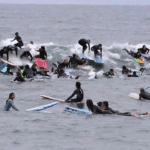
A confrontation at Punta Blanca in Tenerife escalated violently when a local surfer attacked two Venezuelan tourists, accusing them of “stealing his waves.” Social media footage shows the man punching surfer Cristian Mederos in the water before running up a seaside path and throwing rocks at Mederos and his partner, Alexandra Caraballo.
According to local reports, the couple offered to move to a different part of the break, but the man attacked without warning. The fight spilled onto shore, where he continued yelling and hurling stones.
The surfer later issued a partial apology, expressing regret for throwing rocks but also blaming the visitors for “disrespecting the spot” and upsetting long-standing local surf dynamics.
The incident comes amid broader tension in the Canary Islands, where anti-tourism protests have surged and officials have warned of declining visitor confidence. Local authorities are investigating.
And this story is a testament that some surfers are just too much.
north shore lifeguards issue chilling warning as massive swell hits o‘ahu
The North Shore lit up this week with a terrifying early-winter swell — Pipeline, Waimea, and the entire seven-mile miracle getting pounded by 30–40 foot waves. The Honolulu Fire Department issued a rare public warning telling people, especially adult learners, to stay out of the water entirely.
While officials kept their tone measured, longtime lifeguard and former pro surfer Jason Magallanes did not. After spending the day rescuing inexperienced surfers from chaotic conditions, he posted a blunt message: “You will come home in a box.” He described people trying to tow-surf without knowing how to operate skis, navigate channels, or time sets — calling it “a shit-show.”
At Waimea, things were equally dangerous. Surfers collided, dropped in on each other, and paddled out wearing safety gear they didn’t know how to use. Magallanes emphasized that on a day built for elite big-wave surfers, those without proper training weren’t just risking themselves — they were risking the lifeguards trying to save them.
You know, sometimes it isn’t gatekeeping, it’s just common sense.
fiji may bring back pay-to-surf rules at cloudbreak
Fiji is considering reinstating a controversial system that would re-privatize some surf breaks — including Cloudbreak — and require surfers to pay for access. The proposal would reverse the 2010 Surfing Decree, which opened all Fijian breaks to the public and fueled a boom in local surf businesses and homegrown talent.
Before 2010, several resorts held exclusive rights to nearby waves, and local Fijians were often barred from surfing them. That changed when all breaks were made accessible, creating what pioneer Ian Ravouvou Muller called an “explosion” of local surfing.
The new bill argues that Indigenous communities should receive compensation when visitors use their traditional marine areas. Tourism Minister Bill Gavoka said previous rules denied locals “huge opportunities” to benefit from their own resources.
If passed, the legislation could reshape surf tourism in Fiji — and potentially reintroduce a pay-to-surf model at one of the world’s most iconic waves.
We have an entire episode on Cloudbreak, check it out.
♂️ dylan graves breaks obscure guinness world record on indonesia’s “7 ghosts”
Dylan Graves — patron saint of weird waves — has officially earned one of surfing’s strangest honors: the Guinness World Record for “most top turns on a single wave.” The number? Forty-six. Yes, Guinness really counted them. The ride happened in March 2023 on The Bono in Indonesia, a tidal bore wave system better known as 7 Ghosts.
The Bono forms when a massive incoming tide charges upriver and produces a wave that just…keeps going. It’s an “undular bore,” meaning each big pulse is followed by several more, which is why the wave rolls through the jungle in a series of seven distinct walls.
♂️ when the eisbach went flat, munich surfers hit wave pool
When Munich’s beloved Eisbach river wave suddenly went flat in early November — thanks to a dredging project that removed too much sediment — the city’s hardcore river surfers were devastated. In response, O2 SURFTOWN MUC, Germany’s only wave pool, stepped in with a surprisingly wholesome offer: show a photo of yourself river surfing, get a free session.
More than 1,000 surfers took them up on it, totaling around €120,000 in donated sessions. The gesture was a nod to how deeply the Eisbach shaped Munich surf culture — and how strongly the community rallies when their wave disappears.
The Eisbach’s collapse happened after engineers lowered water levels to clear sediment but overshot the mark, leaving nothing for the river flow to hit. Instead of a standing wave, the water now collapses into a mushy whitewater.
City engineers are now working on restoring the wave. Until then, Munich’s river surfers have migrated to the wave pool.
oregon’s “sightless surfer” joins team USA after lightning-fast rise
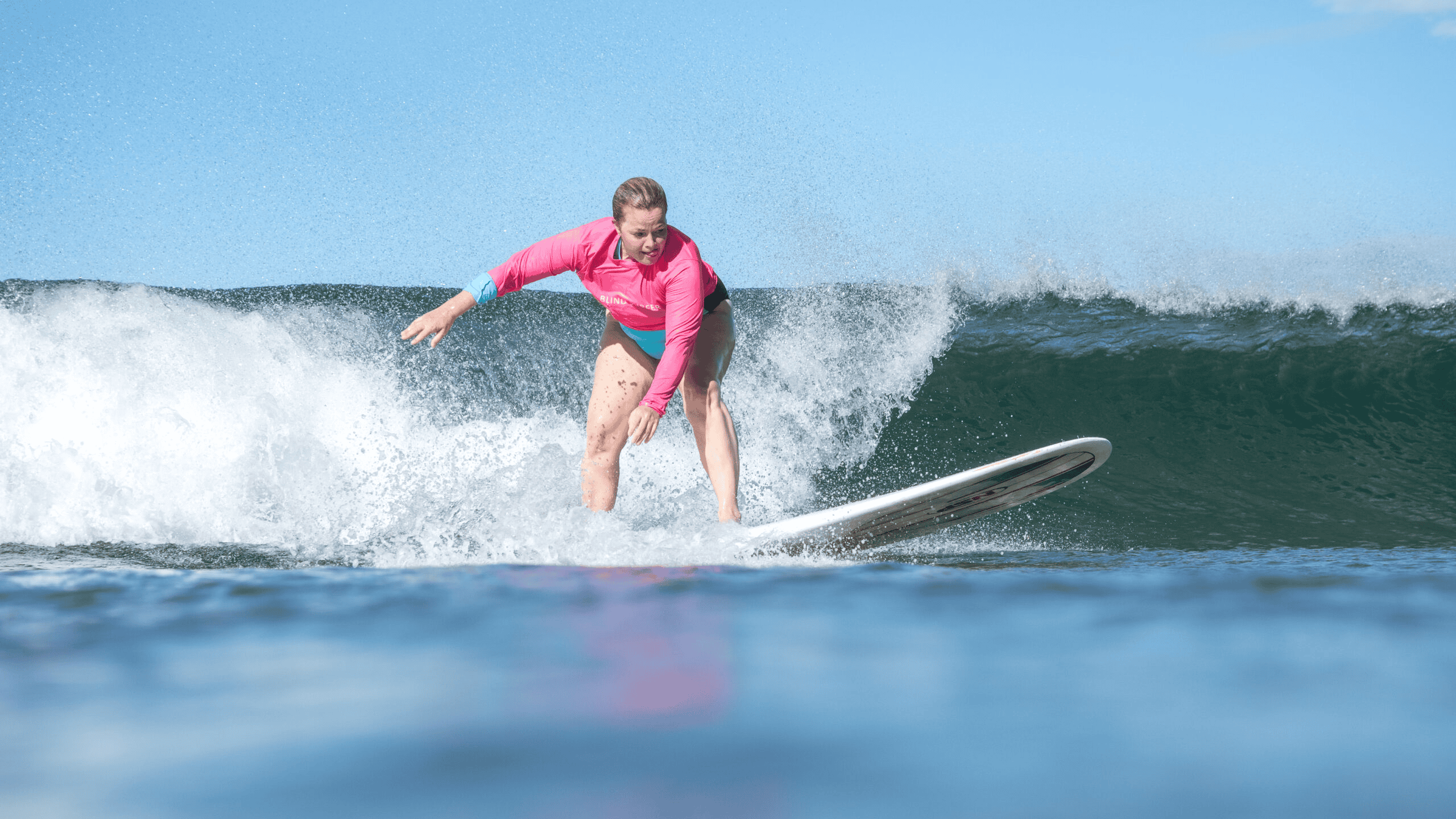
Oregon adaptive surfer Emily Purry has made a stunning leap from beginner to Team USA competitor in just weeks — a journey she describes as unexpected. Emily, who is blind due to Stargardt’s macular degeneration, said the shift began after she casually asked her surf guide how far she was from competing. His answer: “You could compete now.”
With only weeks to qualify for Team USA tryouts, she had two options: Hawaii the following week or Japan three weeks later. She chose Japan — flying solo internationally for the first time, buying her first board, and trusting strangers to help her navigate a foreign country.
She competed successfully, returned home, and eight days later made the U.S. team at tryouts in Oceanside, California. The experience, she says, restored a sense of confidence she feared she’d lost.
Emily went on to help Team USA win silver at the ISA World Championships in November — a remarkable achievement for someone who was a complete beginner earlier this year.
new wave spotlights Ireland’s rising junior surfers
Ireland’s junior surf scene gets the spotlight in New Wave, an eight-part documentary series premiering on RTÉ2 and RTÉ Player. The show follows young surfers vying for spots on Team Ireland ahead of the European Surf Championships in Santa Cruz, Portugal.
Filmed over one unpredictable Atlantic season, the series tracks surfers from Donegal, Sligo, Clare, Dublin, Waterford, and Kerry as they balance school, fierce weather, and the pressure of competition. Only three surfers per division will make the national team.
The show moves from Irish surf hubs like Lahinch and Bundoran to France, Northern Spain, and finally Portugal — capturing teenage nerves, triumphs, setbacks, and the uniquely gritty charm of cold-water surf life.Narrated by champion surfer Caoimhe Skinner-Syme, New Wave blends personal storytelling with cinematic surf footage, offering a rare inside look at the friendships, rivalries, and ocean moments that shape young Irish surfers.