Now Reading: Hawai’i wants Olympic dough. Arizona goes full send. Save the Waves summits. Otters attack.
-
01
Hawai’i wants Olympic dough. Arizona goes full send. Save the Waves summits. Otters attack.
Hawai’i wants Olympic dough. Arizona goes full send. Save the Waves summits. Otters attack.
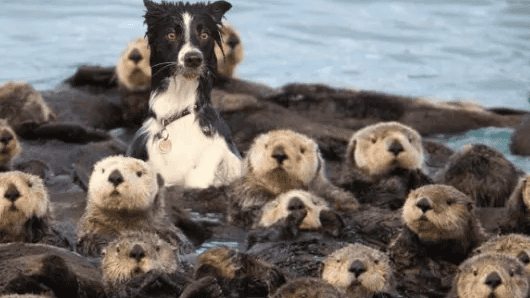
This might be the best week in surf news ever — because it involves otters. We just loooooove otters at The Wipeout Weekly.
Hawaii Wants a slice of the Olympic pie
With the 2028 Olympics set to take place in Los Angeles, government officials in Hawaii are exploring ways to connect the islands to the event — specifically by encouraging Olympic surf teams to conduct pre-Games training in the state. Because, of course, why not.
The initiative is being led by the Hawaii Department of Business, Economic Development and Tourism. Director James Tokioka said the department is actively inviting teams to stop in Hawaii before arriving in Southern California. The proposal includes the possibility of hosting preliminary training camps or even exhibition events.
Tokioka is focusing on surf teams from Asia and the South Pacific — countries like New Zealand — which may consider Hawaii a convenient and familiar stopover en route to Los Angeles. Makes sense. Just in case you’ve missed it, surfing was added to the Olympic program in 2020 and is scheduled to return in 2028, with the official competition venue located at Lower Trestles, a well-known cobblestone point break in San Clemente, California.
Although Hawaii’s waves are world-class, the conditions are quite different from those at the Olympic venue. Lower Trestles is a mellow, fast-breaking point wave, while Hawaii’s surf is typically heavier, punchier, and often breaks over sharp reefs. This contrast may influence training decisions — especially considering that, in the past two Olympic cycles, national teams have prioritized training in locations that closely match the competition setup. Ahead of the 2024 Paris Games, which featured surfing in Tahiti, many teams traveled to Teahupo‘o early to prepare.
No formal decision has been made yet about Hawaii’s role in the run-up to LA 2028. So I guess, only time will tell. I’d happily go to Hawai’i thankyouverymuch.
What saving the waves looks like in 2025
Last week in Santa Cruz, California, more than 100 members, partners, and guests from around the world gathered for the second annual Save the Waves Coalition Summit. Over three days, surf stakeholders — including representatives from all 13 World Surfing Reserves — came together to share ideas, explore new conservation strategies, and talk about what it really means to protect surf ecosystems in 2025 and beyond.
The summit’s guiding principle? “The coast is never saved. It’s always being saved.”
One of the key messages that emerged was the importance of expanding surf conservation beyond just surfers. The focus is shifting toward protecting the full set of conditions that make waves possible — from the physical coastline itself to the local communities and economies that depend on it.
You might remember that Save the Waves recently released a study showing that surfing brings nearly $200 million a year to Santa Cruz’s local economy. That same research also modeled the potential impact of sea level rise on the region’s surf breaks — and the economic loss that could follow. It’s this kind of data the coalition is using to show just how much is at stake.
️ A surf festival is coming to Arizona
Arizona is set to host a surf, skate, and music festival this year at Revel Surf Park in Mesa. The two-day event, called Revel Ruckus: Full Send Festival, will bring professional athletes, competitive events, and live entertainment to the state’s first surfable wave pool.
The festival will take place at Revel Surf Park, part of the Cannon Beach development in Mesa. The park uses artificial wave technology to produce long, rideable waves, suitable for both recreational use and professional-level competitions.
Revel Ruckus begins with a day of athlete jam sessions, skate demos, a swimsuit fashion show, and a VIP pre-party. The following day will feature the main events, including the Winch Pro Surf Big Air Contest, the Huck Dive Show, and the River League Surf Finals.
The lineup includes athletes from multiple disciplines. Colby Raha, a seven-time X Games champion and freestyle motocross world record holder, is scheduled to appear. The surf roster features names like Noah Beschen, Blair Conklin, and Austin Keen (alas I don’t know who these people are). On the skateboarding side, Omar Hassan and Heimana Reynolds are among those expected to participate.
General admission tickets are priced at $75 per day. VIP packages start at $150 and include access to exclusive areas and additional programming. Bargain!
Revel Surf Park is one of the latest additions to a growing list of inland surf facilities in the U.S. Because the world of surfing as we know it thanks to wavepools is ending.
Sea otter seizes surfboard in Santa Cruz
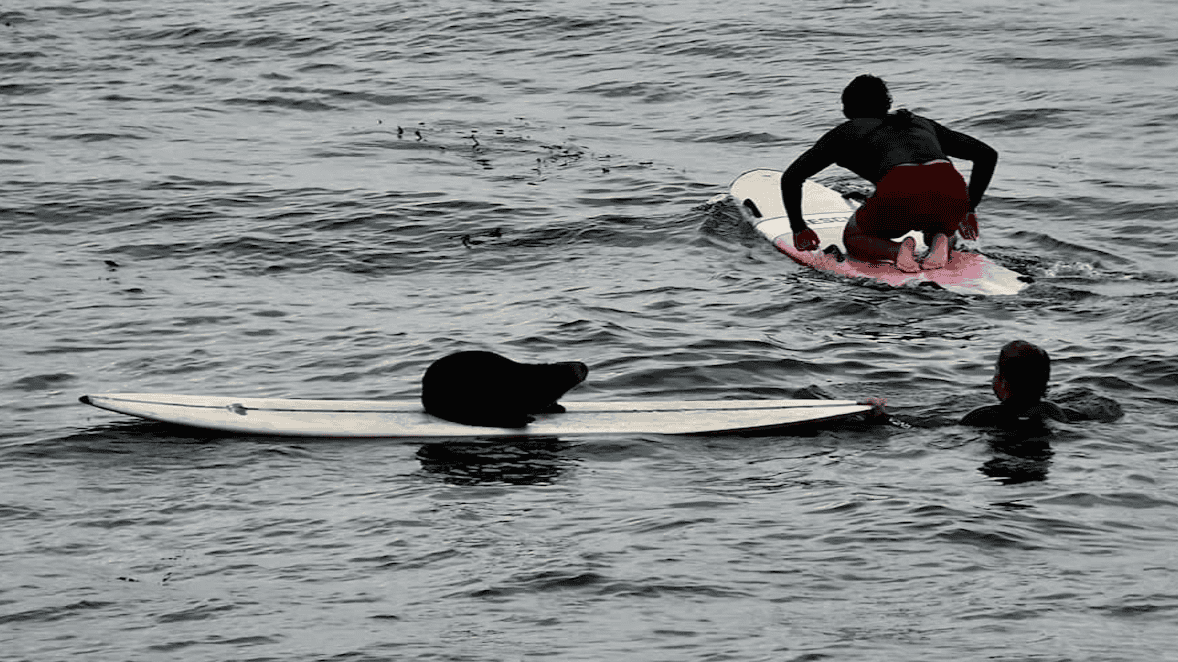
A surfer in Santa Cruz, California experienced an unusual encounter this week when a sea otter bit her foot and climbed onto her surfboard, holding it for nearly twenty minutes before lifeguards intervened. Why wasn’t it me?!
The incident occurred on Tuesday evening, October 14, 2025, at Steamer Lane. The surfer, later identified as 21-year-old UC Santa Cruz student Isabella Orduna, reported that she was paddling back toward shore when she felt what she described as a small nip on her foot. When she turned around, she saw a sea otter perched on her surfboard.
Orduna said the otter remained on the board and would not leave, despite her attempts to scare it away. Nearby surfers assisted in calling for help. Lifeguards and marine safety officers from the Santa Cruz Fire Department responded to the scene. According to an incident report, two lifeguards paddled out with a rescue board and helped bring Orduna safely to shore, where medics examined her and found no bite wounds.
The otter, meanwhile, stayed on her board for approximately twenty minutes. After a short effort to reclaim it, lifeguards were able to chase the otter off and return the surfboard undamaged. 20 minutes?! Again, why not me?!
In response to the event, the Santa Cruz Fire Department issued a PSA on social media advising surfers on how to handle sea otter encounters. The guidance recommends that if a sea otter climbs onto a surfboard, the surfer should immediately get off the board, clap hands, and splash water toward the otter to encourage it to move away. If the otter does not retreat, surfers are advised to pull the board in by the leash and paddle toward shore. When an otter is approaching from a distance, the same hand-clapping and splashing behavior is advised as a deterrent.
Orduna’s encounter is very similar a series of similar incidents in 2023 involving a sea otter known as Otter 841. That otter became widely recognized after multiple reports of her climbing onto surfboards and interacting with surfers in the same area. Otter 841 had previously been captured and tagged by wildlife authorities but was released after being identified as healthy. She was last seen in Santa Cruz in May 2024.
At this time, it is not confirmed whether the otter involved in this week’s incident is Otter 841. The tracking device originally placed on Otter 841 is no longer active, and her current location is unknown. I guess we will never know.
The Tuesday encounter is the first reported case of a sea otter commandeering a surfboard in Santa Cruz this year. Local officials and marine biologists are monitoring the situation and encouraging beachgoers to maintain a respectful distance. What is respectful distance again?!A photograph of the incident, taken by local photographer Mark Woodward of Native Santa Cruz, shows the otter perched calmly on the surfboard just offshore at Steamer Lane as rescue crews approached. Chilling, just chilling.
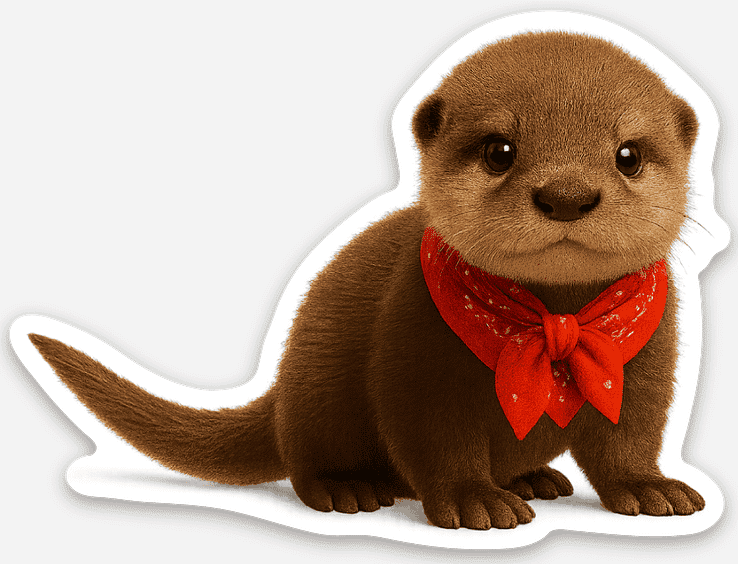
I may as well introduce you to The Wipeout Weekly‘s own Otter-In-Chief and founder of Red Paisley Bandana Crew—Wee Fatty.
Don’t call her a surfboard thief—
No one should surf alone.
Found an old red paisley kerchief once,
Bandana Crew—all her idea.
The best surf buddy you could wish for.
Ridic cute. Floatsalot. Will hold hands.
Available soon in a sticker and hat form.