
Now Reading: Meet Ireland’s Mavericks: Mullaghmore Head
-
01
Meet Ireland’s Mavericks: Mullaghmore Head
Meet Ireland’s Mavericks: Mullaghmore Head
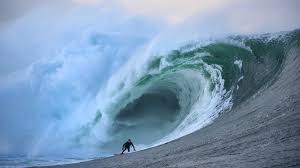
I feel like I should’ve waited with this story for St. Patrick’s Day, but I got too excited. I want to talk about surfing in Ireland, and specifically the monster that is Mullaghmore Head. The Irish equivalent of California’s Mavericks.
meet the irish beast
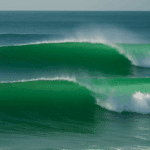
Mullaghmore Head is actually known as “The Irish Beast”. It’s Ireland’s most famous wave, the equivalent of Mavericks or cold water Jaws (the water temperature is 8–12°C / 46–54°F). It is also one of the most challenging big waves in the world.
The break can be found between Grange and Cliffoney, 400 meters northwest of the village of Mullaghmore in County Sligo. Sligo — that’s in the north of Ireland.
why it’s so terrifying
Mullaghmore is known as one of the most challenging big waves in the world. It breaks only during huge winter swells and can reach 40–60 ft+ faces. Man, that is big.
If the size wasn’t enough, it breaks over a shallow reef right beside a harbor wall, and it’s super thick. What this means is that the wave jacks up almost instantly off a ledge, folds forward, and lands with the kind of force that not wearing a flotation vest is rather suicidal.
It can actually be paddled, and that’s one of the reasons why it became famous, but these days tow-in is still common on the biggest days.
No wonder it is surfed solely by the best of the best — the very elite of big wave surfers.
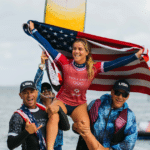
Just past December, Mullaghmore got terrifyingly big. The largest swell in five years rolled in on December 18, according to The Inertia, and with it the best of the best (or perhaps the craziest of the craziest), including Nic von Rupp, Conor Maguire, and Justine Dupont. I only recognize Justine’s name here.
I watched an eight-minute video of the wave on that day from Global Zoo and it was both mesmerizing, beautiful, and scary as hell.
ireland’s big wave awakening
Mullaghmore hasn’t been on the surf map for that long. It was only in the mid-’00s when Ireland, quoting the Encyclopedia of Surfing, “gained a measure of big wave notoriety, as videos of huge, grey waves ridden at spots like Aileen’s and Mullaghmore began pouring out of surf media outlets.”
Aileen’s, which is near the Cliffs of Moher in County Clare, is a subject for another episode — it gets as big as Mullaghmore.
It’s not surprising that Ireland is home to not one but two gigantic waves. We’ve got 1,700 miles of coast with surf on the north, west, and south coasts, most of it generated from North Atlantic storms.
From August to May, the country’s best surf is found on the north shore, particularly along the 26-mile “Causeway Coast”. But it’s not just about the north. Stormrider Guide Europe describes the west counties, including Donegal, as “a surfer’s paradise.”
I can attest that the Dingle Peninsula in the southwest is very pretty, but also very inconsistent surf-wise — but who cares: 50+ pubs in Dingle to make up for that.
how surfing came to ireland
The history of surfing in Ireland is whimsical, to say the least. This is from Encyclopedia of Surfing.
Surfing was introduced by Joe Roddy, an Irish scuba-diving pioneer and all-around ocean enthusiast, in 1949 near the town of Dundalk, riding a homemade paddleboard made from old wooden tea chests.
Then, 15 years later, Ian Hill, a British customs officer from Devon, rode his board alone for a summer near a jetty in the Northern Ireland town of Castlerock.
At about the same time, Kevin Cavey, who often bellyboarded near the Republic of Ireland town of Bray, read a Reader’s Digest story on surfing, built himself a plywood and plastic kneeboard, then sent away for a do-it-yourself balsa surfboard kit from England.
By the 1970s, Ireland had five surf clubs, national championships, and started sending Irish surfers to compete in the European Championships. The number of surfers shot up over 50k. It’s a small island, so the ratio works out to something like 1 in 100 people in Ireland surf.
So when are we going to visit?