
Now Reading: Just watching, thanks: A beginner’s obsession with big wave surfing
-
01
Just watching, thanks: A beginner’s obsession with big wave surfing
Just watching, thanks: A beginner’s obsession with big wave surfing
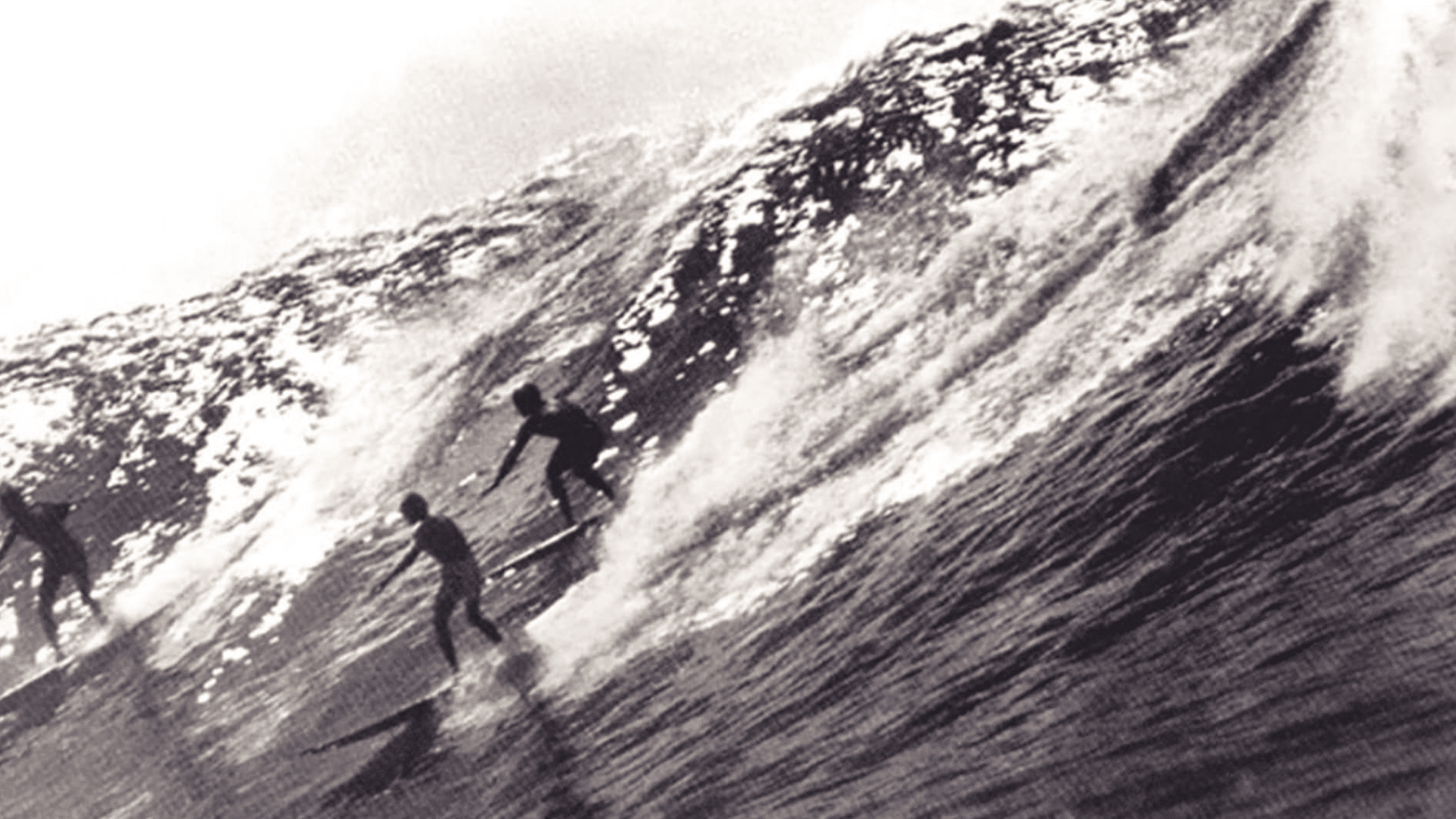
I’ve been all in on big wave surfing since I watched Riding Giants by Stacy Peralta. Just to be clear—watching big wave riding, not partaking. I have zero interest in dying.
What I got wrong about big wave surfing
Considered myself somewhat of an expert. One thing I did get wrong: the start date. If the big waves always existed, surely so must’ve big wave riding in ancient Hawai‘i. On their big-ass olos.
However, it’s said that big wave surfing only began with the invention of a hot curl surfboard designed by John Kelly, Wally Froiseth, and Fran Heath in the late 1930s—a surfboard that allowed them to trim along big waves in a more controlled manner. And then the boys traveled to the North Shore of O‘ahu, discovered Makaha, and the rest is history.
What counts as a “big” wave anyway?
Sorry—two things I got wrong. I also assumed that there must be a clear, widely agreed-upon demarcation line on what constitutes a big wave versus a regular-sized one. Because to me, a 4-footer is big.
Apparently not. It’s somewhere between 15–18 feet. Is it on the Hawaiian scale? I’m really not into ambiguity. The Eddie—the Eddie Aikau competition—takes place when waves are at minimum 20 feet, so I’m going with that.
Why big wave surfing isn’t an everyday thing
If you ever wondered why you don’t see more big wave riding being reported, it doesn’t happen THAT often, and when it happens, it’s usually in the winter.
That’s why competitions like The Eddie and the now-defunct Titans of Mavericks didn’t take place every year.
But I am digressing.
Makaha, Greg Noll, and the first boom
Back to the history. Once Makaha became a big wave thing, and a pic of Buzzy Trent, George Downing, and Woody Brown appeared in the press in 1953, things kinda snowballed.
Surfers from California began traveling to the North Shore on a regular basis, and Sunset Beach and Waimea Bay got discovered—ridden by the likes of striped-shorts-clad Greg Noll, filmed on celluloid and popularized across the USA and the world.
And that lasted until the very late ’60s, when Greg Noll dropped into a 35-foot wave at Makaha. Yes—dropped, not surfed. I do recommend watching Riding Giants for more on that story.
Then crickets for more than a decade, until Waimea started pumping big time. Then Todos Santos in Baja, Mexico, and Maverick’s became big wave surf spots.
You can hear more about Maverick’s in our pod titled: I Loved How You Almost Died at Maverick’s.
The tow-in era begins
In the early ’90s, Laird Hamilton (my hero), Buzzy Kerbox, and Darrick Doerner started dabbling with towing into the big surf using a Zodiac—it’s a kind of pontoon-type watercraft.
And tow-in surfing was born, now allowing surfers to tackle much larger waves of 30, 50 feet.
Laird started riding Pe‘ahi—that means Jaws—on Maui. And big wave surfing was back big time, with initiatives such as the search for a 100-foot wave, first by Billabong in 2001 and now by HBO with Garrett McNamara.
Official world records
More on what to wear and how to survive a big wave wipeout coming soon, but for now I will leave you with this fact:
Despite the reports of a 108-foot wave ridden by Alessandro Slebir at Mavericks, the current official records for the biggest waves ever surfed are:
- Sebastian Steudtner – 86 foot
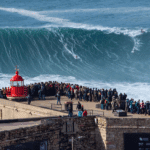
- Maya Gabeira – 73.5 foot (how precise), both at Nazaré.