
Now Reading: All hail Huey at your local surf sacrifice
-
01
All hail Huey at your local surf sacrifice
All hail Huey at your local surf sacrifice
Huey is Australia’s god of sea and surfing, similar to Hawaiʻi’s Kahuna—but not really. First of all, you can actually trace back the etymology of “kahuna” to refer to certain professionals such as doctors, surgeons, and dentists, as well as priests, ministers, and sorcerers.
But no one can agree where Huey came from. It could’ve been Hughie, with an h—the rain god from the Australian Outback who was called upon to bring rain during the droughts of 1912. Or it may be derived from “yowie,” which is an Aboriginal word associated with thunder. Or Mr Huie, who was a real-life meteorologist near Narrandera who fired cannons to bring rain.
That’s it. This is all I’ve learned about Huey. No, wait. Huey is also mentioned in relation to “surf sacrifice.”
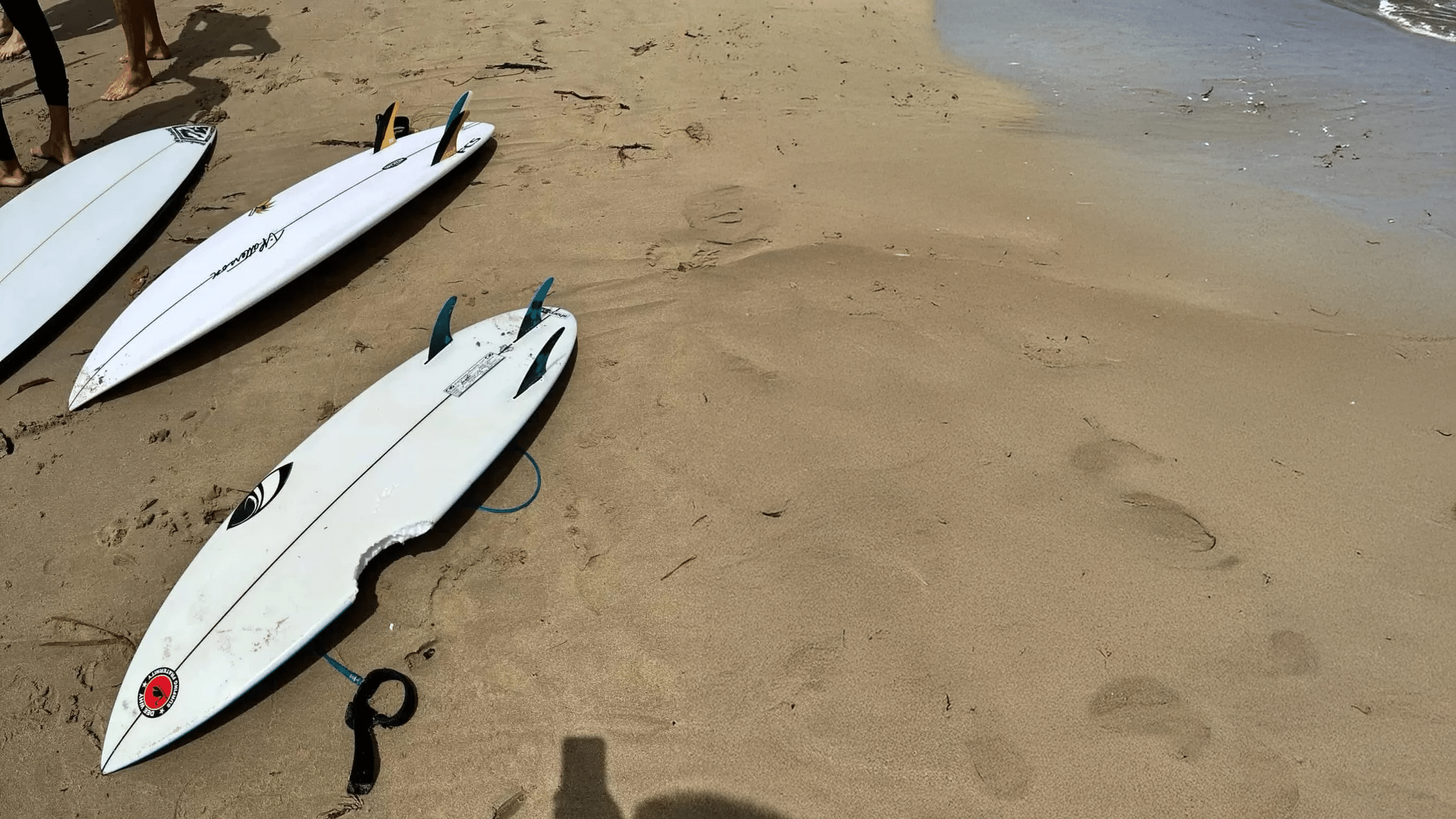
It has nothing to do with sacrificing red kumu fish when making surfboards in ancient Hawaiʻi or performing human sacrifice when building voyaging canoes. Actually, surf sacrifice is all about the destruction of surfboards.
The Encyclopedia of Surfing describes it as “a spoofing beachfront pyrotechnic ritual performed in order to bring up the waves by appeasing the surf gods with an offering—the real point being to engage in a bit of misdemeanor destruction.”
You take an old board—or a couple—you soak them in gasoline or lighter fluid, you set them on fire, and there you go: you’ve got yourself a “surf sacrifice.” Or you can chuck a board off a cliff. Dealer’s choice.
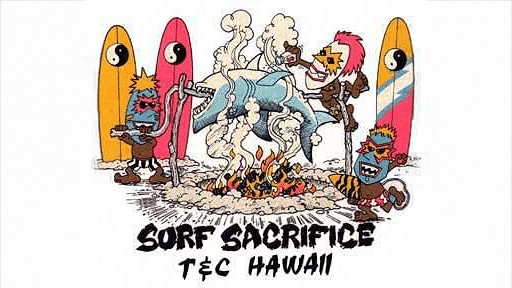
It’s no longer performed, since the ’80s, when—most likely—one of the more sober surfers (beer toast is also part of the ritual) realized this might not be particularly good for the environment.Still, it featured in multiple surf movies such as Sacrifice for Surf (1960), Innermost Limits of Pure Fun (1970), and Blazing Boards (1984). In the early ’80s, Hawaiian company Town & Country Surfboards introduced a Tiki “surf sacrifice” design featuring a spit-roasted shark. Cartoon or no cartoon, I’m in two minds about it.