
Now Reading: Skeleton Bay and the art of not going there
-
01
Skeleton Bay and the art of not going there
Skeleton Bay and the art of not going there
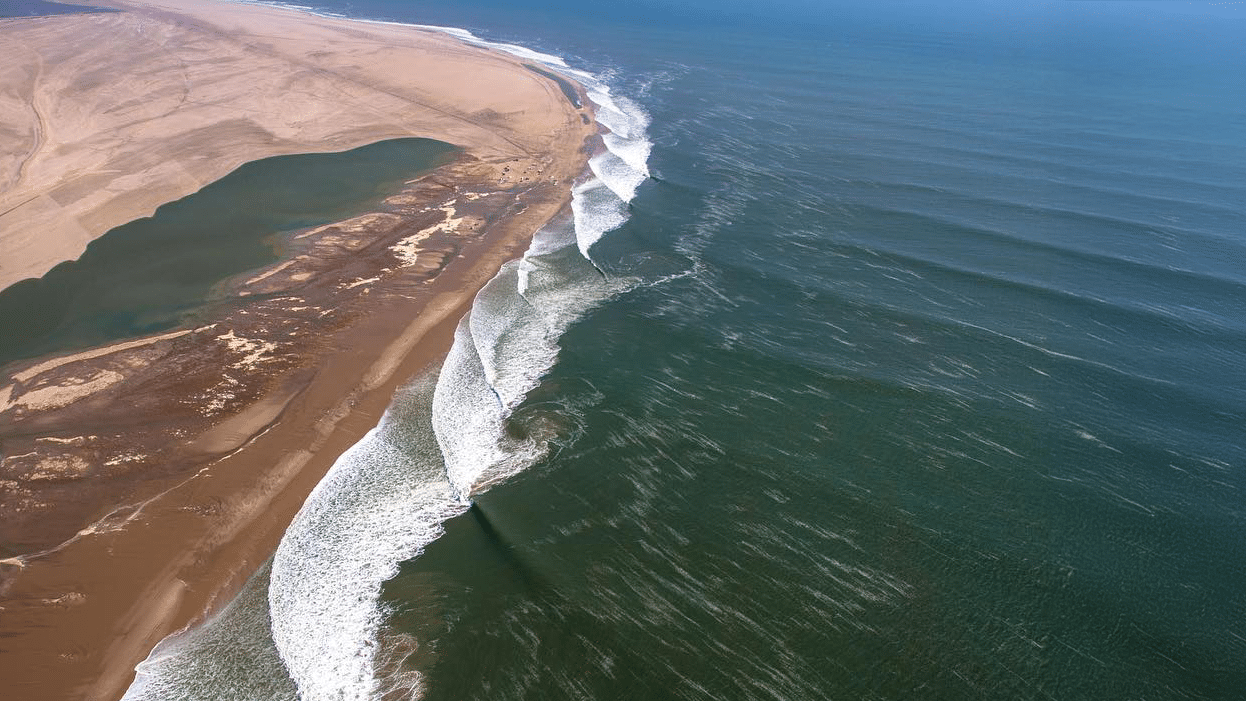
Have you ever heard of Skeleton Bay? I had not. Until now, of course. Let’s talk about one of the most famous left-hand breaks in the world.
🌍 where on earth is skeleton bay
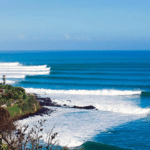
Skeleton Bay sits inside the Skeleton Coast National Park in Namibia, along Africa’s southwest edge. The name derives from the whale and seal bones that once littered the shore, as well as the skeletal remains of shipwrecks—victims of dense fog, strong currents, and a brutal coastline.
Skeleton Bay is a pain in the ass. It’s remote, you have to stay about 45 minutes’ drive from the waves, and you could spend a couple of weeks waiting for the wave—and it may still not happen. This must be horrifically frustrating because the potential of Skeleton Bay is immense. We’re talking mile-long rides and 30-second barrels.
🌊 when it works—and why it barely does
The wave is a fickle mistress. It only works in the winter months for the Southern Hemisphere (May–September) and needs a very long-period groundswell to start working. And then it works for a day or two and it’s all over. The water is cold, and wetsuits are required year-round. If you think sharks would be your main concern, think again: extreme hold-downs and remoteness are going to be your biggest enemy.
South African pro surfer Simon Nicholson called Skeleton Bay “a wave reserved only for the brave, and even then it’s a waste of time without the skills to back it up.”
🛰️ how the internet “discovered” skeleton bay
Local knowledge existed for years, but Skeleton Bay was “discovered” as part of Surfing magazine’s 2007 Google Earth Challenge—a contest that asked readers to submit satellite images of potential undiscovered surf breaks.
In July 2008, the contest winner Brian Gable, a software developer from Irvine, California—because of course—flew to Africa with pro surfers Cory Lopez, Peter Mendia, Hank Gaskell, and Mitch Coleborn. Once the footage dropped, the internet basically lost its mind.
Since then, access has been intentionally limited to prevent overuse and protect the environment—you need a permit. It helps that there’s no infrastructure at the wave itself, so be ready for a long drive. Actually, don’t—because a) the trip would cost you a few thousand dollars, and b) if you’re listening to The Wipeout Weekly, you are absolutely not ready. And that’s ok!