Now Reading: What’s in the tail?
-
01
What’s in the tail?
What’s in the tail?
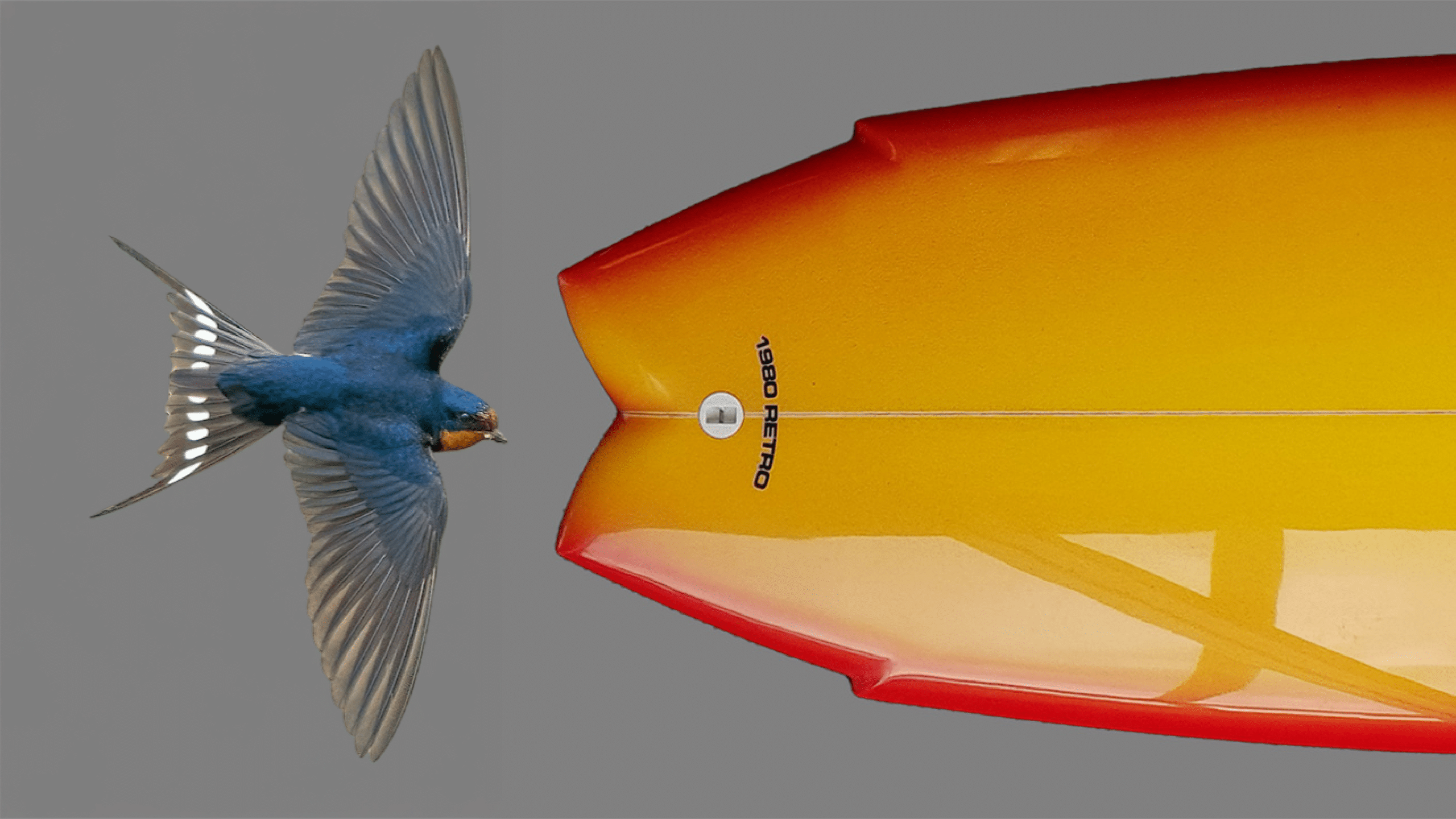
I have this coffee-table book called Surfboards by Guy Motil, published in 2007. It chronicles the evolution of surfboard design over the last century, featuring photography and history from Longboard Magazine, which Guy created. He was also a member of the Dewey Weber Surfboards team in the late ’60s and early ’70s. The book is absolutely gorgeous, and I will be featuring the funnest-named surfboard in 2026 on our pod.
In the meantime, I thought I’d share with you some tail wisdom. There are so many different shapes. Wikipedia lists 15 types: rounded square, rounded pin, swallow, square, pin, diamond, rounded, squash, star, rounded diamond, fish, bat, swallow tail with wings (i.e. stringer), fang, and hip.
It makes you wonder where these names come from. Oh wait—the shape itself. But what we really want to know is: how does a tail affect a surfboard?
Short answer: the tail controls how the board releases water—and that affects speed, hold, and turning.
The longer answer is, well, longer. The tail is the last part of the board touching the wave, so it has a huge influence on how fast the board feels, how easily it turns, how much hold you have on steeper faces, and how forgiving (or punishing) mistakes are. It’s like a steering wheel plus brakes combined.
As a beginner, you’re probably more focused on length, volume, and the general shape of the board. But the time will come when you start thinking about your tail shape—and we will have instructional pods ready for you to make that decision.