
Now Reading: Surfing Newquay (Yes, England)
-
01
Surfing Newquay (Yes, England)
Surfing Newquay (Yes, England)
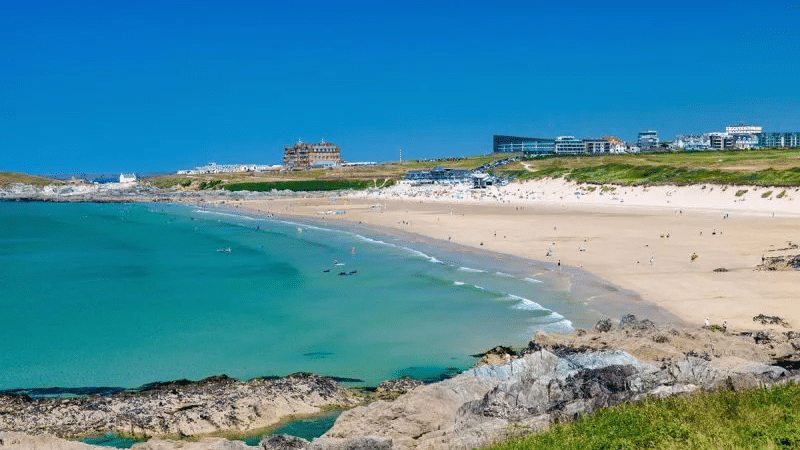
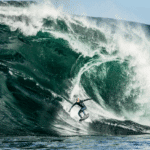
I’ve been reading about Kai Lenny’s trip to the legendary Mullaghmore big-wave surf spot in County Sligo, Ireland, in Stab Magazine. At The Wipeout Weekly, we don’t care as much for waves that are actively trying to kill us, so instead we wanted to take you on a trip down south—go surfing Newquay, Cornwall, the UK’s surf capital.
You know what the problem with Newquay is? It’s so far from London! But hey, it’s Surf City UK, so you do what you’ve gotta do when you want to surf in England. There are closer places to London, like Wales and North Devon, but it’s Newquay that remains the mecca of British surfing.
when the waves actually work
You can surf in the UK all year long, but of course the best—the cleanest—waves arrive not in summer, but when you can semi-freeze to death changing in the parking lot: roughly September to April. Size-wise, we’re talking four to six feet, with the occasional push up to ten. Temperature-wise, around 45°F / 7°C when the waves are good. Sometimes it’s genuinely warmer in your 5/4 in the ocean than outside.
Newquay sits on the north coast of Cornwall, facing straight into the Atlantic. That positioning is everything. The town is fully exposed to North Atlantic swells, which means consistent waves year-round—and proper power when winter storms roll through.
a quick surf history detour
There had been bellyboarding and occasional stand-up surfing in the UK prior to the Second World War. However, the true arrival of modern surfing is often said to have occurred, according to the Encyclopedia of Surfing, in 1959, when Newquay employed full-time lifeguards on its local beaches. They sometimes used their hollow wooden paddleboards to ride waves. Visiting lifeguards from Australia brought their own fiberglass boards.
Then, in 1963, the first surfboard retailer—Bibo Surfboards—was established. By 1970, the British Surfing Association (BSA) existed, and European surf competitions were happening across the UK.
why newquay really works
Enough about the history—let’s talk surf spots. Lots of surf spots.
Because what makes Newquay special isn’t one perfect wave, but the choice of decent waves within a relatively small stretch of coastline, working at different swell angles and excelling in different conditions. That’s why it works for both experienced and beginner surfers alike.
Fistral Beach
The most famous one. Long, open beach, consistent peaks, handles size well. It’s where competitions happen—and surf lessons, too. Good stuff.
Crantock
Just across the river from Fistral and often calmer, both in energy and crowd.
Towans / Great Western
More sheltered, more forgiving. These beaches catch smaller swell and are often where people head when Fistral is blown out.
Lusty Glaze & Porth
Sometimes hard to tell apart unless you’re a local.
You’re probably thinking: why would I go surf in Newquay if I live, say, in California, Australia, or near Biarritz?
I don’t know—bragging rights? Decent fish and chips? Because it’s fun. Try it.