Now Reading: Cloudbreak is a food wave
-
01
Cloudbreak is a food wave
Cloudbreak is a food wave
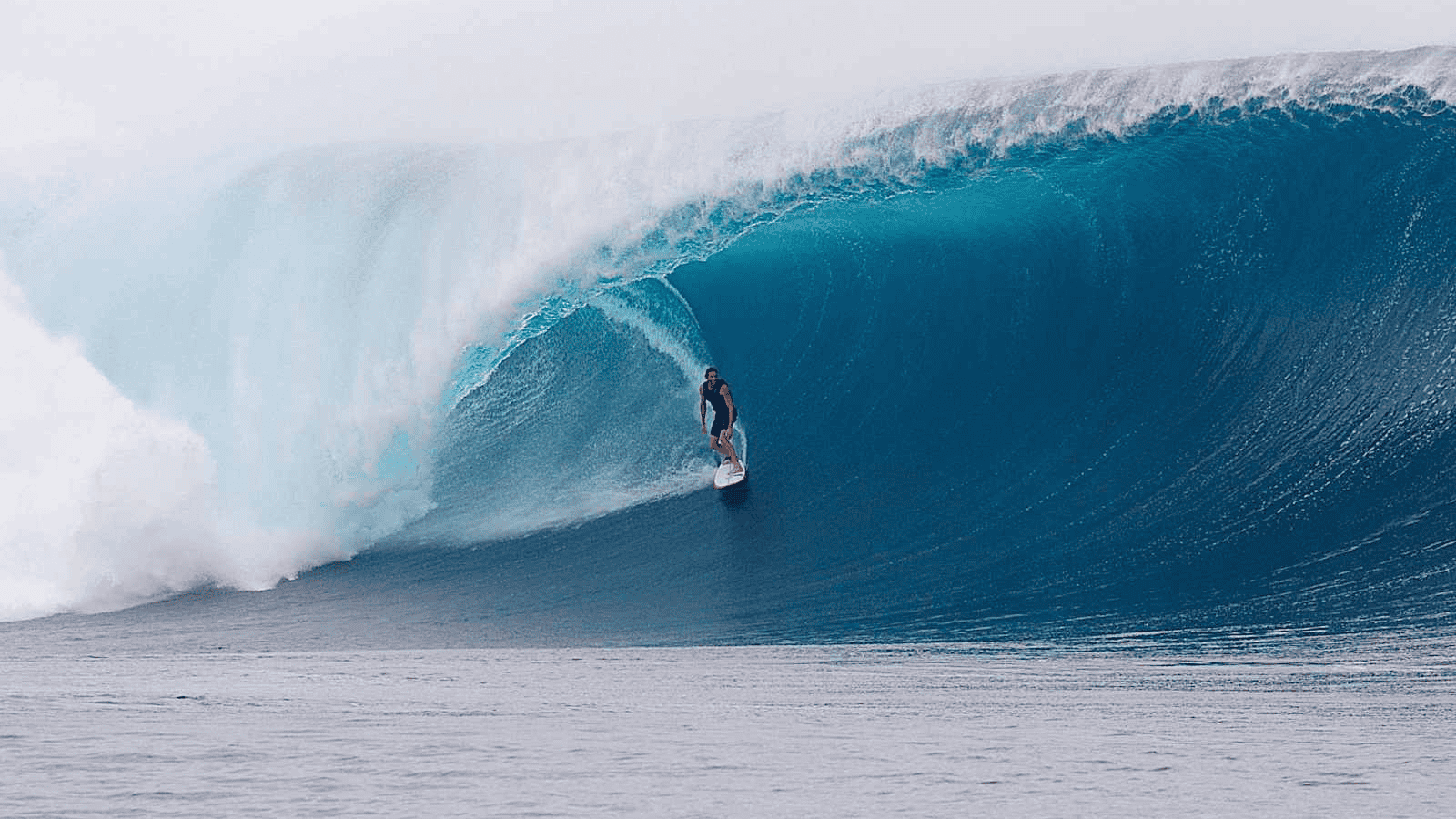
Kaboom. The worlds collide. This week’s word of the week and wave of the week and surf spot of the week and a surf news of the week is cloudbreak and Cloudbreak. But what you mean, Cloudbreak is a food wave? Patience!
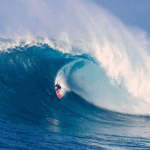
Cloudbreak with a lower “c” is a big wave break, usually a reef one, usually to be found beyond the normal surf zone. According to the Encyclopedia of Surfing, cloudbreaks come into full force during the biggest storms and more often than not are totally and utterly unreadable.
Although what does “unriddable” means this day, right? Everything can be ridden if you’re crazy enough. One of the most famous cloudbreaks is Outer Log Cabins on the North Shore of Oah’u. You may also come across cloudbreak’s other names: outer reef and bombora (that’s in Australia and New Zealand).
Not time to read? There’s a micro-pod for that.
cloudbreak: fiji’s left-hand dream
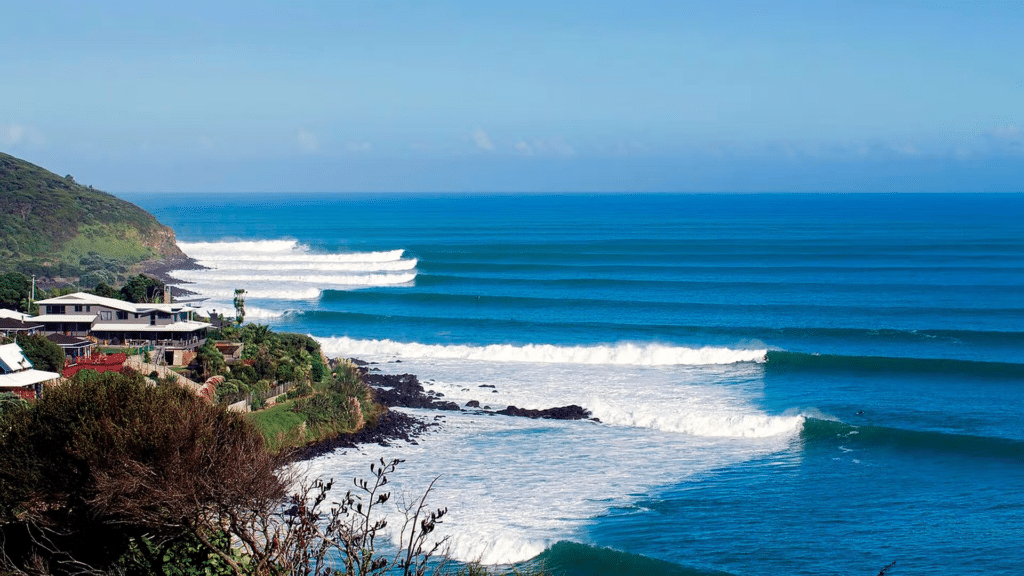
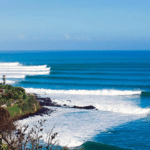
Now, is Cloudbreak with a capital “c” a cloudbreak? It’s a reef break for sure. Shortened from “Thunder Cloud Reef” One of the world’s best left-breaking reef waves. Living just next door to the other world’s best left-breaking wave called Restaurants. You gotta love the name. Both are located in Tavarua, which is a very wee island in Fiji. And they just happen to be of one of the bucket list spots for most surfers who know what they’re doing.
The breaks in Tavarua break best from May to October, you get Southern Hemisphere storms driving consistent surf often coupled with offshore winds. If you thought Restaurants was a fun name, Cloudbreak is split into three sections: the Point (boring), the Middle (boring), Shish Kebabs (hell yeah). When they link up, you get to ride for 200 yards. As for the height, normally you will be experiencing four to six feet, but it’s still rideable at 18 feet. The water is warm, it’s the tropics after all, high 70s to low 80s.
Cloudbreak was “discovered” by American yachtsman John Ritter in 1982 who shared his discovery with a surfer friend Dave Clark who later staked out Tavarua for two months. The spot seem to good of a business opportunity to pass by, so Dave and his cousin secured what they believed would be exclusive surfing rights to the local breaks and built a private cabin for 24 surfers and called it The Tavarua Surf Resort. By 1984, the circus kicked off, because of course a feature in Surfer mag. And the resort would get booked solid for months in advance.
️ the era of “exclusive rights”
The “exclusive” rights to the surf breaks, with added “fishing rights”, have been “tested” for years. And no freaking wonder. For decades, Cloudbreak lived under this strange, semi-privatized system. If you weren’t staying at the exclusive Tavarua resort or on one of the connected islands, you couldn’t surf it. Locals—actual Fijians—were often told they couldn’t surf their own waves. Visiting surfers were openly turned away.
That changed in 2010, when former commander of the military dictatorship in charge of the country at the time Frank Bainimarama issued the Surfing Decree, a national law guaranteeing free access to all waves in Fiji. It was historic. Suddenly, anyone with a boat could surf Cloudbreak and finally locals could surf their home breaks freely.
The Fijian surfing pioneer Ian Ravouvou Muller told ABC:
“We as locals couldn’t surf. We were treated as second-class citizens in our own country… Ever since we opened, there’s been an explosion of local surf businesses and local surfing.”
But but but (and take it from someone who grew up in a communist block) giving the power to the state is not always best for the people.
It worked out for some locals, for sure, but other indigenous owners of the coastlines and seas were cut out–the decree removed their rights to control access to their marine areas and banned other activities from surfing hotspots, like fishing.
the new bill: pay-to-surf 2.0?
So, a new bill is in play today. One that is currently being pushed through Fiji’s government that would re-privatize the marine areas, including surf spots like Cloudbreak.
Meaning that waves could be “leased” again, resorts or operators could charge fees, but also that locals and visitors might pay to access their own coastline, and Cloudbreak may no longer be freely surfable.
Tourism Minister Bill Gavoka argues the old system didn’t allow indigenous Fijians to benefit financially from their marine resources:
“No-one was allowed to receive any compensation… they were denied the huge opportunities to make something out of their resources.”
The new proposal would create a structure for local landowners—known as mataqali—to receive compensation when others use their marine areas, including breaks like Cloudbreak.
In other words: surfing would generate direct income for local Fijian communities rather than private resorts.
That’s the intention. Whether it will work that way is the debate.