Now Reading: Surf lessons go free. Nazaré goes boom. Coral goes into labor. Carissa comes back. Skiers back off. A 10-year-old keeps her hand.
-
01
Surf lessons go free. Nazaré goes boom. Coral goes into labor. Carissa comes back. Skiers back off. A 10-year-old keeps her hand.
Surf lessons go free. Nazaré goes boom. Coral goes into labor. Carissa comes back. Skiers back off. A 10-year-old keeps her hand.
It’s a bumper edition of the surf news roundup—not every story is strictly surf-related, but important nevertheless. We just love keeping you informed.
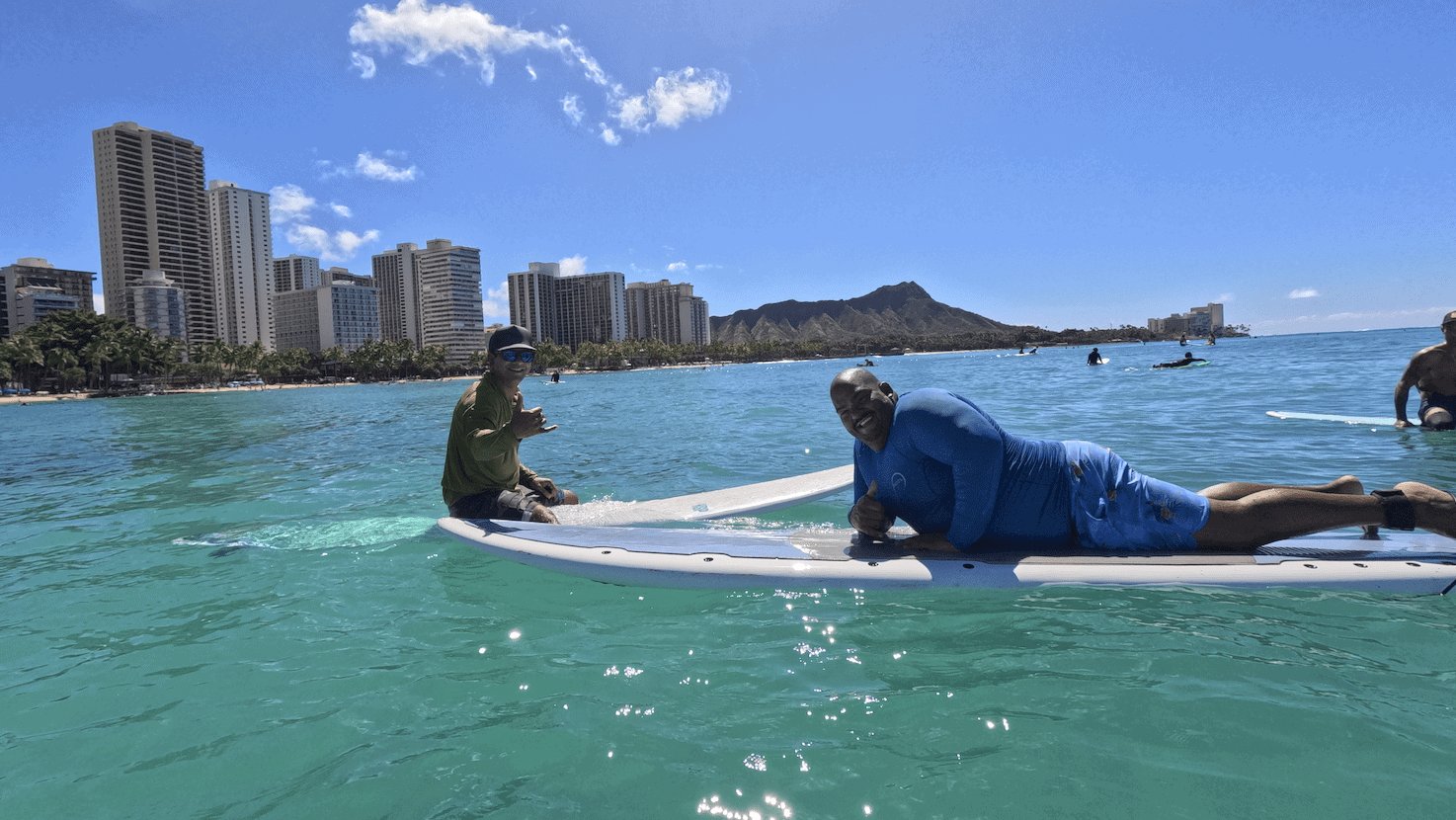
Free surf lessons in Waikiki? You better believe it.
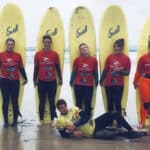
In a time when surf lessons in Waikiki can run up to $200 for a private one, a trio of local surfers is making a change. Enter the First Wave Project—a grassroots initiative where strangers get surfed for free. No strings. No email signups.
Led by Honolulu native Buddy Wiggins and childhood friends Zach Murphy and Isaiah Moniz, the project has already taught 50+ people to ride their first wave—most of whom never imagined they’d ever paddle out.
Some stories are light-hearted (like the guy on a Waikiki bender who found surfing might beat out booze). Others are tearjerkers—like the visitor who opened up about depression and found hope in a single ride.
In case you were wondering who’s charging $200 for a private surf lesson… that’d be the Moniz Family Surf School.
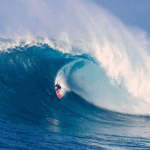
Nazaré hit by 40-foot bombs, big wave carnage, and jet ski saves
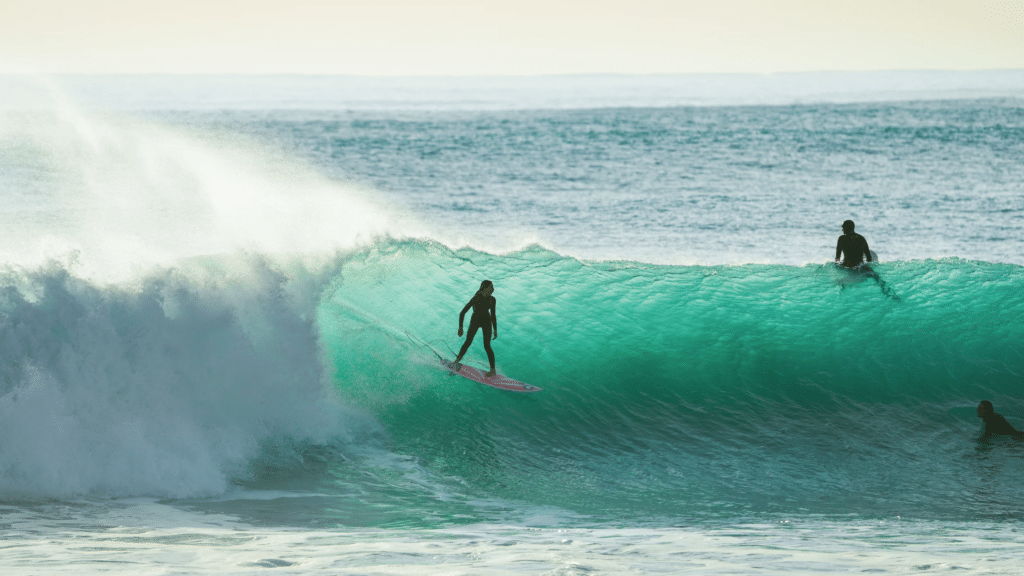
Last week it was Mavericks. This week? The first big wave swell of the Nazaré season just rolled through Portugal and brought three solid days of 40-foot action.
Legendary surf cinematographer Tim Bonython was there for his 10th Nazaré season and caught the whole thing on film. Highlights included England’s Laura Crane and Portugal’s Tony Laureano, who barely outran a monster set on a jet ski.
And this is just the beginning of the season.
This story has been months in the making—we give you: coral babies.
Florida is going full ocean mom mode (bear with us!) and we are here for it. In a massive coral baby boom—yes, coral baby boom might be our favorite phrase ever—the Florida Aquarium is putting all the doulas to shame and helping birth thousands of juvenile corals as part of a major reef restoration effort.
Funded by Florida’s Coral Reef Restoration and Recovery Initiative, the plan involves 5,000 coral “babies” and hundreds of thousands of larvae being grown in lab tanks, then delicately planted into reefs across Southeast Florida and the Keys using underwater cement.
Some of these baby corals are offspring of rescued parents who’ve already survived both disease and heatwaves—making them, in theory, tougher, younger, and maybe even more heat-resilient.
Why does this matter? Because staghorn and elkhorn corals—Florida’s primary reef-builders—were nearly wiped out. Less than 22% of staghorn survived. But the brain corals planted from earlier efforts? They held strong. Scientists hope that selective coral breeding—like agriculture, but underwater—could help reefs survive our new climate reality.
With natural reproduction now almost impossible (there just aren’t enough healthy corals left close enough together), this project may be the last best hope for Florida’s reef system.
And now we have coral babies on the brain.
Carissa Moore is back—and we’re collectively losing our minds over it
Hawaii’s own Carissa Moore, five-time world champ and Olympic gold medalist, just announced she’s returning to the WSL tour in 2026 after stepping away post-Paris Olympics.
And yes, she surfed Teahupo’o while two months pregnant (because of course she did).
Moore will rejoin the tour with a season wildcard, kicking things off at Bells Beach on April 1 and finishing with a hometown crowd at Pipeline. After a decade on tour and a pause to start her family, Moore says she’s still got more to give—and we’re all for it.
♂️ U.S. Ski & Snowboard comes to its senses
As surfing prepares for its biggest Olympic moment yet—LA28 at Lower Trestles—an idiotic power struggle just got wiped out: U.S. Ski & Snowboard has dropped its bid to govern Team USA surfers.
The winter sports giant had hoped to bring its Olympic pedigree and infrastructure to surfing, pitching a crossover strategy led by former WSL CEO Sophie Goldschmidt. But after a year of public spats and legal threats, they are out.
That leaves USA Surfing—the San Clemente–based org that groomed past gold medalists—as the frontrunner to reclaim governing body status. After voluntarily decertifying in 2021 due to financial reporting issues, USA Surfing has since cleaned house: new leadership, new policies, new funding. They now have backing from top athletes, the WSL, the International Surfing Association, and elected officials like Rep. Mike Levin.
Not your usual shark story: 10-year-old girl’s hand saved after near-amputation
We usually only cover shark stories when they involve close calls in the lineup or a board getting munched mid-session. But this one is worth telling—because it shows what’s medically possible after a shark encounter.
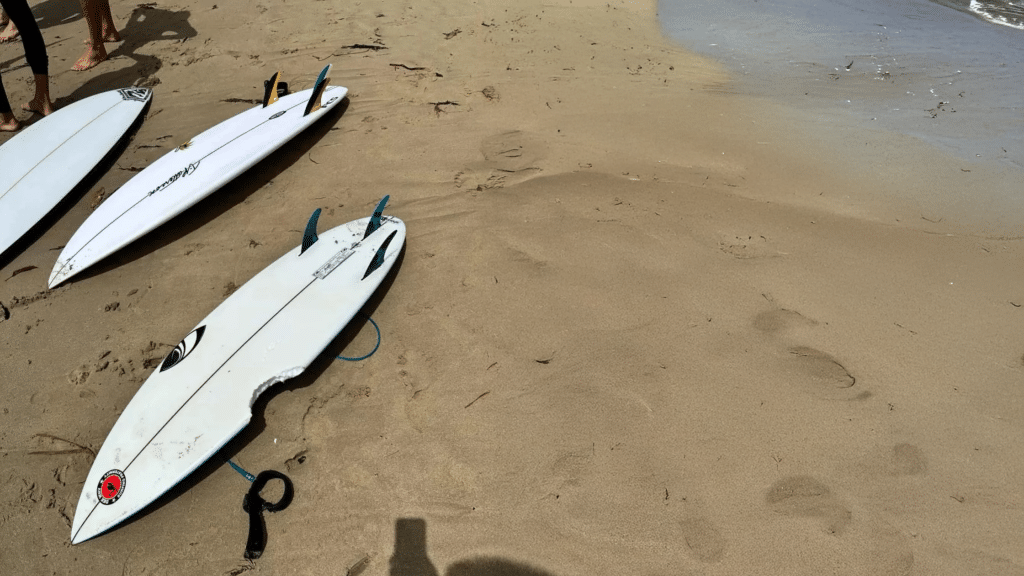
Back in June, 10-year-old Leah Lendel was snorkeling with her family in shallow water off Boca Grande, Florida, when she was bitten by a 9-foot bull shark. The attack nearly severed her right hand, leaving it attached by just a shred of skin.
Thanks to quick-thinking construction workers who applied a tourniquet, and a six-hour reattachment surgery at Tampa General Hospital, Leah is not only alive—she’s knitting clothes for her Barbie dolls with the same hand that almost didn’t make it.
Leah was able to move two fingers within 24 hours. Now—months later—she’s regaining sensation and movement in all five digits. Surgeons even used arteries from her leg to reconstruct tendons and restore function. The fact that no bones were missing helped, but still—this is wildly rare and borderline miraculous.
In other news: Sharknado 7 is coming. SEVEN. Our collective obsession with sharks appears to be eternal.