
Now Reading: Tow surfing a.k.a. that thing we’ll probably never do
-
01
Tow surfing a.k.a. that thing we’ll probably never do
Tow surfing a.k.a. that thing we’ll probably never do
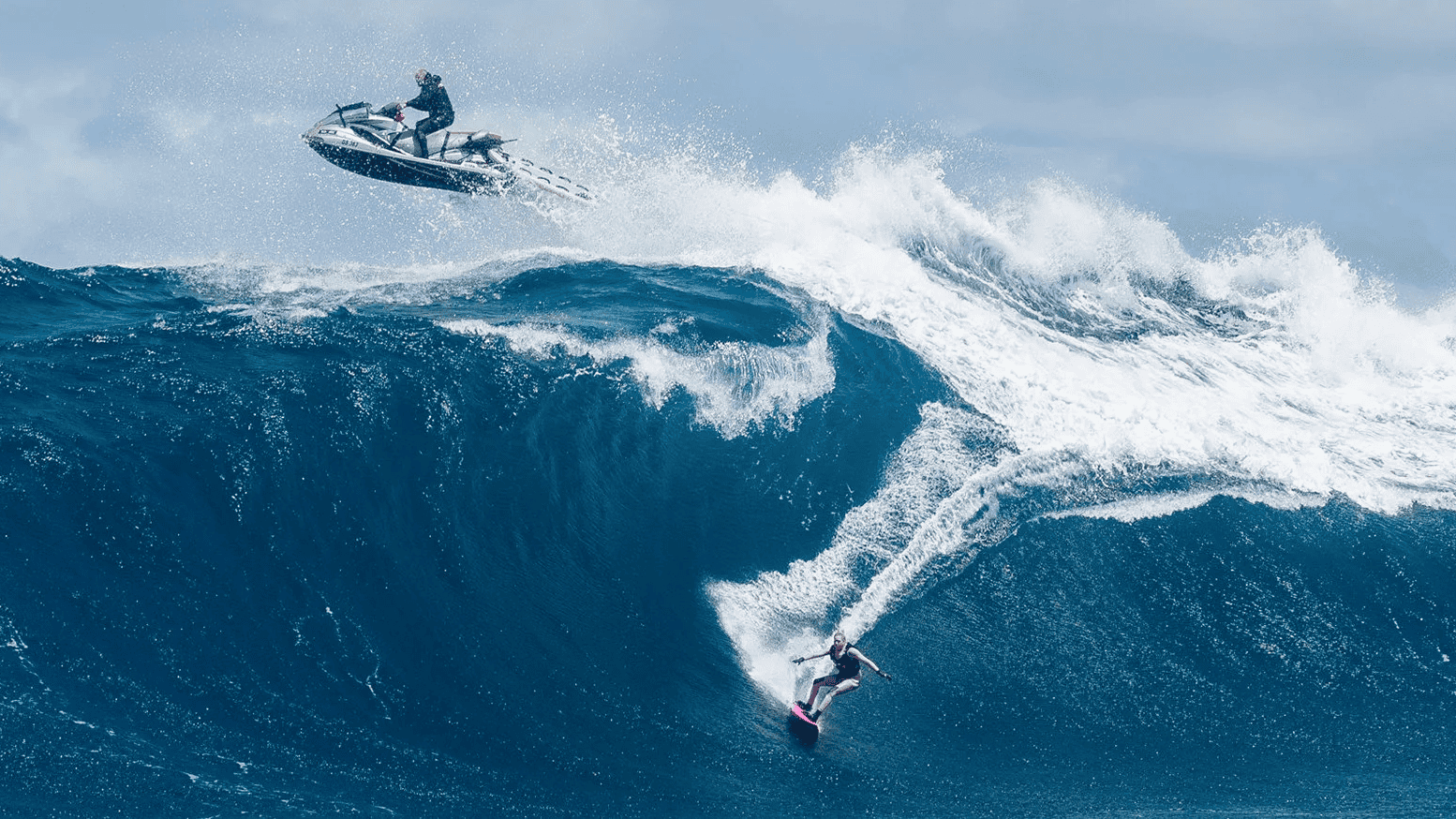
Word of the week—or more like concept of the week—is tow surfing, or tow-in surfing. That other kind of surfing that we don’t usually do, because we’re not nuts enough to surf gigantic waves.
My surfer friend sent me a video. Without much explanation. In the video, he looked like he was wakeboarding. What’s the big deal? I thought. I kept watching. And then the horizon disappeared and I heard: “Let go, let go!”.
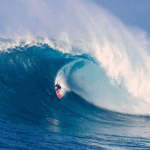
My friend got towed into an absolute monster on the North Shore. He later told me that a few days earlier, it was twice as big, and he thought he’d die. There’s no way he could’ve caught that wave by simply paddling.
When paddling just isn’t enough
There’s a point where the ocean just gets too big. Too fast. Too heavy. Where paddling becomes just not enough. That’s where tow-in surfing comes in the method that allowed humans to ride waves once thought completely unrideable.
Tow-in surfing involves using a jet ski to tow the surfer into a massive wave. The goal is to slingshot the rider into a building-sized swell, let go of the rope, and ride the beast before it swallows you whole.
The jet ski gives the surfer the speed they could never generate on their own—essential for catching waves moving as fast as 40–50 km/h (25–30 mph) or more. Tow surfers, by giving themselves a running start, broke the 30-foot wave barrier easily and continued riding ever-larger waves — well over 50 feet by 2001.
A Maui nvention? Not quite.
You might’ve heard that the technique was pioneered in the 1990s by the Maui crew—most famously Laird Hamilton, Darrick Doerner, Dave Kalama, and Buzzy Kerbox.
But the idea for power-assisted surfing dates back to at least 1963, according to the EOS. “The surfer might be towed into the wave by a boat much like a water-skier,” California’s Mike Doyle wrote in Surf Guide magazine.
Then Hawaii’s Jim Neece tried using a speedboat-powered “water-ski takeoff” on smaller waves in 1974. He wanted to surf Ka‘ena Point—a break that gets big—but he abandoned the idea. In 1987, California’s Herbie Fletcher towed some surfers into 10-foot waves at Pipeline; in the fall of 1991, East Coast surfer Scott Bouchard was towed into a half-dozen 12-footers at a Florida break called RC’s.
Then the Strapped Crew happened. Hawaiians Buzzy Kerbox, Laird Hamilton, and Darrick Doerner began by using Kerbox’s inflatable Zodiac boat in late 1992 to tow each other into 15-foot waves at Backyards, near Sunset Beach on the North Shore of Oʻahu. Their exploits are documented in Riding Giants and Step Into Liquid. The Zodiac turned into a jet ski, and the crew went on to conquer Jaws (Peʻahi). And the rest is history.
Board design for tow-ins
Wait. One more thing. Traditional surfboards weren’t cutting it for these wave sizes, so they designed new boards — smaller than traditional guns, but heavier and with straps to stay connected during takeoffs that felt like being launched from a cannon.
Not everyone loved the idea of towing. This is from the EOS again: “Critics said that tow-in was a blasphemy against the very nature of surfing—that drawing a bead on an incoming wave and paddling into a vertical drop was, in fact, the essence of big-wave riding. That the sport in general derived its beauty in large part from its lack of mechanization.”
And as such, the sport split in two. 99% paddle surfers, and 1% tow-in surfers — or more like surfer teams, since you can’t really do this on your own. In case you were wondering, a popular PWC (personal watercraft), the Yamaha WaveRunner, retails at $12,399.