
Now Reading: Bored of the ocean? Try bore surfing.
-
01
Bored of the ocean? Try bore surfing.
Bored of the ocean? Try bore surfing.
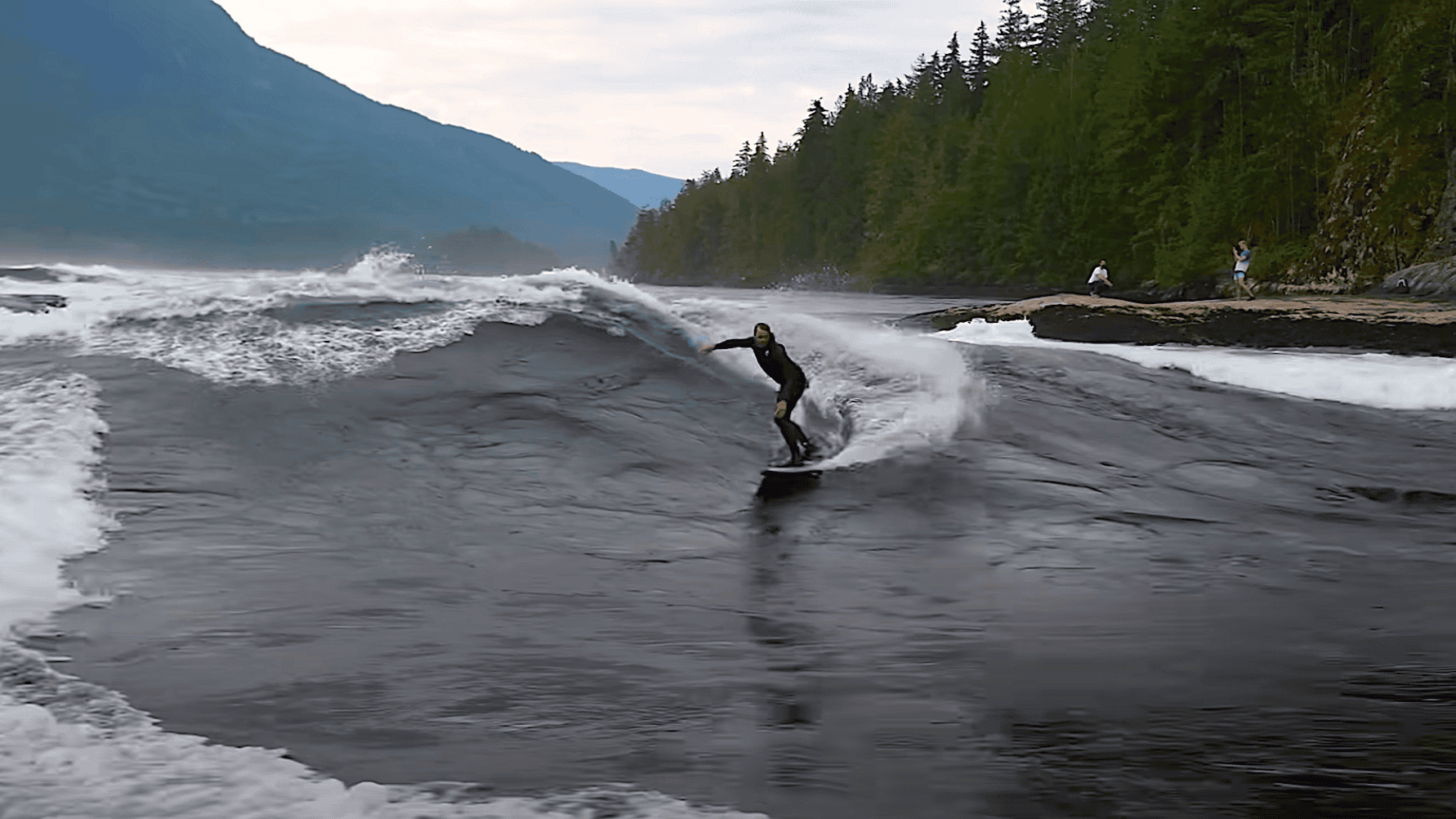
“I’m bored of surfing in the ocean”, said no one ever. But let’s explore other types of surfing anyway. Starting with bore wave surfing.
Bore wave surfing must be one of the weirdest and rarest forms of surfing. It doesn’t happen in the ocean. It doesn’t happen in a wave pool. Because bore surfing is a river and lake affair. Mostly, a river affair. And not every river, every time, either.
️ What even is a bore?
What is even a bore, you may ask? Well, a bore is a person who is dull as a marine layer in the summer in LA. I know, not that kind of bore.
A bore (also called a tidal bore) is a natural tidal phenomenon where the incoming tide forms a wave—or series of waves—that travels upstream in a river or narrow bay, against the direction of the current. It’s like if the ocean were pushing so much water into a river mouth during high tide that it created an actual breaking wave moving inland. That wave is the bore.
Bores are not a common occurrence. They usually form in areas where the difference between low and high tide is pretty high, typically more than 20 feet. It also helps if the incoming tide is funneled into a shallower and narrower river or lake.
For instance, the famous Severn in the UK has an estuary that is literally funnel-shaped, with a deep end at the river mouth and getting shallower as you move inland. According to an article in Surfer mag from 1968, “at spring tide,” the tidal range can be well over 40’ (49’ according to the EOS), and as the incoming tide pushes the estuary, a wave is formed—sometimes a powerful, ripping wall of water that precedes a great flood.
That’s River Severn, but the height and quality of bores elsewhere differ greatly. Some bore waves are a few inches high and choppy. Others are overhead-high and totally surfable.
The longest ride in the world
You might be wondering why we’re so excited about bore wave surfing. Okay, what’s the longest ride you’ve ever had in the ocean? 30 seconds? 1 minute on the slow-rolling waves of Hawai’i? Ha!
Bore wave rides can last several minutes to even… wait for it… an hour! I kid you not. The world record for the longest duration of a bore wave surfed is 64 minutes. The record was set on the Bono tidal bore in Indonesia by Steve King in 2013, with that ride lasting for 12.8 miles or 20.6 km. Insane!
When you watch surfers ride the bore in Alaska, they ride for so long, they need to sit down. Actually, they might just be admiring the views.
Where to find them
Tidal bores only occur in about 60 rivers and lakes worldwide, which makes sense, because you need a huge tidal range and funnel-shaped estuaries.
Some of the most famous ones are:
- Pororoca, Amazon River, Brazil – the most famous (and loudest) bore in the world. The water is brown, debris-filled, and home to trees, snakes, and piranhas—so it’s a wild ride.
- Severn Bore, River Severn, UK – the most famous bore in Europe. It happens several times a year when tides in the Bristol Channel push into the river.
- Qiantang River Bore, China – a national spectacle; thousands of people gather on the banks every fall to watch it.
- Turnagain Arm Bore, Alaska – spectacular views and icy perfection.
Catching the bore (and surviving it)
Once you’ve identified your bore of choice, you gotta catch it. It can be a bit unnerving because the wave creeps—or rushes—upriver like a backwards tsunami. Surfers either line up and catch it from the bank or get dropped in by jetski, depending on where you’re going to surf a bore.
If you want to be entertained, may I recommend watching a group of Polish surfers trying to surf River Bóbr? Not a proper bore wave from what I can see, because the surfers stay in the same spot. The level of commitment and damage to their surfboards is out of this world.
⚠️ Dangers of bore surfing
I know what you’re thinking: OMG, all of this sounds amazing, lemme try! Now, hold your horses.
Tidal bores surge up muddy rivers, and the water is often full of branches, logs, plastic, even dead animals swept in from upstream—because, you know, flooding. Because it’s so murky, you can’t see below the surface, so it’s easy to hit hidden objects. Not to mention, these rivers often run through populated or farmland areas. The water quality can be horrible—bacteria, fertilizer runoff, sewage, etc.
And the bores are unpredictable as hell. First, it’s a wall of water moving against the river current. That’s already against nature, LOL. Because a bore can reverse the river’s flow in seconds, it creates whirlpools and cross-currents. Fun.
If you fall, you can get trapped underwater or dragged for long distances before surfacing.
Yes, you can ride for miles, but how much you can maneuver really depends on the bore. You’re often surfing narrow, twisting river channels with muddy banks and trees sticking out on both sides. Stopping is kind of a non-option—you can’t just pull out over the back of the wave; you’re stuck riding it until it runs out or you bail.
It can be cold. It can be muddy. There could be piranhas, snakes, and crocodiles—although not all at once.
The worst part is that the good bore conditions are even rarer than the good wave conditions at my local surf spot. And once you miss it, you’ve missed it for good—there’s not another wave coming.
Still, who wouldn’t want to try it? It does have cult status, after all.