
Now Reading: Soul arch, and can you be a soul surfer with a mortgage?
-
01
Soul arch, and can you be a soul surfer with a mortgage?
Soul arch, and can you be a soul surfer with a mortgage?
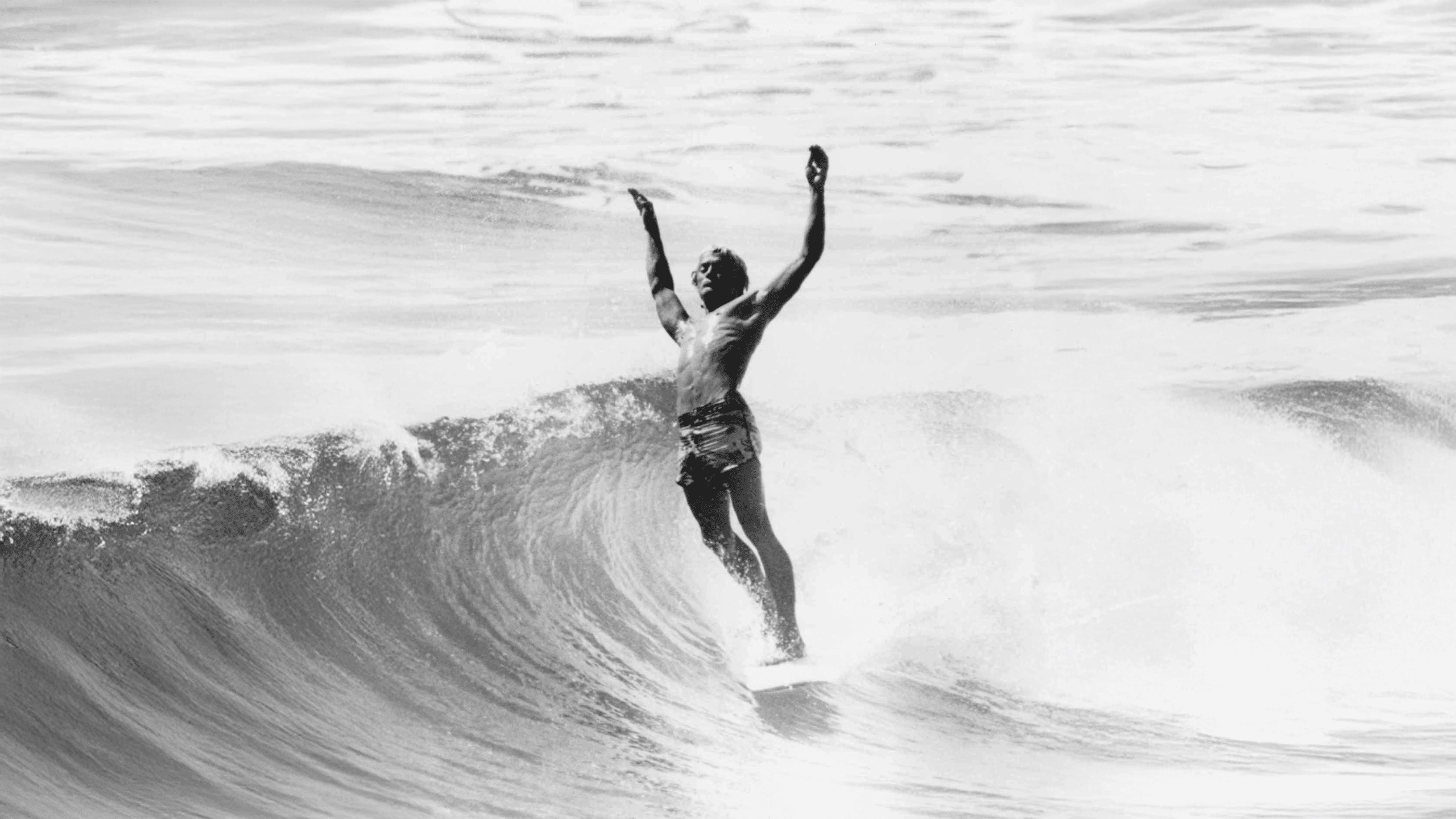
The word of the week is: soul arch. And we will throw in “soul surfing” free of charge, because otherwise, it would be a micro-post.
The origin of the soul arch
I had never heard about a “soul arch” until I started researching “soul surfing,” and this was a next-door entry to it in the EOS (paywall)
“Soul arches” in the wild are hard to come across these days. It’s when a surfer stands tall, chest out like a freaking peacock, bends their back in a deep arch (usually with knees bent and arms stretched or hanging loosely), while cruising down the line or during a frontside bottom turn.
It doesn’t really add functionality like trimming or noseriding — it’s all about showing off. It’s a double show-off if you combine it with hang five or hang ten.
The expression itself originated in the early 1970s, but the move itself was made famous by world champion Peter Townsend, who effectively stole it after seeing a photo of California surfer Kemp Aaberg back-arching at Rincon in 1961.
Soul surfing: not the movie
Does it have anything in common with “soul surfing”? Apart from the decade in which it was popularized — not much. And we are not talking about Soul Surfer, a movie about Hawaiian pro surfer Bethany Hamilton starring AnnaSophia Robb. I have not seen it, but calling a pro surfer a soul surfer — it’s a teeny-weeny bit misleading. Because, ta-da, “soul surfer” describes a noncommercial, noncompetitive, pure surfer.
Surf guitarist Johnny Fortune wrote an instrumental piece called “Soul Surfer”for his album in 1961. Soul music was very much au courant in those days. But it is said that its actual origins came from surfing’s alignment with the counterculture in the late ’60s. A soul surfer was described in Petersen’s Surfing Magazine as “the man upon his board who shuts out the world and its clamor.”
Soul surfing was never fully defined — or perhaps was only defined in opposition to pro surfing. It was against prize money, competitions, surf media, and the surf industry in general. So, unlike the surfing we know today then.
Country soul & California soul vibes
Two examples of how soul surfing bloomed IRL:
In Australia, a small group of surfers celebrated the “country soul” movement, moved into abandoned farmhouses, grew their own produce, made their own surfboards, and rode together at uncrowded breaks. They lasted two or three seasons. I am not saying it would’ve lasted longer if it wasn’t for Nat Young being part of the group, but then again, his anti-noseriding comments were pretty anti-soul-surfy to me.
In California, soul surfing jelled with territorial localism, with locals discouraging visitors from surfing in their spots. Intimidation and violence ensued. Again, not very soul-surfy.
The pragmatic soul surfers
And then there was a rise of pragmatic soul surfers (you can’t make this shit up, honestly). We’re talking Gerry Lopez in Hawaii, Tom Curren in California, and Wayne Lynch in Australia.
They had the soul surfers’ souls, but as Matt Warshaw describes in the EOS, they also had mortgages — so they canoodled with the surf media and surf industry. We all have to eat, no?
Soul surfing was all but extinct when Sam George launched his “Soul Search” in Surfer Magazine in the 2000s. He said about soul surfing:
“(It) stretched and shrunk and tugged like the rubber on an ill-fitting wetsuit. We’re all soul surfers, and so there’s no such thing as soul surfing.”
Only in the movies, I say. Like the Kahuna in Gidget, played by Cliff Robertson.