Now Reading: It’s only drowning after all with David Litt
-
01
It’s only drowning after all with David Litt
It’s only drowning after all with David Litt
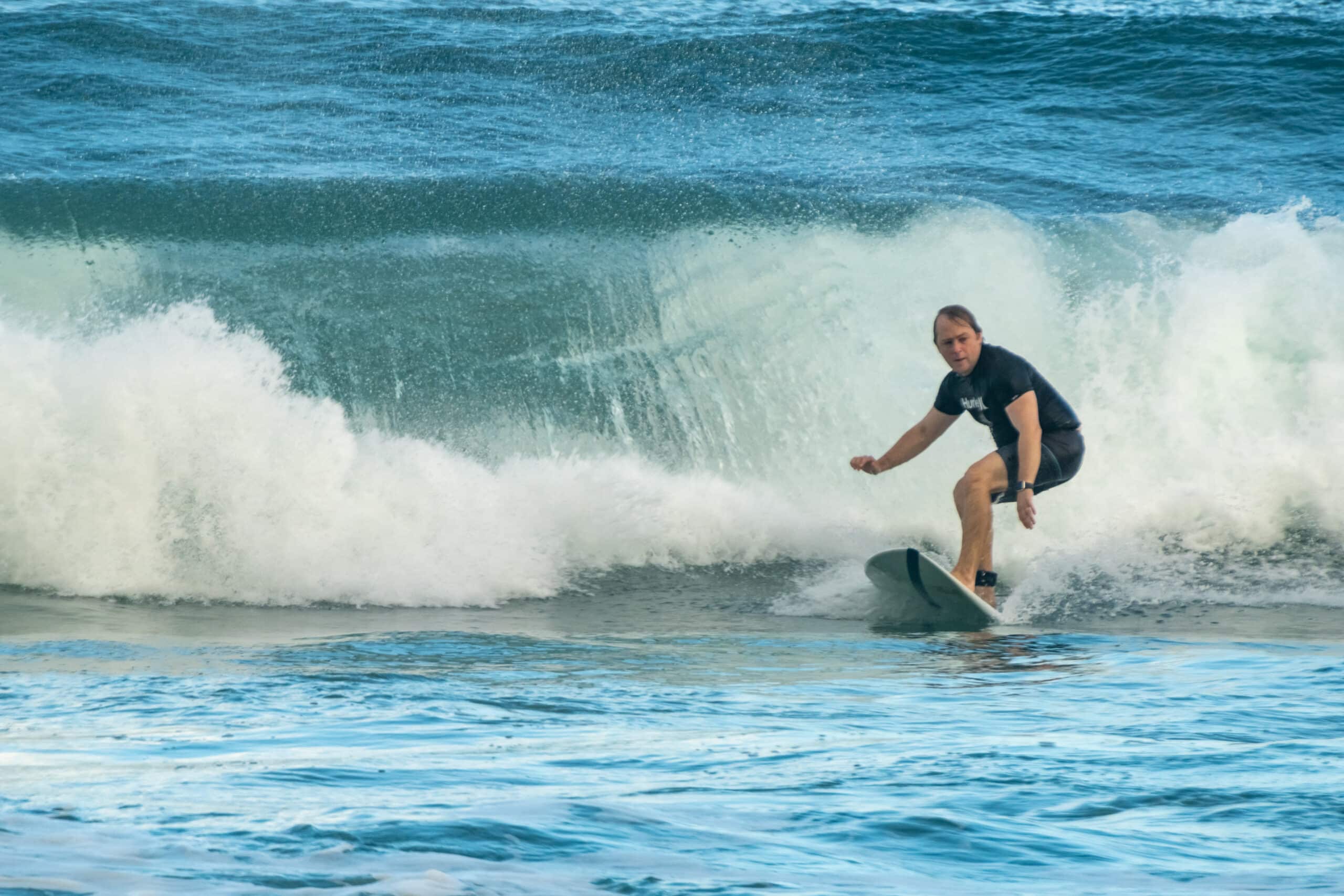
You can listen to The Wipeout Weekly episode with David Litt, former speechwriter for President Obama and author of It’s Only Drowning and Thanks, Obama below or where you get your pods from.
This Wipeout Weekly podcast episode transcript was abbreviated to a blog post format by my good friend Chad (ChatGPT). He takes liberties, you know.
You will find the full transcript below it. Host: Zuz Wilson | Guest: David Litt
Zuz: You’re a speechwriter-turned-surfer—how did surfing even happen for you?
David: It started with a midlife crisis, maybe. I realized I needed something physical and new. My wife was supportive and suggested surfing. I was 33 and had never tried it. The idea terrified me. So obviously, I had to do it.
Zuz: What was your first experience like?
David: Humbling. I took a lesson in Rockaway Beach. I flailed. A lot. I didn’t understand waves. I didn’t know how to stand up. But I got one wave and was immediately hooked. The instructor said, “You looked like a wet noodle. But a happy one.”
Zuz: And that was enough to make you keep going?
David: I became obsessed. I watched surf YouTube videos, followed surf accounts, tracked conditions, read surf history. It was like becoming a kid again. That awkward, exhilarating learning curve was addictive.
Zuz: You even started traveling for surf?
David: Yeah. I took a trip to Costa Rica just to surf. I wrote a piece about that first trip called It’s Only Drowning. I surfed, fell, tried again. Something about returning to the water every morning after failing the day before felt like therapy.
Zuz: You surfed the North Shore?
David: Yes—but I want to be clear—I didn’t go out at Pipeline! I surfed a beginner spot in the North Shore region. It was still intimidating. That trip taught me how different surf culture is in Hawaii: respectful, sacred, serious. You’re a guest there.
Zuz: Any takeaways from how surfing has changed your brain?
David: Surfing is the one activity that shuts my brain off. As someone who writes for a living, I’m always in my head. Surfing forces me to be fully present. I can’t be thinking about to-do lists when a wave is about to break on me.
Zuz: What’s next in your surf journey?
David: Honestly, I just want to surf more. I’m still improving. I want to get better at reading waves, turning, maybe even learning to noseride one day. But mostly, I want to keep showing up—because that’s the real trick, isn’t it?
Full transcript
David: I think the biggest difference for me now is that it’s something that I almost feel a sense of security in, even though obviously surfing is always frightening, right? I think fear is always a part of it. I was going to say, it feels almost like if you like go back to reading a book you’ve read a gazillion times before or watching a show that you really love, right? There’s a comfort in it.
Zuz: That was David Lett, former Obama speechwriter and author of It’s Only Drowning.
Documenting his journey from I have never surfed before to paddling out on the North shore. If you loved Barbarian days, this is not that. And you will find out why in our chat.
Welcome to the Wipeout Weekly, the daily podcast for beginners, wannabe surfers, and seasoned Wipeout enthusiasts. No hype, no filler, just the highs, lows, and honest truth about learning to surf and finding your place in surf culture. I’m your host, Zuz Wilson. Let’s go out.
Zuz: When you started surfing, did you think that you’re going to write a book about it?
David: No, not at all. I started surfing, I think like a lot of people who came into surfing a little bit later in life, I had always thought maybe I should have tried it, but I never imagined I would actually get my act together and do it.
And I ended up starting because during the pandemic, I felt pretty depressed for the first time in my life. And I wanted to be honest when I wrote about that in the book, in part so that other people who are going through that, maybe if you’re reading it, you don’t feel as alone, which I know for me was one of the hardest parts of that feeling of depression. But also to set the scene, because I think if I had been doing fine and kind of happy with the way things are going, I don’t think I would have stumbled into surfing.
And once I started surfing, I very much thought, okay, this is something I want to do for myself. Definitely not going to write about this. And it was only a couple of months later where I started, two things happened.
Number one, I was embarrassing myself and I was like, okay, that’s fun, right? Like that’s, you know, it’s enjoyable. And I had like good stories to tell my friends, which for me is always the first sign, okay, this might be a book. And the other thing was that I was learning a lot.
And as you know well, what I was learning was not just helping me surf better, it was helping me be a better person. And that’s when I started to think, okay, I’ve got embarrassing stories and I’m learning things that I feel like everyone should know. That feels like a book.
Well, you mentioned that you felt a bit down, that you felt depressed. Would you recommend surfing to people who feel like they need a little bit of a change? Yes. I don’t think surfing is a substitute for, you know, therapy or for talking with someone, you know, and also for letting people in your life know how you’re feeling.
And if you’re struggling, letting people know that you’re struggling. I think surfing helped me immensely in two ways. So number one, maybe the simplest one, it was, it forced me to leave my phone at home, right? Or at least in the car.
That’s one thing, I don’t know, maybe you knew this when you started surfing, but I didn’t think about it, not being able to scroll, right? As you scroll through the news, scroll through social media, whatever. That’s very good, I think, for your mental health. And the other thing also, and maybe you’ve had the same experience, is I feel like surfing is simultaneously, it’s about all of these different ways that we’re not in control.
And then these little moments where our actions do matter. And I think sometimes, you know, at least for me, part of depression was this feeling of being overwhelmed by the bigness of the world. And surfing certainly has plenty of that, but it also has this reminder that what we do can lead to these incredible moments.
And so both in the water and out of it, I think it really did help me get to a place where I wasn’t, you know, I’m still anxious from time to time. I still am not a poster child for optimism necessarily, but I still feel, I feel like surfing absolutely helped me, you know, deal with the worst parts of that and get past it. And your descriptions of takeoffs and wipeouts are so detailed and so vivid.
I’m wondering, how did you commit this to your memory? Or did you journal? How did you manage to achieve that? It’s a great question. It’s interesting, actually. The book’s been out for about six weeks.
I’ve done a ton of interviews and no one’s asked me that. And I don’t know why. So I’m glad you did.
Not the praise part beforehand, which I appreciate, but the question of just how do you keep all this in mind? Because also, as you know, right, you can’t be out there on a board with a notebook saying, okay, you know, what’s the color of the water? What’s the… So for me, it was voice memos, actually. So I would go out, I would, you know, in New Jersey, for example, where most of the book takes place, and I might go out in the winter. So I’m putting my five-floor wetsuit on.
I’m paddling out, you know, dealing with the terrible ice cream headache that comes from cold water surfing. You know, I come back in, try not to freeze to death, taking my wetsuit off. I’m in the car.
And then the first thing I have to do, even before getting like a cup of coffee or a bagel, is just open up voice memos and say, okay, what’s everything that I remember happening? Right, what did the wave look like? How many, you know, takeoffs did I miss before I caught that one? What was the color of the bird that I saw? Right, just trying to keep all these details in mind. And I actually think, in a way, I was really lucky because, you know, so many of us, right, you have a great surf session, but you don’t, you remember the feeling, but you might not remember every day. You think, oh, I’m never going to forget this.
But all of us, right, we have moments where it’s easy to forget. And so one of the nice things about writing a book about something that you’re enjoying is not only do you get to enjoy it, but you get to really commit it to memory and think through the experience in a way that you wouldn’t otherwise. Yeah, I cannot remember a single wave that I took, unless there’s GoPro footage to go with it.
And I still cannot remember. Right, well, and then for me, I always, I remember something one way, and then if I see video of myself, I’m like, wait, is that the same wave that, you know, I’m pretty sure I was like pro level on that wave. And then I see the video, I’m like, okay, maybe not even close.
But yeah, it is, and that’s part of, I think, what makes surfing so almost spiritual, right, is that feeling that you are so present when you’re on the wave, it feels like everything is even more real than real. And then you’re off the wave, and you’re like, where was that? How do I get back? How do I recapture that? Because it’s impossible to remember everything about it. When you’re on the wave, or even if you’re waiting in the lineup, do you actively think, or are you just sitting there, you’re just taking it in? Like, I don’t think, I’m like, my mind is completely blank.
You know, I feel like I’m the annoying person who’s always just like humming to himself, or like I get a song stuck in my head. I tell myself that I never would, you know, have a song stuck in my head loud enough that anyone else can hear me. I hope that’s true.
Everyone’s been very polite about it, if it’s not true. But I think it is, like, you sort of, I feel like I enter this place where I’m half thinking, right, where, and then sometimes, if you see, you know, like a wave is coming, and I find the other thing about surfing, that it taught me to think less, especially when you’re in the water. There’s a lot of thinking beforehand, or thinking about, you know, what do I want to focus on in this session? How do I want to try to improve? But then all of the waves that I am, the where I’m like, oh, those were the waves of a lifetime, right? They all came from, the wave came and I went without thinking about it.
I don’t want to give too much away, because I would love everybody to read your book. But do you remember when you had your first lesson, I think it was with Katie, and you were still in the whitewash, how that felt? And, you know, that first pop-up and just the feeling of being in the water with your surfboard. Well, it’s funny, I don’t know if this is a universal experience, but I bet it’s true for a lot of people who have started surfing as adults, which is the first surf lesson I took was not very fun at all, right? I sort of thought, and maybe it was also a guy thing, I kind of went in being like, I bet I find out that I’m like secretly a surfing prodigy, right? But, you know, two minutes in, my instructor Katie is going to be like, oh my God, you know, you should drop everything and pursue your real calling as a world tour surfer.
That did not happen. That did not even come close to happening. And it was the feeling of, the other thing I didn’t know about surfing was how hard it is to do everything before the pop-up, right? I figured standing up on a board is difficult, but just paddling the board or, you know, even like the first day I was out, it was pretty windy.
I had a wave storm. So, you know, eight foot foam board and just walking with that thing to the beach was incredibly challenging. And so that was, it was very demoralizing.
But I think then, you know, I did, I got up exactly once in that session and it was going toward, you know, it was in the white water. I wasn’t going down the line or anything. But I do think that what I really remember was almost the way that chaos became this total calm, right? And especially where I was in my life at the time, where I was feeling very overwhelmed by a lot of different things, that moment where it just felt like everything stopped, even though you were moving forward and there was this sense of clarity, right? That was very addictive.
So that’s the thing that I remember. And it’s funny, now I can still remember sort of sensations, right? I haven’t surfed my wave storm for two or two and a half years now, but I remember what it felt like, just like my feet on the deck, because I do feel like that moment was so kind of pressed in my memory. You mentioned that you didn’t know that much about surfing before you got into it.
But when you started surfing, did you consume all the books on surfing? What did you read? What did you find helpful? I did. So I think one of the things about me and then kind of a difference between, because in a way the book is about me learning to surf and it’s also one of the people who taught me the most is my brother-in-law, Matt, my wife’s younger brother, and we’re just super different. So one of the ways I think in which we’re different is like he learned to surf by buying a shortboard and just figuring it out.
And he’s a natural and kind of a kid to do that. He’s a very good surfer. When I decided to start surfing, I was like, okay, I’m gonna do as much research as I possibly can do, right? I’m gonna think my way to becoming a good surfer, which turns out to be very difficult.
So I ended up, I read Barbarian Days, which of course is a terrific, I mean, that’s a great book. I’ve read it now several times. I read a book called The World in the Curl, which is about the history of surfing.
I read parts of Matt Warshaw’s history of surfing. But then I also, like a lot of people, I think I did a lot of YouTube instruction, some better than others. I have a lot of thoughts about that.
But I think one of the things that was interesting about it was the, I do think that thanks to foam boards plus YouTube, it is at least a little bit easier to learn than it would have been 20 years ago. At least there’s like that opening. And there were a couple of YouTube channels.
I mean, the ones that really, that I, if someone were just starting now that I would recommend that I found actually quite helpful were Barefoot Surf. And I ended up doing a retreat with them in Costa Rica. So I recommend them.
Surf Simply, which also does Costa Rica retreats, but they have really good kind of technical videos. And then I think it’s pronounced OMBE Surf, O-M-B-E, which I think that’s like the sort of surf education platform that I found most helpful just because it had like a very different approach to a lot of stuff and was less about like physicality and more about how you think about the sport. Sorry, you mentioned Matt.
So this is the opening now. That was my next question. Your relationship with your brother-in-law is like the central storyline through the book.
So I wanted to ask you, do you think you would have been a different surfer if it wasn’t for Matt? Absolutely. I would have been both a worse surfer, not in terms of just my sort of technical skill on a board, but also I think I would have gotten less out of surfing. So Matt and I have now surfed together all over the world, actually.
In the book, I write about, we go to Santa Cruz, California. We went to the wave pool in Waco. We went to Hawaii.
We went to Bass Country in France and Spain. So we’ve been all around. And I’ve seen, there’s sometimes surfers in the water who are better than he is.
The thing that he can do that I still have never seen someone do as effectively is claw himself onto a wave, right? When it looks like he is just never gonna make it and he fights himself over the ledge and that level of commitment. And I don’t have that level of commitment, but I learned to at least get closer to it, right? That sense of like, all right, it’s time. I’m just gonna do whatever I can to get myself over the lip and get onto the face.
And I think he made me a lot more courageous and a lot more willing to, it’s not a choice between thinking and acting, but I think it’s more a dividing line, right? You say, okay, this is the time for thinking. I do all the thinking. And then when it’s time to act, when it’s time to commit, all right, now I’m just gonna fully commit.
And I think that’s the thing that I learned from him that has changed both my surfing, but also my life outside of surfing. Matt started surfing earlier than you, right? What’s the delta in experience in years? So he started surfing probably six years before I did, but he was a skateboarder before that. And he’s also just clearly like pretty naturally good at it.
So I think that’s the, so there’s a delta in experience and there’s kind of the delta in innate talent. And I’ve done athletic stuff, right? Like, so I ski and I wrestled in high school, but surfing was very, it’s just not, clearly like if there was something I was put on this earth to do, like surfing really, really well was not it. That doesn’t mean I don’t enjoy it, but it’s like, all right, this became clear to me.
I would call Matt, it’s a kind of surfer that does, it’s what I would call it, a fully send it surfer. Like he’s so committed. He’s there and he’s just gonna do it.
It doesn’t matter what the wave looks like. He’s just gonna take it. He’s gonna get himself into like the gnarliest situations.
Do you think it’s because he’s been surfing longer than you? It’s been those six years and he used to be a skateboarder. Do you think it’s that or his approach to life that makes him more fearless? So it’s funny you say that because I think my changing views on that are in some ways what this book is all about. Because I would have said four years ago before I had started surfing with Matt that he just like is kind of fearless, but I would have meant reckless, right? He doesn’t think about the consequences.
And I do think that Matt and I have very different tolerances for risk, right? He’s willing to take risks that I’m just not. At the same time, one of the things I learned over the course of writing about the book, and then even since then as we just hang out and surf together, I think he’s cautious up until a point, right? So when we were in Hawaii and there was reef and he didn’t know as much about what the wave was like and knew that these were high consequence waves. Actually, he almost became more cautious than I was for a little bit because he knew how much could go wrong and I was kind of an idiot about it and was like, oh, these seem sort of like waves at home, not realizing that these are nothing like waves at home.
And so it was interesting. Once he got comfortable, then he started going back to that kind of full send mentality you were talking about. And I think I’ve learned a lot from that.
I know you’re from the book that you’re a better listener than Matt when it comes to like learning about local knowledge when you were on the North shore, but would you say that you’re a better surfer than Matt now? No, not even a little. We did an interview together and somebody was like, who’s a better surfer? And he was like, oh, we’re equally good. I was like, what are you talking about? No, we’re not.
You don’t have to surf to see, like anyone could tell you that. And I don’t mean to like, I’m not trying to sell myself short. I’ve improved a lot since I started and I definitely surf waves where like, you know, if you told me two months in that I would surf an overhead wave, you know, at sunset on the North shore, I’d be like, that’s crazy.
I would never do that. And so the fact that I’m able, I was able to do some of those things, I’m really proud of, but that doesn’t mean I’m anywhere close to as strong a surfer as Matt is. I saw it in your book’s acknowledgements that Matt didn’t read the book.
He started reading the book, but he had to put it away and then he went back to it. Were you? Yeah, go ahead. Oh yeah, sorry.
I was gonna say, it’s a funny story. So I worked on the book. He knew I was writing a book about us, obviously.
And I would mention certain things, but I said, you know, do you want to see the book? And he said, no, no, no. I don’t want to see it. Like if I’m an asshole, you can just say I was an asshole.
Like, hey, I’m not, I don’t think you’re an asshole. So it’s not gonna come up. And also I was like, if there’s like a jerk or an idiot in the book, I would like that to be me.
Thank you very much. But then a little bit before the book came out, but after it was too late to change the acknowledgements, he was like, oh yeah, actually, maybe I would like to see an early copy. So he was, he’s an electrician.
So he was doing a job here in Asbury Park where I am now in New Jersey. And I drove over and gave him like the early copy of the book. And I was really nervous.
I mean, that was by far the scariest review I was going to get. And the first sentence of the book is Matthew Kapler is my brother-in-law and we’re very different. And one of the biggest differences between us is that if I lived like him, I would die.
And so he just kind of read that and started laughing. And I was like, okay, we’re going to be good. And we were, you know, he really liked it and has like, and I think has not just like the book, but also since it came out has, it’s been fun to kind of share experiences with him a little bit.
We did one book event where, where we were, you know, like he would, he got to answer some questions along with me, right? Like we sort of did it together and that kind of thing, which has been fun. Yeah, that is so much fun. But were you worried at any point when you were writing it? Because you were being so honest, like brutally honest, that this may actually damage your relationship.
You’re not going to be able to go to like family dinners anymore. I worried about it a little bit, but at the same time, you know, like I said to me, there were sort of two, two things. So one is I had my wife read it beforehand to Matt’s sister and sort of say, okay, is there anything that he would really dislike? So that helped.
The other thing was, you know, just a general sense of, I knew that I was going in, right? To me, a memoir is a story about changing, right? And this was a story about me changing and improving. And Matt, in many ways, helping me change and improve. And so that felt like safer territory than it might otherwise, because there was this sense of, I was clearly the one who needed, or at least the story that I’m writing about was about me trying to figure out how to solve problems in my life or how to become a better person and a better surfer.
And Matt’s presence in my life kind of helping me do that. So I felt like it was something, you know, it was like all things in surfing, right? There’s a little risk, but I felt comfortable taking the risk. And I also, you know, I know Matt pretty well.
And so I wasn’t, I was very happy that he liked the book, but I wasn’t shocked. You know, I felt like, and there are things that I wouldn’t write because I wouldn’t if they weren’t fair or something like that. I know you surf with Matt.
I know that you surf alone sometimes. Do you surf with anybody else? Did your wife Jackie ever, you know, express desire to start surfing? No, Jackie has, I keep, I’ve kept trying to get her to surf and I’ve given up, but I tried for a while. We were in Hawaii once and I was like, okay, I’ll make you a deal.
If you take a surf lesson, I will talk about surfing, but not all the time, right? Like I will, I’ll sort of like, I’ll cool it a little bit. And so if you took a surf lesson and she was like, okay, I did my end of the bargain, never again. It was just not for her.
So, and I think she was like, okay, it’s great that you and my brother have a thing. That can be your thing. Thank you very much.
So, yeah, you know, sometimes I’ll surf with, you know, it’s interesting actually, since the book came out, I’ve gotten to know some of the people in Asbury Park who are like locals a little better, even though I’ve surfed around them for a while. So it’s not like I’ll call people up, but it’s like, you know, you start to know the people in the water even if it’s, even if you’re, you have literally, you know, you don’t know their last name, you don’t know what they do for a living. But now some, you know, some, like I follow some people on social media who I didn’t follow before.
So I have a sense of their life outside of that. And the other thing that has been fun too, is you kind of get it. This is particularly true of putting out a book about surfing.
You kind of learn everybody who started surfing as an adult who does something else, right? Like, you know, like a lot of like, TV hosts or whatever, the ones who are surfers, I’m like, they all want to talk about it. So now I feel like I have, you know, a very loose network of people around the country where I’m like, okay, I have a lot of standing invites. So if you go here, you know, let’s paddle out, which is kind of cool.
I liked how you said that surfing is for lunatics. I’m curious, how many times have you almost died? I don’t know, right? I mean, I guess like how many times have you almost died surfing? I never, I don’t think I ever got myself in a situation where I thought, oh God, this is the day. Yeah, I guess that’s right.
Like I think, but I don’t think I ever, I think that’s probably one of those, like, if you know, you know, and by that standard, I don’t think I’ve ever crossed that line. I’ve definitely gotten to whatever the line is before that, at least two or three times, which is like, this is like, I’ve put myself in a situation where I am no longer in control of it. And that, and I don’t, it’s kind of, this is going to be luck of the draw, right? That’s the thing that is, and that’s, I don’t, that, that I would rather not do.
I mean, like, you know, in those situations and sometimes it’s because of just trying something new. Sometimes it’s because of being an idiot. Sometimes it’s because, you know, in Jersey, the surfing here is cold water a lot of the year.
And so some of the risks go up and the number of people in the water goes down. But, you know, you see that happen. But again, I wouldn’t describe those as like near-death experiences.
I think that would be too much. But I do think it’s, if surfing is about maintaining some amount of control, even in the face of the ocean that we of course have no control over, there have been moments where I’m like, oh, no, this is now, it’s up to the ocean what happens next, which is a very scary feeling. And I don’t think you had any major accidents in the water either.
Not many injuries. No, it was, it was funny. You know, when you work on a book, well, wouldn’t it be cool if like, I don’t want to get, I don’t want to get injured so much I can’t surf, but like, I don’t want to get bitten by a shark, but like a nibble would be a good story.
So maybe just like, just a little, like a love bite. Sadly, that never happened. Probably for the best.
No, I think the worst injury, and I feel like this is true of a lot of people, of like the most dangerous thing in surfing is your own board, right? The worst injury I had was when my board, I fell off the board and then right as I got up, it skidded across the water and hit me right in the face. And in retrospect, I’m pretty sure I had a concussion that time. So probably should have stopped surfing.
But yeah, that was probably as bad as it got. Hopefully as bad as it’s going to get. We’ll see.
You know, one other thing that actually I totally forgot to mention, it’s not an injury, but I will also say, and I don’t know if you’ve had the same experience, but I think like a really long hold down, and I think that’s probably different for everybody, but a hold down that lasts much, much longer than you’re used to and longer than you’re comfortable with is almost like a psychological injury, right? Like that is hard to come back from, even though, right, if you’re a professional big wave surfer, you might deal with 20, 30 second hold downs all the time. And if you’re me, you know, 10 seconds is a really long hold down. But having that moment, that can be really like, it shakes you in a way that, you know, is akin to an injury, even if it isn’t.
I think you’re right. That happened to me maybe a couple of times. It always feels like it’s longer than it actually is.
But if you come off your board and you like somersault on the water, and then you, you know, and then you feel like a ragdoll, it’s like, okay, this was scary. Yeah, and you have to really, like learning to calm yourself when all you want to do is panic. And, you know, I was out two days ago here in New Jersey, and the waves are not big right now in Jersey, but I watched somebody get caught in a surfer, get caught in a rip.
And they must not have known what they were doing because they started panicking. A couple of the surfers went out and got him right away. It wasn’t super dangerous, but you could see, you know, it’s that moment when a switch flips and you’re like, oh, I’m in control.
And now it’s like, nope, the ocean’s in control. And that’s a terrifying feeling. So I’ve just finished your book.
So for me, you’re like, literally just still in Hawaii, the way I think about it. But how often do you surf now? You know, whenever I can. So I’ve been in New Jersey.
Most of the sort of quote unquote book tour has been these days, right? It’s like a podcast tour. You go on television, you do all those things. So I’ve been in New Jersey for, the book came out in late June.
And so I’ve been up here since then. And we’ve had decent waves. So I’ve been out, you know, I’ve been out like twice, three times a week.
And I’m hoping to go, you know, the fall we’ve got hurricane season coming up in Jersey. And that’s usually when it gets good. So the only problem is right now, I’m kind of in writing shape or like talking about the book shape, which is very different than surfing shape.
And so I am well aware that once the first hurricanes come through, it’s going to kick my ass a little bit. But I’m just going to have to get back into surfing shape. Is there a difference how you feel about surfing when you started and what it meant to you? Because, you know, you were depressed and how you think about it now and what it means to you.
I think the biggest difference for me now is that it’s something that I almost feel a sense of security in, even though obviously surfing is always frightening, right? I think fear is always a part of it. So I think when I started, it was all about kind of challenge. On one hand, I felt like I was improving faster because I literally knew nothing.
So, you know, if I popped it once in a session, I’d be like, that’s amazing, right? I’ve gotten so much better. Or the first time you go down the line instead of straight to the beach, holy crap, this is extraordinary. But I think the difference for me now is that it feels almost like, I was going to say it feels almost like if you go back to reading a book you’ve read a gazillion times before or watching a show that you really love, right? There’s a comfort in it.
And so I think that’s the, especially in the summer, because it’s when I started learning, right? So right now, we’ve had mostly longboard waves. So if I like take my longboard down to the dog beach here and it’s like, there’s something about it that’s kind of a ritual in addition to all of the challenge and the fear and all the other stuff. You’ve mentioned all these places where you already served.
So obviously locally on the East Coast, you came to California, you went to Santa Cruz, you went to Spain and to France and you were in Costa Rica. Are there any places where you would like to go next? Oh man, yeah. Well, first of all, there’s places I’d love to go back, like I’d love to get back to Santa Cruz.
I would love to get back to the North Shore. Once I’m back in surf shape, I’d like to try again. And actually, really almost everywhere we went.
I’d love to go back to the Basque Country and Waco. I am trying to say, Matt and I have been talking about where we’re gonna go next. So where do you think we should go? Nicaragua, maybe? Yeah, I’ve heard Nicaragua is really good.
That’d be fun. I’ve thought about that. I’ve thought about Guatemala.
There’s like a small surf scene in Guatemala and same with Panama. And so I was like, maybe that would be cool. A little bit more like fewer people, but that could be kind of neat.
Sort of similar waves, I think. And then the other thing I would love to do, although I don’t have time usually, is like I’ve never gotten to do sort of Southern Hemisphere big surf trips, right? So like Indonesia or Sri Lanka, Australia, right? I’m still mostly thinking about when’s winter up here. Actually, I take it back.
I think you and Matt should go finally to Ireland. Ireland. Okay, yeah, that’s a good idea.
Have you been? No, I haven’t. But you guys almost, almost went. Yeah, we almost did.
And I do think it would have been a really fun, you know, Matt, part of Matt’s family is from Ireland. So that would have been fun. And I do think the like, it’s got a kind of Jersey cold water attitude.
And so I think he would have been right at home. I would love to not be in a four three, you know, in October and in gloves and stuff, but I think he doesn’t care. So yeah, that’s a good idea.
Maybe we’ll, you know, I think what we’ll try to do, I got to talk to him about this. I think we’ll try to do some kind of strike mission, right? Like a sort of, you know, a sort of like, not like the fancy, you know, triple overhead, you know, YouTubers strike mission, but the normal people strike mission where it’s like, all right, if there’s a week of really good waves and we can get a cheap flight, maybe we just pick right beforehand. You see, I was going to ask you whether wherever you’re going to go, it’s always going to be with Matt now.
Yeah, I mean, I think so, right? Like at least in the near future, but I hope so. Like, I don’t think, the only exception would be, I would totally do another like surf camp, you know, to try to get better. Cause I did one as you mentioned it and I wrote about it in the book.
I did one in Costa Rica very early on. I think maybe like I’d been surfing about five months and it was pretty helpful, but I was not as strong. The biggest thing I learned from that is like, I should have been swimming laps in the pool for a few, for a month or two beforehand because by day three, I was so beat that I’m not sure I learned as much as I could.
So I would love to go back to either like Costa Rica, Nicaragua, somewhere where, you know, they have like real intense instruction. And I think that would be really fun. I always say, book a surf trip, prepare to be disappointed.
Yeah. It’s going to be bigger than you expected or it’s going to be small or it’s just not going to be what you imagine it to be. Yeah.
Well, it’s, so it’s interesting to me because I do think like I come from, I grew up skiing, but I grew up in New York city. So all, all skiing was trips and you know, either on the East coast or in the mountains, you know, in the Rockies or whatever. And surf right to me, surf trip seems sort of obvious.
And I hadn’t realized how even compared to a sport like skiing, it’s so weather dependent. And so I do think when Matt and I have taken trips, I ultimately, I’ve been pretty happy about like booking them last minute, as long as you can find a flight, just at least, you know, some sense of like, all right, we’ll get waves, right? They might be bigger than we’re expecting. They might be smaller, like you said, but at least there will be waves early.
You know what? We won’t be like stuck with nothing to do for a week. I’m trying to imagine whether you two could actually handle a surf retreat, but I don’t think you could. The two of us together, you mean? No, no.
Even just with your approach to surfing, because there probably would not be enough surfing. There’ll be a lot of other stuff. Oh, I see.
Well, the one I did in Costa Rica was like two sessions a day. And that was, you know, I was not in good enough shape, frankly, to take advantage of it, but it was good to do two sessions a day. The only thing is, right, there is a limit to how much you can learn in a week because by the end, you’re mostly just trying to hang in there.
But I think the, yeah, I would love to do that again. I do think, right, there’s like some that are, you know, maybe a little bit of surfing and a lot of other stuff. And I’m like, well, in that case, you know, also, especially because my wife doesn’t surf.
So it’s like, well, if I was going on non-surfing vacation, we would do that one together. When you started surfing, at which point, because I cannot remember it in the book, you decided that your goal is going to be to surf on the North Shore. So it was around three months in, and it was the moment when I first realized that surfing was actually helping me learn things that had nothing to do with surfing.
So I took a lesson with a teenager, basically, right? Like I’m 38. So this was a kind of new experience for me of having my life in the hands of someone who was literally half my age. And at the end of the lesson, he looks at me and he looks at me like he’s, you know, old and wise.
And he was like, when you start out, it’s going to be incredibly difficult. You’re going to wipe out four out every five times. You just have to remember you’re a better surfer than you were before you wiped out.
And I was like, okay, that I can kind of play around with, right? And I started doing that, not just surfing, but also in the rest of my life saying, okay, if I, you know, like most of my days, right, I’m writing. So if I sit down at the computer and I write all day and like nothing good comes out, I’m still a better writer than I was before. And I started to think about that.
And I started to think about success differently than I thought about success. And I said, hey, wait a second, becoming a better surfer is making me a better person. And so what would becoming a much better surfer do, right? That was kind of when I started to think, hey, this is bigger than just picking up a hobby as much as I’m enjoying the hobby.
And so that was both when I said this feels like a book, but also what would a goal that’s kind of achievable but difficult to achieve be? Originally I was thinking, okay, I want to try to get barreled in a year. And that, the more I surfed, I was like, that’s not gonna work for, you know, unless I dropped everything and all I did all year was surf. And so I started, you know, everything I was reading was kind of pointing to the North Shore as like, this is almost legendary space in surfing.
And as I talked to people, they started to turn me onto the, you know, the idea of like, all right, you’re not gonna surf pipe because that would be dangerous. And you’d, frankly, you’d like put other people in danger just because you’d be one of those idiots at pipe who’s not ready. That doesn’t sound like fun.
But, you know, maybe sunset, right? Maybe there’s another, there’s other breaks on the North Shore that you could do. And that seemed like the right combination of doable, but also like consequential. So that was the goal for then.
What is the goal for now? It’s funny. I feel like in my surfing these days, I don’t have as many goals. And that’s kind of what I learned from surfing, right? I’m like, I’d like to get better, you know? I still have stuff I focus on each session, right? So right now, you know, I’m still, I feel like I’m just still struggling because every time I pop up, I’m too far forward on the board.
Like my back foot is too far forward and I’m just never getting my back foot over the fins. And I don’t know why. And I need to like get film of that and then show it to Matt.
And usually he can help me figure it out. So I have those things. I would love to, I still am trying to get barreled.
I got into the barrel for the first time. You did? I did. Well, you don’t sound so excited quite yet.
So I was surfing with Matt. This was at the tail end of the winter. So it was like, I think I was still five, four season, you know, a lot of gear.
And I realized that I was backdooring the barrel and I got in and I had just enough time to be like, oh no, this is definitely it. And then like immediately my board just like, it just got scooped up and hit me in the face or I had my hands up. So it was all right.
But it hit me where my face would be if my hands weren’t in front of it. And so I lasted about, you know, a 10th of a second in there, but it was cool. That was the first time I was like, oh, I can kind of feel it, right? Like this feels totally different than anything else I felt on a surfboard.
So, and Jersey is a tough place to get barreled. Like the waves here are just, they’re steep, they’re fast. So I would love to eventually find some place where I could, you know, I feel like at 38, I’m kind of, but also beginning, right? I’m still at the place where my new skills are outpacing like my sort of natural, like, you know, you get older.
So I feel like I have, you know, a number of years left where that’s the case, but then at a certain point that’s gonna reverse. So it’s gonna get harder. When you think about yourself, do you think about yourself and your skill level as you’re a beginner, intermediate, advanced or pro? I would say I’m like a beginner intermediate, right? Like I think in one of my like, you know, I think like anyone who started surfing, especially as a grownup, you have a lot of thoughts about surf instruction.
And one of mine is there should be more levels, right? Like, you know, because I don’t, I think that there’s some people like, oh, I’m an intermediate surfer. And what they mean is like, I’m not, you know, I’m not like a pro surfer, but I’m catching, you know, pretty gnarly waves all the time. And some people say I’m an intermediate and they kind of are talking about being about where I am.
So I would say I’m at a place where I’m like, working on, you know, basically I’m like, I can be on, you know, I’m catching green waves. I’m working on turning on them. And that’s the, but I’m not like, I may be done like a real cutback, like twice or three times.
That’s what I’m really working on now. And more than that too, I can tell that I’m not, I’m still like not comfortable getting on rail. And so I feel like those are the things where those should correlate to more levels, you know.
You’re only like one level down from Matt Warshaw, who wrote the history of surfing because he was on our podcast. Oh really? Yeah, that question. And he obviously, he used to be a pro surfer, but he took quite a long break.
Now when he goes out surfing, he feels more like intermediate. Yeah, and some of it also is like, what kind of board you’re on and what kind of waves you’re in. That’s something about surfing that I just didn’t fully appreciate because I came from skiing where there’s, you know, when I was in ski school as a kid, it was like, are you a one through nine, right? It was like very, there was very clear what a level two is and what a level three is, which was fun when you’re like a, you know, eight year old skier, you’re like, okay, I graduated from three to four or four to five.
And I feel like with surfing, there’s some days where I feel, you know, I don’t think I ever feel like an advanced surfer, but there’s days where I feel very proudly intermediate and then the waves aren’t as clean or, you know, the swell is coming from a direction I’m not used to, or one of a million things. And suddenly it’s like, wait a second, I’m pretty sure I wrote a book about learning to surf, but I’m not, I feel like I’ve never surfed before. And so, you know, I mean, you know this, it’s just like day to day, it can be such a different experience when you’re part of what’s so incredible and so endlessly fascinating and also part of what’s so endlessly frustrating.
You mentioned, oh, it also depends on the board that you’re on. So let’s talk about your quiver. What do you have now? Oh man, so I currently, so I have a longboard that comes from Matador Surf, which is a shop and a shaper in Long Beach Island, New Jersey.
And a 7’4″, what is it? The Harley Angle B-Mo, so like a mid-length. Those are probably the two that I surf most in summer. And then I’m trying to drop down.
So I have a 6’9 Love Machine FM. Do you know, like the Ryan Lovelace board? Yeah. That I’m like, and for the book actually, Ryan shaped a board and then we had it, well, or like we used one of his models and then we had like them laminate it with the book cover.
And so, you know, I was saying this to him actually, where I was like, I think I’m almost ready to surf this board, but I don’t quite understand it yet. And then I have a 6’4 Hypno Crypto and a 6’6 that I got shaped by a local guy here in Long Branch. And those are all kind of doing the same thing, which is like slightly bigger wave, trying to move down toward a shortboard.
I think it’s time. I need like a real shortboard too, just to have something to aspire to. I think Costco, not anymore because now it’s Halloween Central, but you can probably still get online there.
I think it’s 5’8″, Scott Brook. Really? Yeah, for like 90 bucks. If you wanted to.
No way. Oh yeah. That’s interesting.
All right. Yeah, maybe I’ll try that. One of the last time I was in Waco with Matt, which there was a time I wrote about in the book and then we went back last year in December and I was on like a 6’0, like a puddle jumper, like one of those grovelers.
And that was, that felt like very doable. So I feel like that’s, though that are a little smaller, you know, I mean, that’s kind of where I am level wise too. And it’s also just like wanting something I can duck dive would be really nice.
Well, you mentioned Waco, so let’s talk about wave pools. What are your feelings about wave pools in comparison to being in the ocean? Well, for me, what was really nice about wave pools as an adult learner was the consistency, right? I mean, that so much of, you know, I mean, I’ve been out in the ocean in New Jersey and seen, you know, dolphins or whales, right? You know, I’ve been, when we’re in Santa Cruz, there were like otters everywhere. Apparently there was an otter that kept stealing people’s surfboards.
And luckily we avoided that one. But, you know, you’re like surfing and suddenly an otter just pops its head up. You’re like, this is incredible, right? And then there’s all of the, you know, the kind of mystery and vagaries of the ocean.
So I don’t think the ocean is going anywhere. I think that’s probably pretty clear. For me, the flip side of that was that when you’re in a wave pool and you can say, okay, this experience is going to be basically the same every time.
You can focus on other stuff. So I’ve definitely improved a lot from wave pools. I mean, we have a pool in New Jersey that’s in a big mall, the American Dream Mall.
And there’s still some of their, like, technology seemed to have broke and they’re still working on it. But, you know, they had an A-frame wave where basically you have, you know, three seconds on that wave. But as somebody who’s just learning to pop up, right? You could do 30, 40 takeoffs in two hours.
And that might be as many takeoffs as you get in an entire week-long trip. So that ability just to do reps, almost like you’re at the gym, was really, really helpful. So I think that’s like, I don’t know.
I feel like there’s a place for, there’s a place for all of it. And you’ve been surfing for a while now. If you were starting today, is there anything that you would have done differently? Oh my gosh, yes.
There’s so much stuff I would have done differently. Wait, I have my answer, but I want to ask you because you read the book. As you began the book, and with me starting surfing, so what would you have done differently if you were me? Oh, I’ve got a perfect answer for that.
First of all, I would have started swimming much, much earlier because I had to learn to swim in order to start surfing. Two, I would have done bodyboarding. Like that would be like my number one thing.
Maybe body surfing first and then bodyboarding just to learn, you know, the ocean, how the waves work. I think this is actually one of the things that you’ve mentioned, Surf Simply. This is how they teach.
They don’t, yeah, they tell you not to pop up until you actually, you know, you can carve and you can change direction and only then you can start popping up on the board. So that’s exactly what I would have done. So that’s actually, it’s funny, we have at least some overlap there because the biggest thing I was going to say is swimming laps.
So I really only started actually like this year. There’s a pool near where, because we split our time, my wife and I, between New Jersey and DC. There’s a pool near our place in DC and I was using it.
Sometimes I’d bring in like a 410 board and in the afternoons they’d let me paddle, which was good, but usually it’s crowded so I wasn’t going. So finally I just started swimming and it took me forever to be like, oh, wait a second. It’s not even that it helped me surf.
It’s that I go so much longer before I get exhausted. So, you know, if you’re learning for 90 minutes, you don’t spend 70 of those minutes just being tired. So that’s the first thing I would have done differently is just is swimming both before I started and then like when I wasn’t surfing, just getting into swimming.
And then the other, I’m trying to think about the other big ones. I think another thing I probably would have done differently. This is a very small one.
I think I probably would have either bought wax for a soft top board or a non-wavestorm board because I do feel like wavestorms, like that’s what every, you know, sort of the internet was like, just buy a wavestorm. And I like, you know, the wavestorms serve an important purpose in the ecosystem. They’re really slippery.
And I felt like there was so much, so many times where I thought what I was doing was like technique and often it was, but in retrospect, like the first time I tried a board that was a little grippier, I was like, okay, at least this is getting easier in a lot of different ways. But the swimming is definitely the biggest one. That’s the thing I think would have been so helpful.
I think it’s a travesty that people don’t know that you can actually wax a wavestorm. I wax all the foamies. I had no idea.
Well, you know, the other thing, by the way, I would say, cause we talked about kind of different surf YouTube. I think that ombi surf for me, at least, I wish I had found them earlier because I think the other, we could do a whole podcast just about this, but it would be really boring. So it’s probably good that we won’t.
But I feel like so much of surfing for beginners gets messed up because the phrase pop-up is not actually what you should be doing. And so pop-up make feels like you should be like jumping in the air. And that’s what I was trying to do for a very long time.
And it was, it was on like, it was ombi surf that started to break it down a little bit where I was like, okay, this is actually, should be, I haven’t figured out. I’m like, I’m a writer. I should have figured this out, but I haven’t figured out yet what we should call it.
Maybe some other countries, you know, some other languages just have a better word for popping up. But that I think was the one that like, you know, once in my head, I was like, oh, I’m not supposed to just spring to my feet instantly. Right.
And it’s okay if I don’t. That was really, really helpful. I literally just wrote an article on, and with the title, if you think pop-up is overrated, we cannot be friends.
Just because like, I am obsessed with a pop-up because that’s like my, you know, it’s an albatross around my neck and I would have been a better surfer. But it is all about, you know, being comfortable in the ocean about positioning, ability to read waves and, and traveling as you take off. And if you feel, and then getting out of the whitewater, and if you feel the pressure, you are going to pop up at stand up, whatever, you know, call it, it’s going to happen.
So I think, yes, we are paying a little bit too much attention to the pop-up, but I also think that people think it’s overrated are the ones who’ve never had a problem with it. Right. And for the record, I think we can still be friends because my, what I’m saying is a little bit different because I think it’s the phrase pop-up.
Right. Like I, you know, I think if you called it like the stand-up, that would be kind of dumb, but I feel like once conceptually, right, once I was like, oh, the idea is just to go from you’re on the board to you’re in your stance. Right.
And like that, and let’s not call it a pop-up for a second. Let’s just think about it as that transition. Then it started to make a little more sense.
The other thing I learned from the free, like that I noticed a lot when I see beginner surfers now is people over paddling, right? Like getting way too far out and just getting clobbered by a wave. And then they don’t understand what happened. That was me a lot.
And it was only later that I was like, oh, I see. The point isn’t to just like sprint paddle for 20 seconds when you see a wave, right? You want, it’s really about the, getting the positioning, right? And that I think was kind of unlocked something for me of like, you don’t have to, you know, like the people who are catching the most waves are not the ones killing themselves paddling. They’re thinking carefully about where they are, which turns out to be substantially more difficult, but still.
I think beginners get this eventually if they catch a wave without paddling, because that’s the moment it’s like, okay, I was just in the perfect position and now I can pop up. Yeah. And the thing I’m still working on is I’m better at identifying where that spot is, but it, you know, and it’s also tough in New Jersey and on the East Coast because we get short periods well.
So you don’t have like, you know, nearly as long to say, okay, I see it coming. I’m going to think about positioning myself. It’s much more instinct, but then, but I feel like when I get it, totally what you’re saying, right? It feels like, oh, this is easy, right? Or at least it’s like the catching the wave is easy.
And then that’s like a whole transforming feeling. You always describe wave height in terms of body height, but what is the biggest wave that you surfed and give it to me in feet? So I bet nine feet, but maybe 10, but I didn’t surf it. I got thrown off it.
So the biggest wave I surfed is probably six feet, maybe seven, but I bet six. And that was in Hawaii. But then when we were in the Basque country in Spain, there was a day where it was double overhead, like, you know, sort of on like the four, the like surf line or whatever.
And I think it was legitimately double overhead. So I think it was, and I got chucked off the top of one of the biggest waves of the day. So I think that was probably 10 feet.
I didn’t try to surf it. I was just trying to get over it and past it. And then the biggest one I think I’ve ever tried to surf is probably nine feet, right? Like, which is also in Hawaii.
And I’m proud of myself for trying. And I got up and I was like, I just over torqued it. You know, that feeling where you’re like, you’re up, but the moment you’re up, you’re spinning out into the wave and then you just smack it.
So almost, but yeah, eight or nine feet is kind of, like I’ve taken off on those. I don’t think I’ve ever made one. And, you know, so there you go.
You were asking me about goals. That’s a goal. Still kudos because I am terrified of bigger waves.
I’m like Waikiki two to three on a good day. That I can do. But here, if it’s, you know, I surf at Venice Breakwater.
It’s a short boarding break and it just breaks so quickly. It’s really, really hard. But how do you deal with the fear of bigger waves and taking off bigger waves? So, you know, it’s funny, I think for some of those, that’s when I was doing the most surfing, right? I really surfed for a year and a half and then I surfed, but I also was writing a lot.
And so I think that’s, if I was out now in waves like that, I think I’d be like, all right, I’m done. I’m going back in. I’ve got to work my way back up to it.
But I think that to me, you know, both surfing in general and this book, so much of it is about fear, right? And there’s really, there’s kind of two things. So one, I think is just getting to know your own fear is such a gift that surfing gives you, right? So there’s different types of fear. There’s almost different flavors of it.
And so you start to know, all right, this now I’m afraid because this is legitimately dangerous or I’m afraid because this could suck if I go over the fault on this one, but I’m in the right spot. And along those lines, and one of my first lessons that I took, Katie, my instructor described this thing. She was like the flower of fear.
And I was like, what is that? Sounds kind of hippie. But she was like, the flower of fear means that when you have that sense of total terror, that’s actually your body telling you you’re in the right spot. That fear means that you’re in the part of the wave that can propel you forward.
And that I started to think about in surfing, but also in the rest of my life. And I feel like that’s so important, right? Sometimes fear is not just okay. It’s like you should chase it, right? You should put yourself in positions where you know you’re gonna be scared because that’s the potential for something amazing to happen.
I wanna read something to you because I’ve been doing some research and I went on Goodreads to read some reviews of your book. And this is one, and this person, excuse me, gave you two stars. I know, okay.
I know, I quote, listen to this. Not what I thought it would be, i.e. more about finding common ground. It was almost exclusively about surfing, which was quite boring.
I love the surfing. You can’t win them all, right? I mean, I was like, there’s surfers on the cover, you know, there’s gonna be some surfing. I think that, no, I think it’s funny because obviously the danger with having so much, I actually really like getting feedback from readers and most of it, I’m happy to say, has been positive.
Then you also get the people who are like, all right, let me tell you everything that’s wrong with you. And you’re like, okay, great, I’ll listen to that too. But I do think you, A, you learn, you can’t please everybody.
But the other thing that I think for me as a sense of balance is I think I’ve also gotten a couple of bad Goodreads reviews that were like, there’s not nearly enough surfing in here, right, like it’s too much about this friendship between this guy and his brother-in-law. I’m like, okay, I think that to me means that we’re hitting the sweet spot in most cases. The other thing that I will say, even though I know this is a surf community that I’ve been really happy about was the reviews where people are, my favorite review I’ve gotten the book from a reader was somebody who said, I won this book in a contest.
And I was like, why did I even enter that contest? Because I don’t surf, I live in Oklahoma, but then I really loved it. I was like, that to me, you know, because it’s also part of what I think is so great about surfing as an adult, right, is it’s not hardcore, but it’s still, it taps into something that I think all of us are feeling, whether you choose to sort of access those feelings via surfing or something else. I saw that review, five stars.
So there you go. No, it’s funny that they tell authors, just never read your good reads reviews. I actually do usually read them just because I’m like curious.
And I think if I was getting mostly two-star ones, I would be like, all right, I’m done with that. But then you gotta, if you’re reading mostly good reviews, you gotta take the bad ones too, otherwise it just feels self-indulgent. So listen, the book has been out now for what, six weeks, you said, has Hollywood come knocking? Because I would watch it.
I would totally watch it as a movie. Well, we’ll see. Yeah, I originally, so it’s funny, the first two books that I did, I adapted them myself and, you know, the whole Hollywood thing, right? Like I sold a pilot and, you know, it was a cool experience, didn’t end up getting on the air, blah, blah, blah.
But this one, I’m like, I have been living this story enough that even though strangely, it’s the most personal thing I’ve ever written, if it becomes a movie or a show or whatever, I’d much rather have someone else do it. So that’s, you know, Jackie, my wife and I are going on vacation for a couple of weeks. And then that’s on the list of things I gotta figure out when I get back is, you know, who might be interested in saying, okay, this is a cool story.
Maybe it belongs on a screen of some kind. We’ll see. Who would play you and who would play Matt? I’ve got my choice.
Okay. Well, I want to hear your choices because I actually don’t have an answer to this question. I’m gonna have to ask Matt who he thinks should play him.
I think Chris Hemsworth. He literally just got stopped from surfing a 40 foot wave. Did he really? I knew he was a big surfer.
So I, yeah, I feel like, you know, it’s funny. I feel like I could do like, like I think Jesse Eisenberg could be, could be the me character in this. I could see that.
He just did a movie that was kind of similar, right? Like a road trip movie about two guys with very little in common. Although Kieran Culkin, I don’t think is a Matt type. So we’d have to cast someone else for that.
But I could see it. I could tell you. I know what movie you’re talking about.
It was filmed in Poland. I’m from Poland. Yeah.
Okay. I didn’t realize that. Do you still listen to Joe Rogan from time to time when Matt is not about? So I tend to listen to clips.
Like I think a lot of do a lot of people do with Rogan. My sort of thinking of Joe Rogan is if you listen to him, interview someone who you already enjoy. He’s a great interviewer.
I mean, he really is. So I tend to listen to, you know, like his podcast, his interview, he did with Kelly Slater is a great interview. If you’re into surfing, which obviously if you’re listening to this, you almost certainly are right.
Like great, great interview. You know, so I tend to pick and choose. But it’s like sometimes Matt will be like, oh, did you see what Joe Rogan’s up to? And that’s been an interesting, you know, in the same way that I feel like depending on sort of culturally, I don’t know, in a lot of different ways, both in terms of surfing and in terms of, you know, this friendship that ended up forming between me and Matt and all kinds of different ways.
To me, this book is a lot about pushing outside of where you thought you would be comfortable, especially as an adult. And so I feel like I’ve gotten to do that with the surfing. But also it’s like if you had told me, you know, in the height of the pandemic, that there would be things I appreciate about Joe Rogan, even if I’m not a fan, I would have been like, OK, you know, it sounds crazy to me, but I’m glad that I’ve changed in that way.
I used to listen to him probably until the pandemic. And I think the last straw was when he started slagging off LA and moved to Texas. And I was like, we just broke up at that point.
Yeah, well, that’s an interesting point because I do think, right, like there’s the whole LA and Texas. I will say, as a general rule, because who did this recently? It was like, it was some big CEO who’s still, like her business is still in LA, but she moved to Tennessee. And then was like, and I’m just like, I feel like, you know, California gets such a bad rap, but people like living there.
And, you know, people, people are certainly happy to be there while it makes them successful. So I think it’s not fair to California, even though I’ve never lived in California. I can’t say that I’m like, I’m an East Coast guy at heart.
But, you know, if you’re, I feel like if a place makes you, you should, you should have some respect. Yeah, we love it here. And it was the CEO of In-N-Out.
Oh, right, right. Which is also like, you know, yeah. So that’s why it hit home so much.
That’s right. And again, like, I like, I like In-N-Out. I’m not like, some people I feel, I don’t know if you’re one of these Californians, some people I feel like in California worship In-N-Out.
And I’m like, it’s a good burger. I’m not against it, but I’m not like obsessed. I don’t quite understand the like, the people who are like In-N-Out is the only burger you’ll ever need to eat in your entire life.
That’s that I just don’t quite get. But we’re really loving that. Maybe I’m just not a Californian.
You’re not a Californian. We’re loving For the Win. This is a new, a new burger.
Oh, okay. A new burger in town. Oh, okay.
I’ll have to check that out. Yeah, because I was telling you right as we got started, I’m going to try to get out to Southern California and do a couple of bookstore, you know, live events. And so For the Win is that.
For the Win is one and another one in Santa Monica is Heavy Handed. Yeah, these are my two favorite ones. Okay, last question.
What is your favorite place to surf? Like near your house? I still think, you know, the the Dog Beach at Asbury in Asbury Park, New Jersey. It’s kind of it’s kind of my favorite because I know it the best. And because it’s where I started surfing.
And so especially in the in this summer during hurricane season, there’s a couple other spots that work a little better. Matt and I have one spot we’ve been going to that like people don’t seem to be going to yet. So I’m going to keep quiet about that one.
But I do feel like, you know, and there’s something nostalgic, even though it’s only this was my fourth summer surfing. But even that’s enough summers for at least a little nostalgia where it’s like, OK, you see the same people in the water. It’s the same kind of vibe, but there’s some changes because the sandbars move around.
So it’s a nice feeling to kind of be home. Plus, our dog likes going there a lot, too. So it’s kind of her favorite place.
And that’s all for today. Check outThe Wipeout Weekly for our free newsletter, more stories and ways to connect with us. Thanks for listening.
See you tomorrow for more of The Wipeout Weekly.