
Now Reading: How to stay safe in the ocean—so you don’t die surfing
-
01
How to stay safe in the ocean—so you don’t die surfing
How to stay safe in the ocean—so you don’t die surfing
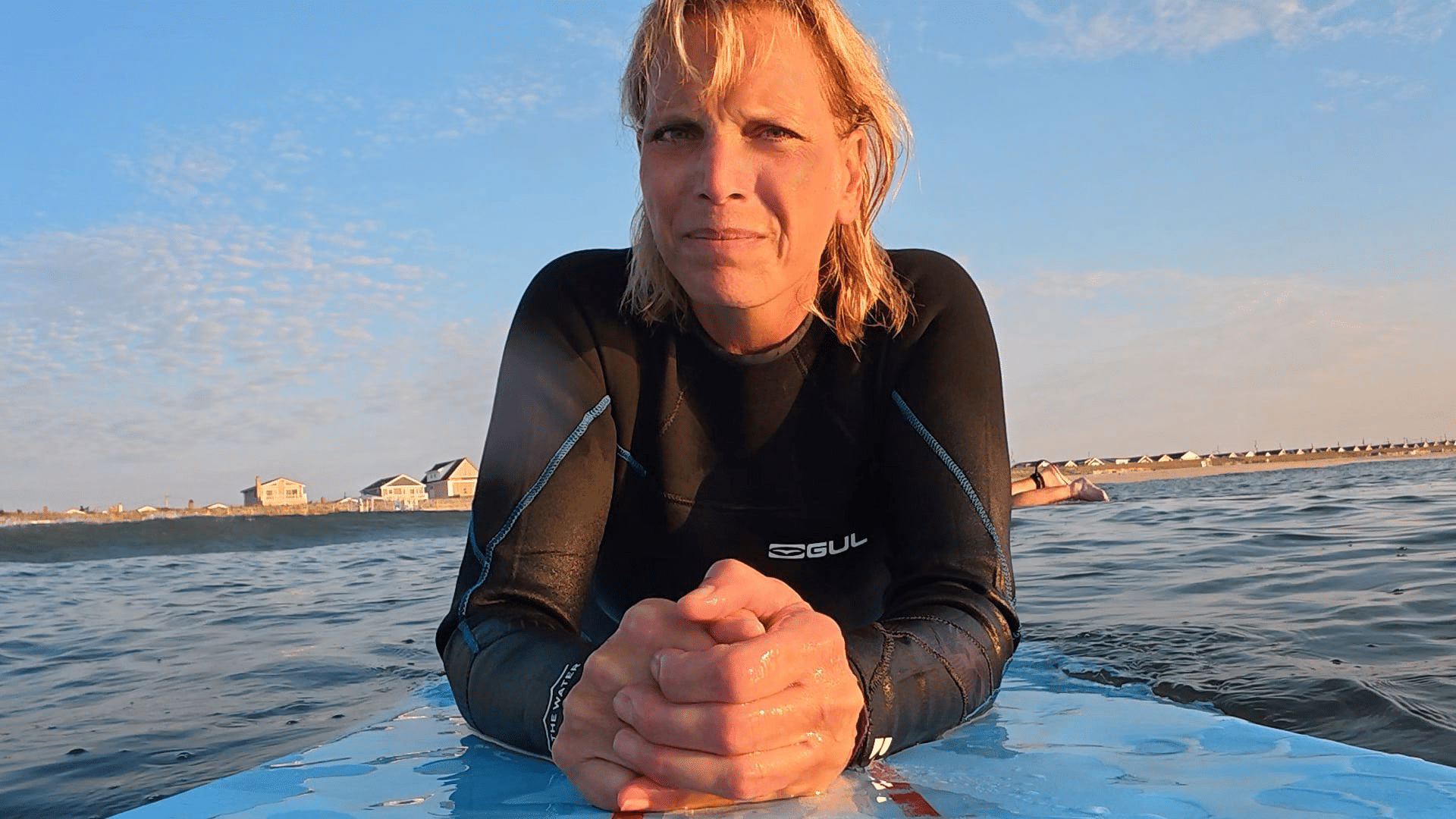
If you were unlucky enough to come across one of my surf vlog videos, which I started doing recently, you will notice that I almost always wear a hat. The reason for that is not to promote our “I Love Fatty” hats from The Wipeout Weekly Wee Surf Shoppe launching September 14, but to cover the bird’s nest that forms on the top of my head after every surf.
Yes, I know—I should really comb it through as soon as I get out of the water. But but but—the reason I end up with a ready-made home for little birdies rather than flowy tresses (as some do) is because I get hit by the whitewash. A lot. It’s gotten to the point that by the end of the session I burp ocean water, and I’m okay with it. For the same reason, I’m okay with nose dives, wipeouts, underwater somersaults, and failed turtle rolls. All of them make me feel safer in the ocean, because despite their occurrence, I don’t usually panic.
A bit of backstory: I didn’t learn to swim properly until I’d decided to learn to surf. It was kinda a prerequisite. I’m still a pretty weak swimmer, because I can’t do the crawl/freestyle—I stick with the breaststroke. My argument is: it worked in ancient times, it will work now, and it’s energy-efficient. I’m not really scared of the ocean per se. I’m scared of the unexpected: a two-wave hold-down, getting tired trying to get through the whitewash to the back, rip currents, passing out after being hit by my own or someone else’s board.
You could probably write a book—and I’m sure someone has—about how to stay safe in the ocean when you’re learning to surf. I just want to focus on a few areas that I pay attention to.
You DO need to know how to swim.
You will hear it from experienced surfers that you shouldn’t be surfing if you’re not a confident swimmer. I am not one, and yet I surf. Because it is perfectly possible to surf a beach break at low tide if you’re not Michael Phelps. But as Kunu says in Forgetting Sarah Marshall, you gotta do more. More than just floating or doing doggie paddles.
A year ago, I had this audacious idea that I’m going to do the Malibu Triathlon, and I trained for it. I went out swimming in the pool. I went out swimming in the ocean. And the knowledge that I can keep going for 30 minutes non-stop gave me more confidence that perhaps I won’t drown while surfing. (I didn’t do the triathlon—I’m too slow without the freestyle.)
Learning to bodysurf and bodyboard can also be super beneficial. I’m about to try some bodyboarding soon!
DO NOT overstretch yourself.
This can apply to soooo many situations. Do not surf in a surf spot that is clearly beyond your abilities. Do not surf on a bigger day than you can handle—the whitewash may just murder you. Do not surf if you’re stressed or feeling off. The ocean will give back whatever you bring with you. Sure, you can challenge yourself, but be smart.
If the whitewash doesn’t kill you, your (or someone else’s) board will.
In the surf, I’m concerned about the big waves battering me, but not as much as I am terrified of being smacked by my own board or getting someone else’s fin embedded in my body.
For your sake and everyone else’s—do not ditch your board. Hold onto it (in as many different configurations as necessary) and do not let go. Stay far enough from other surfers so you’re not on the receiving end of someone’s board flying through the air. When you come off your board, jump as far away from it as humanly possible. And if you’re not a fan of plastic surgery, cover your head and face.
I wish all surf schools would teach students how to walk out into the surf. I’ve seen it recommended that you hold your board by the nose, perpendicular to the waves. The latter I take no issue with, but I find it much easier to hold the board to my side and push the tail down to get across the whitewash. I do a little jump, too.
Be aware of the bottom.
If you’re surfing a beach break, there isn’t much to worry about. Well, maybe when you’re walking out, be aware that the bottom may suddenly disappear, because it’s not always perfectly flat. And maybe, just maybe, there are stingrays. Just shuffle your feet.
But if your break is a sharp reef or cobblestones, you’ve got to be careful about how you fall off your board—and sometimes what you wear when walking out. Booties may be needed.
Learn this about rip currents.
I don’t know why or how—because it’s been ages ago—but the first thing I learned about safety in the ocean while surfing was about rip currents. Do not paddle against it—paddle parallel to the beach.
Rip currents are sneaky little effers, always bending backward to tire you out as you battle against them. So either paddle parallel to the shore (you can do it at a slight angle), or if that’s too tough, let yourself float past it and then attempt the parallel paddling.
Relax, don’t do it (panic!)
It’s easy to advise DO NOT panic. But panic is largely involuntary. I think it’s safer to say—relax if you can, because whatever you’re experiencing is going to pass. And if you know how to deal with these situations, it will pass pretty quickly.
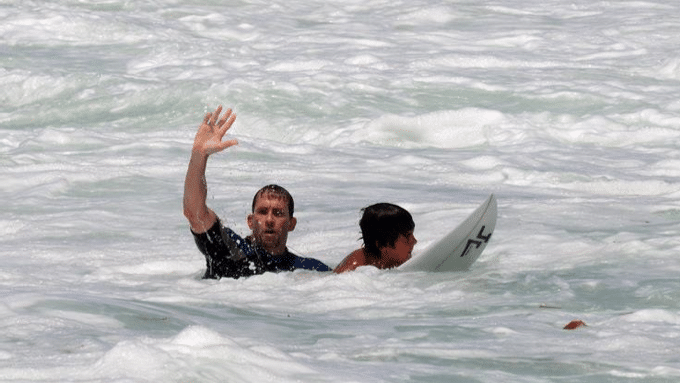
Finally, it’s always safer to surf where you’re not the only one in the water. Even safer with a buddy. And if you don’t know the most common SOS sign for “I’m drowning / I’m in trouble,” it’s one arm up in the air, and do a small wave.