Now Reading: How a girl board changed surfing forever
-
01
How a girl board changed surfing forever
How a girl board changed surfing forever
I was going to write about the shortboarding revolution, and I will, but first, I want to share the story of how we ended up surfing the way we do today. Meaning—not in a straight line, all the way to the beach.
Malibu, 1950: Vicki enters
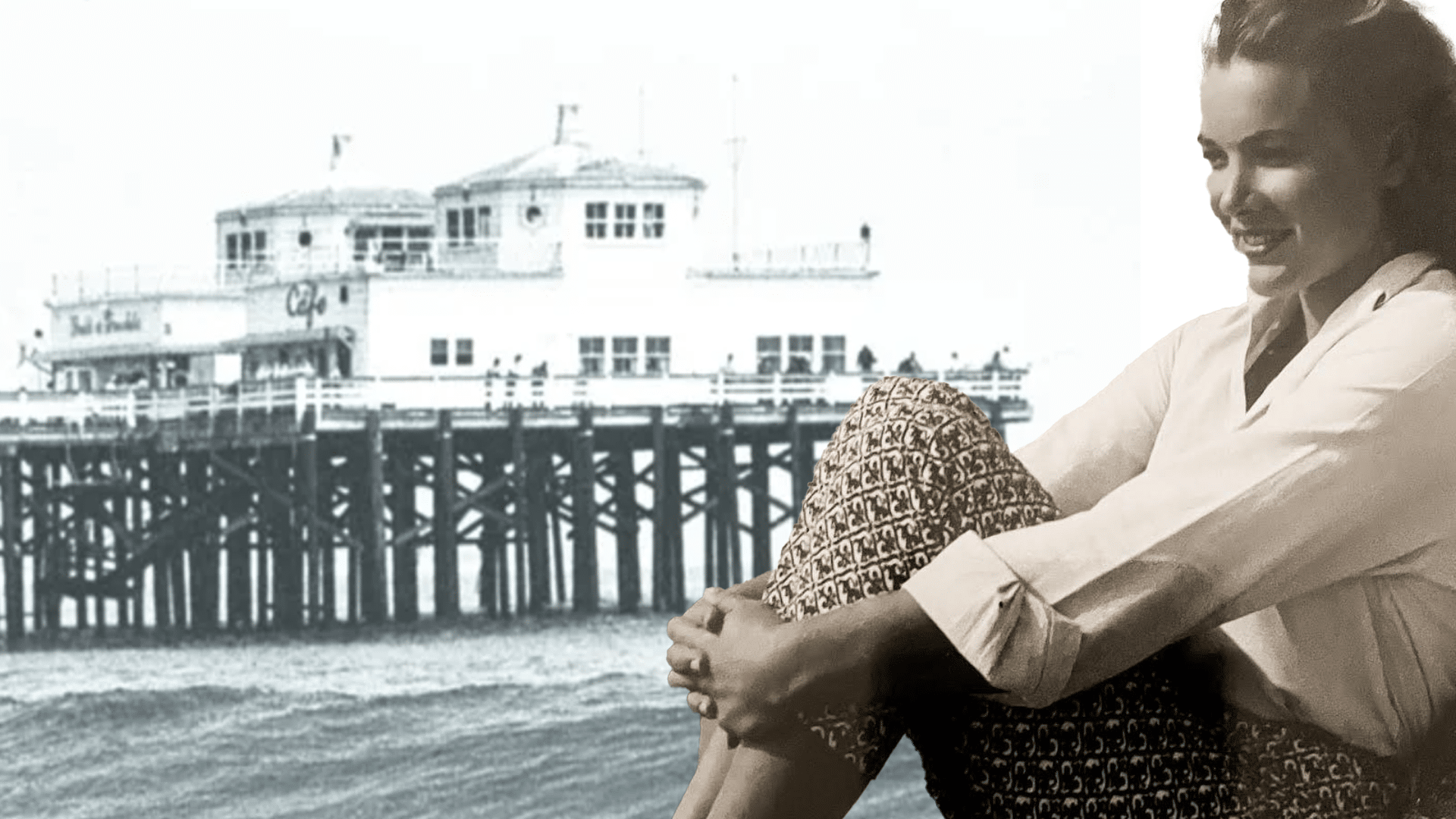
We’re in Malibu. It’s the summer of 1950. And Vicki Flaxman, a 16-year-old Malibu local, is hanging out with her friends on the beach. Vicki was an athletic and aggressive surfer, and in a couple of months she learned to surf better than most men, according to Joe Quigg, a local surfboard shaper. But she was also a 16-year-old girl, with her little 16-year-old arms. No way she could carry a log weighing 35 pounds.
Enter her custom-made Joe Quigg balsa 9’6” surfboard. A thinner, lighter, easier-turning board that weighed about 10 pounds less than a traditional log. Baptized—a girl board—with Vicki painting “Vicki” in big, bright red letters across the deck.
So Vicki is hanging out on the beach with her girlfriends Aggie Bane, Claire Cassidy, Robin Grigg (a sister of big wave surfer Rick Grigg), and Darrylin Zanuck (a Hollywood producer behind The Grapes of Wrath and All About Eve). Alongside them, you can find Tommy Zahn, Matt Kivlin, and Joe Quigg. The latter two are both surfers and surfboard shapers.
The afternoon experiment
The afternoon comes, and the surf is blown out. One of the dudes goes: I’m gonna take out Vicki’s board, so they can mess around on a smaller, lighter board. So in the morning, the boy surfers would be going along in formation, riding fast, and in the afternoon, they’d borrow “girl boards” and mess about in the surf.
Then one afternoon, the hottest (according to Matt Warshaw), most athletic of the dudes—named Les Williams—grabs a girl board and heads into the waves. He catches the wave, AND turns back into the wave and keeps going. Performing the first cutback on one of those girl boards.
The cutback is a surf maneuver that takes a surfer from the wave’s shoulder back to the steeper, more powerful part of the wave. Australian surf journalist Nick Carroll describes a cutback as “the purest power move, a slashing, elegant work of art.”
♂️ “Wait, can I keep this?”
That’s how girl-board loaners are responsible for the next stage of surfing—the high-performance climb-and-drop style of surfing. Of course, now once the boys know what’s possible to achieve on a girl board, they don’t want to give them back!
I heard this story from Matt Warshaw when we chatted to him on the pod. What I didn’t know at the time is that three years earlier, Tommy Zahn asked Joe Quigg to make a board for his girlfriend at that time—Darrylin Zanuck. Joe obliged, and since it was a board for his mate’s girlfriend, he picked the best redwood and balsa from five different lumber yards and made a 10’2” redwood/balsa with 50/50 rails, curved rail rocker, a flat planning bottom, and a fin. In short—a bit larger than Vicki’s board. But Tommy and Darrylin broke up, and Darrylin had to sneak into his garage to get the board back.
The Darrylin board is considered the precursor of modern shortboards, according to Beach Grit, because thanks to it, surfers realized that less is more when it comes to maneuverability. And that’s how we cut back (see what I did there) to the shortboarding revolution—coming soon on The Wipeout Weekly.