
Now Reading: How to tell if a wave will break—almost every time
-
01
How to tell if a wave will break—almost every time
How to tell if a wave will break—almost every time
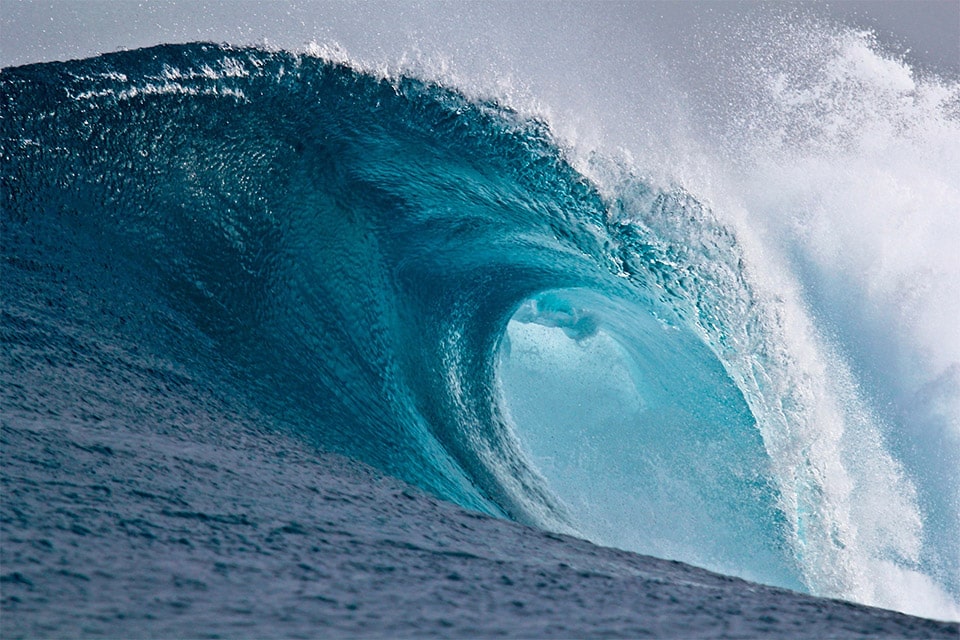
If you’ve ever sat in the lineup wondering whether that lump on the horizon was about to turn into a face, crumble into mush, or close out in your face—this story is for you.
Because it’s all about How to Tell If/When a Wave Will Break.
The lineup stare-down
Do you ever play the will it—won’t it break game when sitting in the lineup and watching people catch waves, because you’re too chicken to go for it?
I do it all the time.
Which made me think—is there an actual scientific way to predict if and when the wave breaks, rather than, you know, surfing every day, getting to know your break, and using your eyeballs?
The science of breaking waves
And apparently, there is!
There’s a whole field of ocean science called coastal oceanography, and it boils down to a few key things:
- Wave height
- Wavelength (the distance between crests)
- Wave steepness
- Water depth
- Seafloor shape—what we call bathymetry
The simple math
The math to measure if the wave breaks is pretty simple, and it has a lot to do with wave steepness.
A wave will break if it gets too steep compared to its wavelength.
There’s actually a ratio for this:
Wave height divided by wavelength has to exceed 1/7.
So if you ever see a wave that looks way taller than it is long—you guessed it—get ready to paddle.
Why waves stack up
As waves roll into shallower water, they start to shoal—that’s the fancy word for slowing down and stacking up.
When a wave enters shallower depths, its speed drops, but the energy has to go somewhere. So it goes up—literally. That’s why waves get taller as they near shore.
Scientists figured out a pretty specific threshold here too:
When the wave height is about 0.78 times the water depth, the wave is going to break.
Example time:
If the water’s 2 meters deep:
0.78 × 2 = 1.56 meters.
Once the wave is taller than 1.56 meters, it’s game over—it’ll topple.
️ Not all breaks are equal
But but but not all breaks are created equal.
Depending on the slope of the seafloor, you get different kinds of breakers:
- Spilling breakers: soft, rolling, good for beginners.
- Plunging breakers: the hollow ones, a.k.a. barrels.
- Surging breakers: waves that don’t really break, they just rush up the shore.
This is why beach shape matters just as much as swell size.
Modern forecasting
Wait, there’s more to surf forecasting!
Modern wave models—Surfline’s system for instance—combine:
- Buoy readings (wave height, period, direction).
- Bathymetry (underwater topography).
- Wind data.
- Tidal data.
These models calculate when waves will shoal, how steep they’ll get, and whether they’ll break.
This is all wonderful, but unlikely to help you when you’re sitting in the lineup.
I recommend playing the will it—won’t it break game, keeping your score, and seeing if your score improves over time.