
Now Reading: Surfboard 101: rocker rules everything
-
01
Surfboard 101: rocker rules everything
Surfboard 101: rocker rules everything
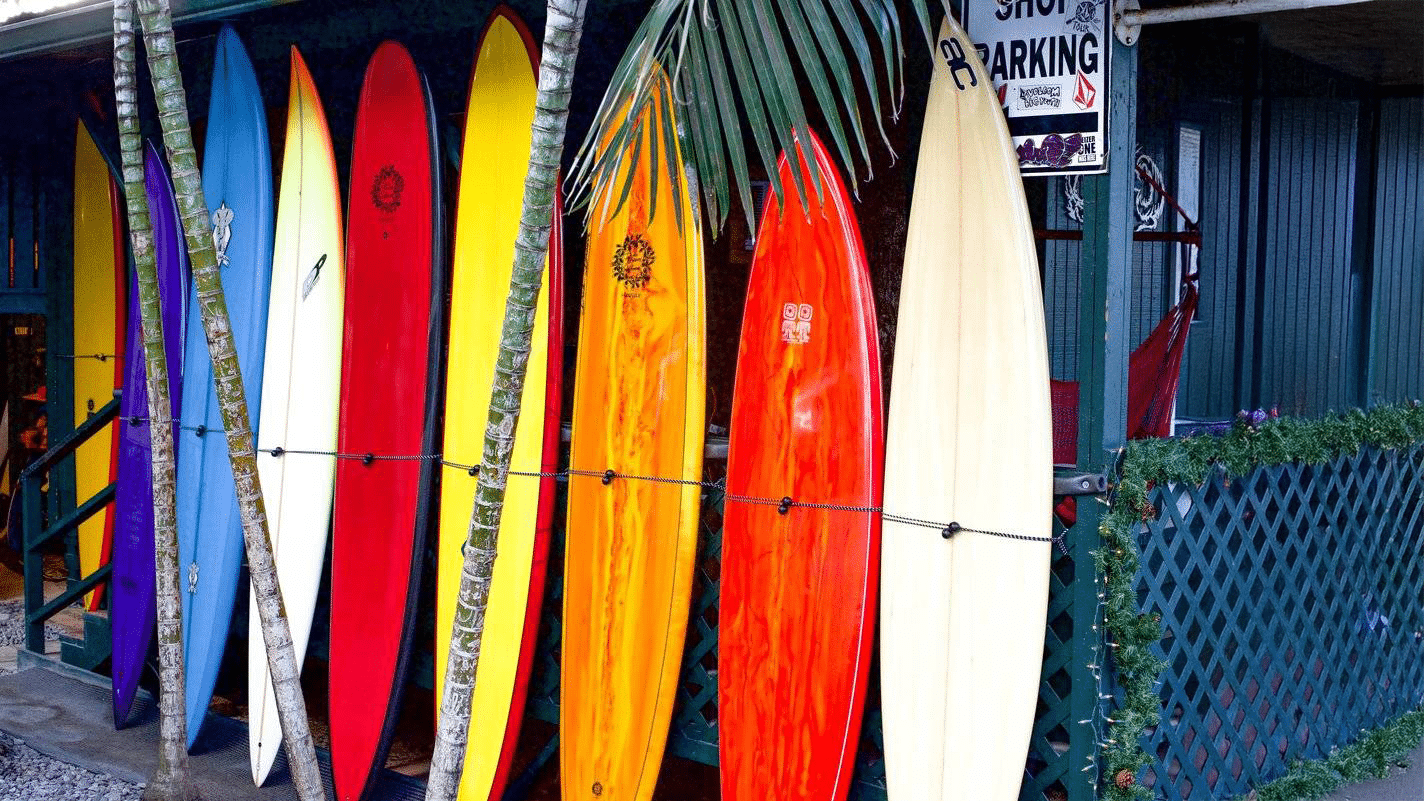
Welcome to the first in many of your Surfboard 101. This is going to take us, like, a million articles.
A surfboard looks so, I don’t know, unassuming. A piece of foam or foam and fiberglass. And yet every curve, every edge, and every contour affects how it rides. Let’s start with rocker!
Why start with rocker?
Not only because it sounds the coolest. There isn’t just one “most important” feature of a surfboard universally—the answer depends on your surfing level, the waves you ride, and what you want the board to do.
But if you had to pick ONE factor that influences nearly everything about how a surfboard feels, it would be: rocker.
Why?
Because rocker dictates how easily your board catches waves, how fast it goes, and how responsive it feels. Also, it’s the first thing shapers decide on before dialing in outlines, rails, or tails.
If you look at how shapers describe “the feel” of a board, rocker comes up again and again as the foundation that everything else builds on.
What exactly is rocker?
The rocker is the curve of the board from nose to tail when viewed from the side.
You get a few different types of rockers:
Nose rocker: The upward curve at the front.
- More nose rocker helps prevent pearling (nosedives) on steep drops.
- Less nose rocker makes paddling easier and faster on flatter waves.
Tail rocker: The lift at the back.
- More tail rocker increases maneuverability and helps fit the board into the curve of the wave, especially in steeper sections.
- Less tail rocker improves speed down the line but makes it harder to pivot quickly.
Overall rocker: The total arc running nose to tail.
- Flat rocker = speed and glide. Great for small, mushy waves.
- Curvier rocker = control and responsiveness. Ideal for steep, hollow waves.
Think of rocker as the board’s suspension system—more curve helps handle vertical drops and critical sections, while flatter rocker is like cruise control on a mellow wave.